
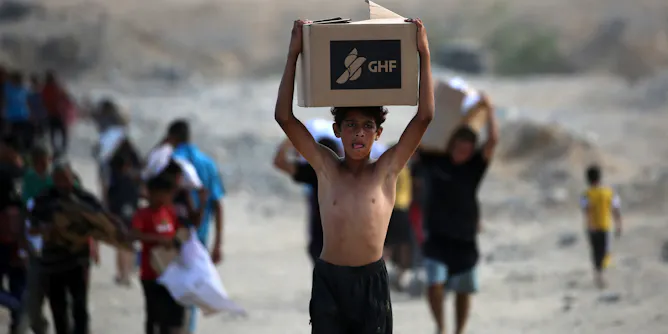
New research looking into the US government-backed Gaza Humanitarian Foundation shows when aid is handed over to corporations, civilians pay the price.
Articles on Humanitarian aid
Displaying 1 - 20 of 167 articles

Villagers are picking up the pieces after a catastrophic flash flood ripped through the region.
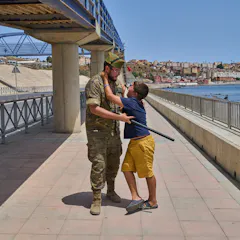
Anti-immigration critics seized on the Ceuta migrant situation as evidence of the failure of soft policies, but in reality the bloc has become far more restrictionist in the past decade.
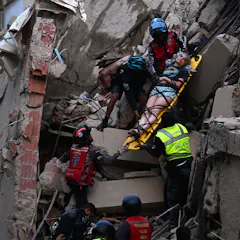
If you want to help, an aid expert advises you to donate cash to nonprofits involved in local rescue and recovery efforts.

The drop in funding has also led donors to prioritize the trend of using aid to control the movement of people – over their needs.
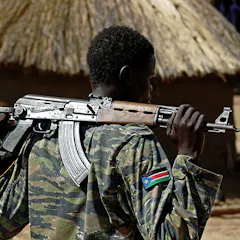
In areas that had received the most American aid, the probability of conflict increased by 3.1 percentage points.
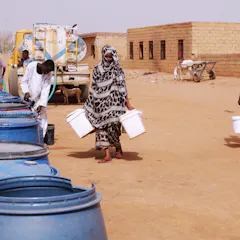
Sudan is one of the most dangerous places in the world to deliver humanitarian assistance. It is also home to one of the most chronically underfunded.
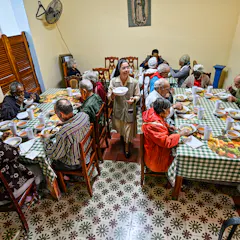
The timing of the offer was thorny because it coincided with the US indictment of former Cuban President Raúl Castro.
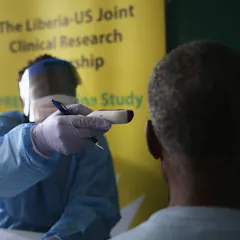
10 years after official end of the Ebola pandemic, very few people know that survivors have struggled to continue with their lives.

What’s happening in Afghanistan is not simply gender discrimination; rather, it’s pushing an entire gender out of public systems altogether in a policy of gender apartheid by the ruling Taliban.
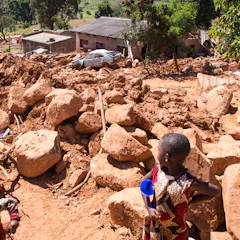
Disaster recovery agencies and governments must pay more attention to survivors’ invisible losses: grief, broken communities and disrupted identities.

We look at Sudan’s long history of civilian-led resistance, and how community networks and youth movements are laying the foundations for re-establishing peaceful rule in a country marked by deep political fragmentation.

Kenya faces extreme weather crises. Humanitarian aid must be part of the solution.
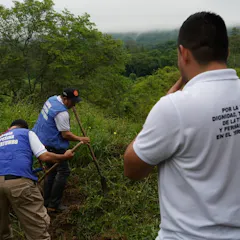
In Colombia’s coca-cultivating Catatumbo region on the border with Venezuela, community care and survival efforts amid escalating violence are in a state of emergency.

With targeted support, refugees are more likely to gain employment, increase their savings and find safety if not housed in camps, study finds.

Sudan’s neighbourhood committees represent a unique blend of political and practical action. They mobilise for change while addressing immediate community needs.
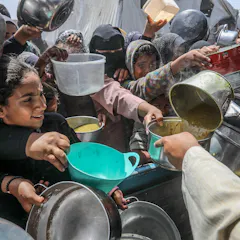
A new report shows that food security is in danger around the world.
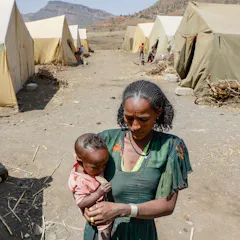
Famine was weaponised as part of a broader campaign of destruction in Ethiopia’s Tigray region.
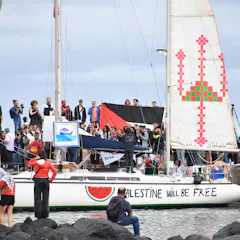
Flotilla organisers say the Israeli military boarded their ships in international waters, where they have the right to freedom of navigation.

In light of the U.S. retreat from humanitarian leadership, countries like Canada must assume a more prominent role in sustaining global protection systems.
Top contributors
-

Deputy Director of the HUMLOG (Humanitarian Logistics and Supply Chain Management Research) Institute, Hanken School of Economics
-
Lecturer in Operations Management, Lancaster University
-
Professor of Public Health, Washington University in St. Louis
-
Senior Lecturer in Operations and Supply Chain Management, Liverpool John Moores University
-
Business School Associate Director, Edge Hill University
-
Research Associate Professor, Washington University in St. Louis
-
Professor, Université de Lubumbashi
-
Lecturer in Interdisciplinary Race, Gender and Postcolonial Studies, UCL
-
Associate Research Professor of International Relations, Tufts University
-
Professor of Law, Conflict and Global Development, University of Reading
-
Director, Program on Resilient Communities, Harvard University
-
Associate Rrofessor of Philanthropic Studies, Indiana University
-
Fellow, Harvard Humanitarian Initiative, Harvard University
-
PhD Researcher, Development Studies, University of Sussex
-
Professor Emeritus in Global Health & Humanitarian Affairs, University of Manchester