
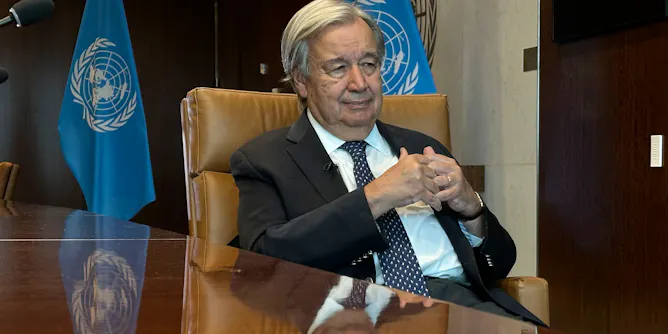
The long-standing UN secretary general could have done more to protect the world’s most vulnerable people.
Articles on United Nations (UN)
Displaying 1 - 20 of 929 articles

Can the two leaders achieve the sort of rapport that helped Ronald Reagan and Mikhail Gorbachev face the threat of nuclear proliferation in the 1980s.
The timing of the disclosure (and the incident itself) is fortuitous in a political sense, vindicating the government’s recent AI warnings.
Rules of war are being shredded by combatants with virtually no accountability. It’s one of several key issues for the UN’s new leader to tackle.

The prime minister will be at the United Nations during leaders’ week in September. That’s an excellent opportunity for a PM with lobbying on his mind.
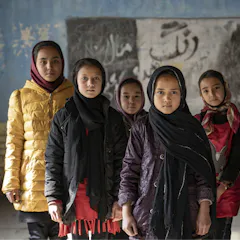
The author was banned from school by the Taliban as a girl in 1996. Years after the Taliban returned to power in 2021, she asks why the international community’s response has fallen so short.
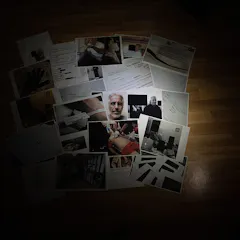
A community – bystanders, law enforcement, colleagues and family – is likely to deny an atrocity when acknowledging it requires action.

AI’s risks and harms are already affecting Australians. There are new ones coming.

The drop in funding has also led donors to prioritize the trend of using aid to control the movement of people – over their needs.
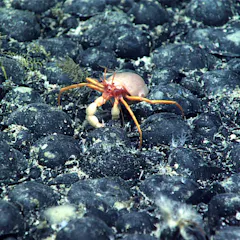
The deep sea holds vast mineral wealth. However, most valuable elements lie in international waters, outside any one country’s territory.

There is no shortage of global objectives and targets driving ocean conservation. However, protecting oceans depends on the communities that steward them.

The leaders of Canada, France, India and Turkey are among those looking to leverage their ability to say ‘no’ to Washington.

In her new book, Francesca Albanese challenges the dominant perception of the Israel-Palestine conflict

Some symbolic authority might help to set useful boundaries.
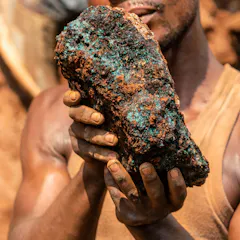
The rapid expansion of critical mineral extraction is trading away human and ecological well-being for technological breakthroughs. There are ways to fix this.

The High Seas Treaty requires a secretariat to co-ordinate between parties, service meetings, manage information and keep the machinery running.
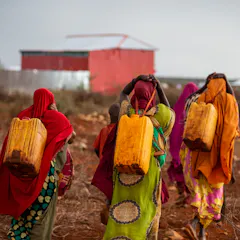
In high and low income economies, women and girls bear the brunt of inequalities caused by water scarcity.
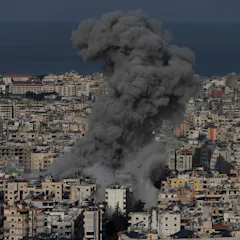
The U.S.-Israel strikes on Iran raise uncomfortable questions about whether the post-1945 rules-based order still constrains the use of force by major powers.
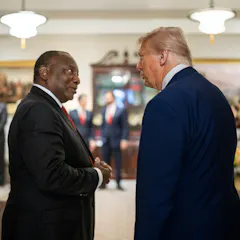
South Africa’s preference for dialogue has become harder to sustain in a polarised world.
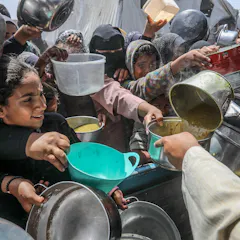
A new report shows that food security is in danger around the world.
Top contributors
-

Professor of Law, Conflict and Global Development, University of Reading
-
Professorial Fellow, University of Canberra
-
Senior Visiting Scholar with the Center for the Study of Genocide and Human Rights, Rutgers University
-
Associate Professor, The University of Western Australia
-
Senior Research Fellow and Associate Professor, Melbourne Climate Futures initiative, The University of Melbourne
-
Extraordinary Professor, Department of Political Sciences, University of Pretoria
-
Professor of International Security, University of Birmingham
-
Professor of Practice in Climate Policy, University of Oxford
-
Associate Professor in the Frederick S Pardee School of Global Studies, Boston University
-
Professor in The Division of Global Affairs and The Department of Political Science, Rutgers University - Newark
-
Professor of Human Rights Law, Monash University
-
Honorary Professor of International Relations, University of the Witwatersrand
-
Professor of International Relations, The University of Queensland
-
Honorary Associate Professor, The Crawford School of Public Policy, Australian National University
-
Professor of International Affairs, Penn State