

Research on crocodile attacks can provide insights into when and where they attack, and who they attack.
Articles on Human-wildlife conflict
Displaying 61 - 80 of 86 articles

Wolves are not bad – they’re just trying to survive in a world where they are unwelcome.
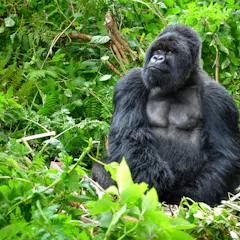
In Rwanda gorillas have been leaving protected areas to raid sodium rich crops.
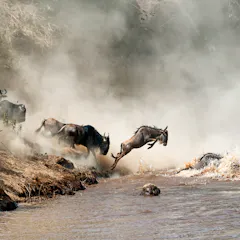
Intense and extensive changes mean that the Serengeti-Mara area’s wildlife has an unsure future.
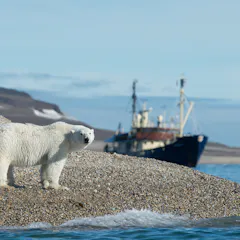
Polar bears ‘invading’ a Russian village have renewed concern over climate change in the Arctic, but human-wildlife conflicts are flaring up everywhere.
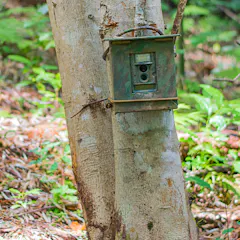
Conservation surveillance can generate fear and anger among local people.

The return of white sharks to Cape Cod, Massachusetts was a tourism success story – until a shark killed a swimmer. Can the Cape’s residents and visitors learn to share the ocean with these apex predators?
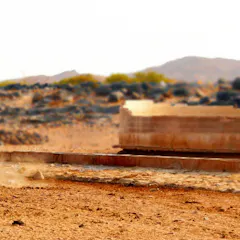
Conflict between people and animals has been on the increase in Tsavo, Kenya.
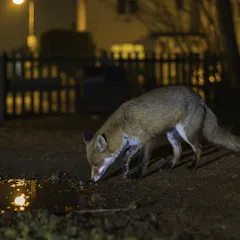
It’s becoming harder and harder for animals to find human-free spaces on the planet. New research suggests that to try to avoid people, mammals are shifting activity from the day to the nighttime.
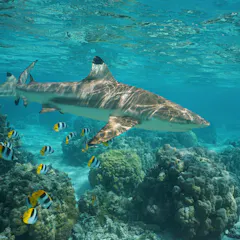
When humans have conflicts with wildlife, the first reaction is often to cull them. But there’s little evidence to show that it works, and removing predators can even backfire and make things worse.

Three researchers studied the “crop raiders” of the Brazilian rainforest in the hope of aiding both local farmers and wildlife conservation.
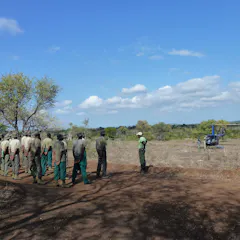
Military style anti-poaching is often criticised because it alienates communities living around protected areas. But these initiatives give them an incentive to protect the species.

Many mammals depend on large areas and trans-boundary conservation for their survival. When this is obstructed it can have a catastrophic impact on animal populations.

Elephants feeding on crops poses a challenge to their coexistence with humans. Farmers must introduce strategies to reduce losses and avoid lethal action against the endangered species.
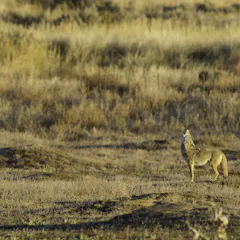
The US Department of Agriculture kills thousands of predators yearly, mainly for attacking livestock. A conservation biologist explains why this policy is ineffective and ecologically harmful.

Elephants, livestock and grass all play an important role in ensuring the survival of the Hirola - the world’s rarest antelope.
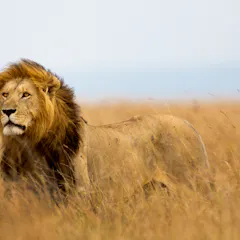
Africa prioritises and makes more of an effort for large mammal conservation than any other region in the world.
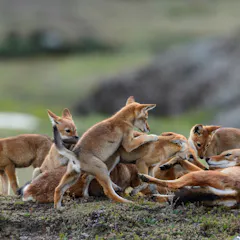
A critical factor in the preservation of the Ethiopian wolf is the commitment and dedication to finding common ground between the needs of people and wildlife.

It is possible to use small spaces such as transport corridors, verges and the edges of sporting grounds for native wildlife habitat restoration, helping to bring biodiversity back into cities.
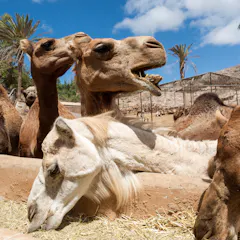
Over the past four decade populations of almost all the common wildlife species have fallen to one third or less of their previous levels
Top contributors
-

Senior Researcher and Statistician, University of Hohenheim
-
Professor of Fish, Wildlife, and Conservation Biology and Director, Center for Human-Carnivore Coexistence, Colorado State University
-
PhD Student in Fisheries & Wildlife and Ecology, Evolutionary Biology & Behavior, Michigan State University
-
Environmental Social Scientist, Newcastle University
-
Postdoctoral Research Associate, Leverhulme Centre for Anthropocene Biodiversity, University of York
-
Professor and Chair, Southwestern Environmental Science and Policy, Northern Arizona University
-
Professor of Wildlife Conservation, University of Oxford
-
Postdoctoral research fellow, German Centre for Integrative Biodiversity Research
-
Adjunct Assistant Professor, University of Wyoming
-
Affiliate Faculty in Fish, Wildlife and Conservation Biology, Colorado State University
-
Lambert Reader in Human-Wildlife Coexistence, Birkbeck, University of London
-
Postdoctoral Researcher in Environmental Conservation, UMass Amherst
-
Associate Professor, University of Oxford
-
Assistant Professor in the Human Dimensions of Natural Resources, Colorado State University
-
Adjunct Assistant Professor, University of Miami