
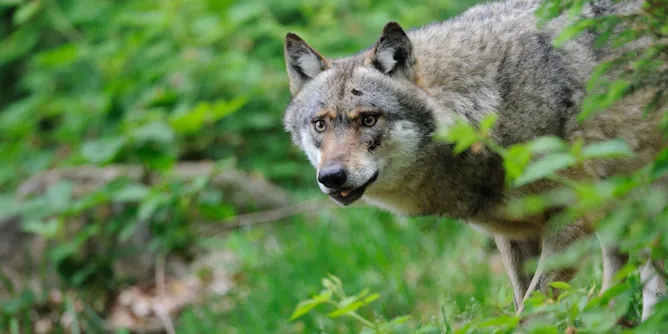
Wolves killing livestock are seizing an opportunity for a meal in a landscape with little natural prey.
Articles on Human-wildlife conflict
Displaying 41 - 60 of 86 articles
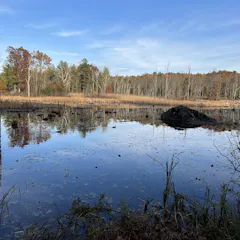
Beavers in our landscapes have great potential to provide small-scale adaptations to climate change – if humans can figure out how to live with them.

It’s usually good news when a once-scarce species starts to recover – unless it starts getting in humans’ way. An ecologist explains how science can help predict unwelcome encounters.
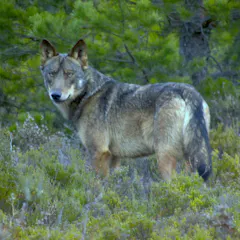
A farming community in north-west Spain may hold the answer to coexistence with wild carnivores.
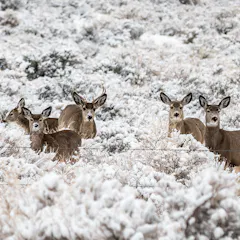
Outdoor recreation is booming across the US, but research shows that the presence of humans – or the trails they hike and ski on – can have harmful effects on wildlife at less-than-close range.
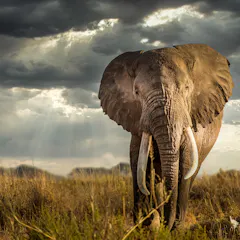
Crop raiding is happening more often in the Masai Mara, in different places and at different times of the year.
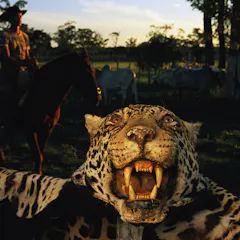
Compensation for losses from wildlife is an increasingly popular conservation intervention. However, a recent review cautions its use.
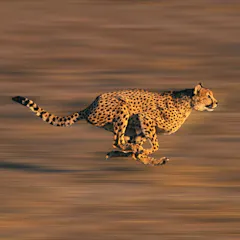
India’s last cheetah was killed 70 years ago. Should the country import a different subspecies from Namibia?

Conflict between fruit-growers, the Mauritian government and conservationists has dragged on for years – it’s time for a new approach.
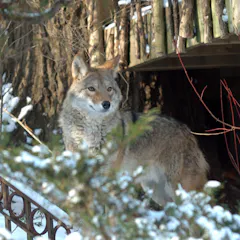
Lethal methods and relocation aren’t effective, sustainable or humane approaches to human-wildlife conflicts.
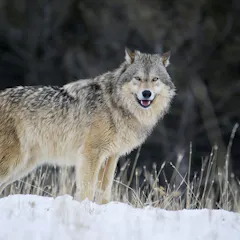
For the first time in the US, a ballot measure will ask voters whether to restore wolves to a place where they’ve been eradicated. Coloradans have strong views on both sides.
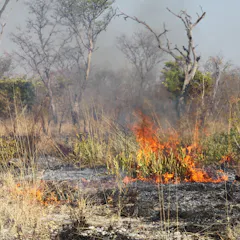
Understanding fire history is crucial to designing effective fire management in order to maintain biodiversity and support the livelihoods of people.
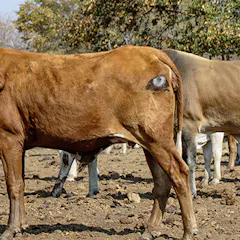
Many carnivores are ambush predators. Being seen by their prey can lead to them abandoning the hunt.
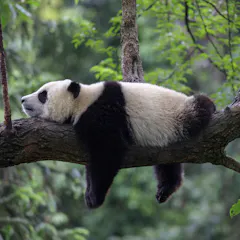
Pandas have done more to raise awareness of biodiversity loss than any other species. But they may not be good at stopping it themselves.
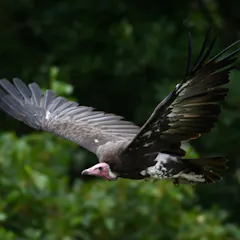
The poisoning incident in Guinea-Bissau represents a loss of around 5% of the estimated national population of Hooded Vultures, which makes up 22% of the entire global population.
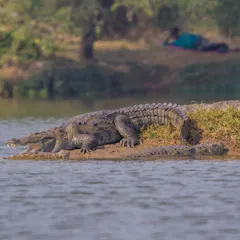
In the villages of central Gujurat, humans and wildlife are forced to share the same spaces – with varying consequences.

As Chile’s central mountain region warms, guanacos are wandering into trouble.
Most of Kenya’s biodiversity needs protecting outside protected areas in human‐dominated landscapes that are undergoing rapid change.
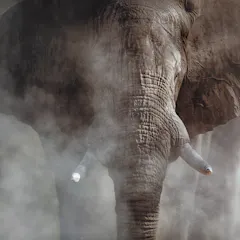
As the ultimate custodians, it is urgent that African countries with elephants take
ownership of the processes at CITES.
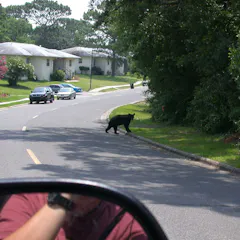
Once hunted into corners of North America, black bears have expanded across the continent since the early 1900s. But bears that end up living near people aren’t seeking close encounters.
Top contributors
-

Senior Researcher and Statistician, University of Hohenheim
-
Professor of Fish, Wildlife, and Conservation Biology and Director, Center for Human-Carnivore Coexistence, Colorado State University
-
PhD Student in Fisheries & Wildlife and Ecology, Evolutionary Biology & Behavior, Michigan State University
-
Environmental Social Scientist, Newcastle University
-
Postdoctoral Research Associate, Leverhulme Centre for Anthropocene Biodiversity, University of York
-
Professor and Chair, Southwestern Environmental Science and Policy, Northern Arizona University
-
Professor of Wildlife Conservation, University of Oxford
-
Postdoctoral research fellow, German Centre for Integrative Biodiversity Research
-
Adjunct Assistant Professor, University of Wyoming
-
Affiliate Faculty in Fish, Wildlife and Conservation Biology, Colorado State University
-
Lambert Reader in Human-Wildlife Coexistence, Birkbeck, University of London
-
Postdoctoral Researcher in Environmental Conservation, UMass Amherst
-
Associate Professor, University of Oxford
-
Assistant Professor in the Human Dimensions of Natural Resources, Colorado State University
-
Adjunct Assistant Professor, University of Miami