
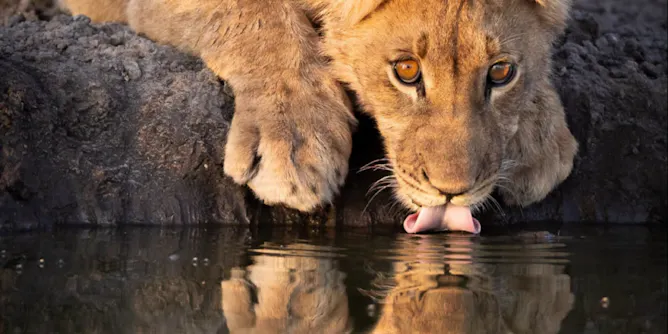
The species most at risk may not always be the ones we expect.
Articles on Elephants
Displaying 1 - 20 of 126 articles

Evidence of hominins butchering huge animals suggests that our human ancestors lived in big social groups.
There is a desperate need to balance wildlife conservation with the wellbeing of people living in these shared spaces.
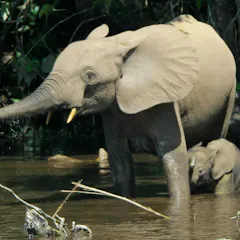
Large animals are key to the survival of big trees as they disperse seeds far and wide in their dung.
Elephants were found to gesture intentionally when they wanted humans to give them apples. This trait was thought to exist mainly in primates.

And do they go far enough?

Maintaining current elephant numbers, let alone reversing declines, requires new thinking and conservation innovation.
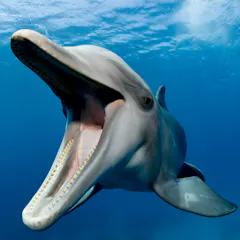
Many animals show signs of high intelligence, including strong memory, self-awareness and communication skills.

Environmental scientists have compiled the first list of wetlands in the park. This will be useful to measure the effects of climate change.
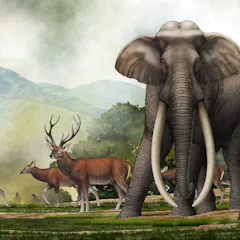
Eurasia and Africa were once populated by 13-tonne, 4 metre tall elephants, but their evolution has long remained a puzzle. A giant fossil skull from Kashmir paves way to unlocking their mysteries.
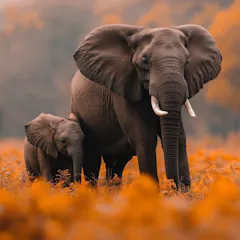
Like big, tall trees in old-growth forests, older animals are irreplaceable. Pulling them out leaves the ecosystem less resilient to future shocks. It’s time for ‘longevity conservation’ measures.
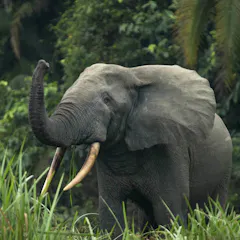
Nigeria has only a few hundred elephants left. They are worth saving, for several reasons.
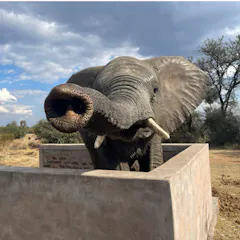
African savannah elephant numbers are surging. But for farmers in elephant territory, that can spell disaster. To solve human-elephant conflict, we might need to use smell.
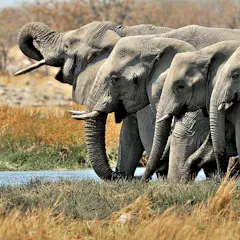
Male elephant society is much richer than previously thought.
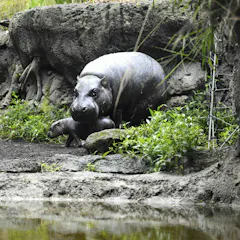
Pig-sized hippos and elephants the size of horses once roamed the lush forests of Cyprus – until humans arrived.

Baobabs have been a source of food, fibre and medicine in Africa for centuries.

Alexander the Great brought elephants back to the Mediterranean world after campaigning in northern India, where elephants had been used for centuries in warfare – and would be for centuries to come.
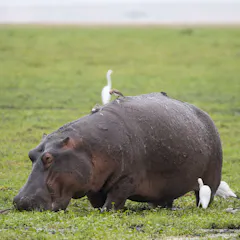
This shows that hippos are one of the largest animals that still can get airborne at fast speeds and yet they are also adapted for an aquatic lifestyle.

Humans aren’t the only animals that have names for each other − and studying animals that use names can teach researchers more about how human names evolved.
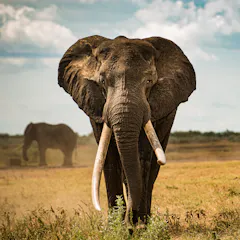
It is difficult to distinguish between elephant and mammoth ivory.
Top contributors
-

Research Associate, Department of International Relations, University of the Witwatersrand; Chief Research Officer, Good Governance Africa; Managing Director, Harvey Economics Pty Ltd.
-
Professor and Chair, Southwestern Environmental Science and Policy, Northern Arizona University
-
Visiting Professor, University of Kent
-
Research Associate, African Centre for Coastal Palaeoscience, Nelson Mandela University
-
Senior Lecturer, Mathematics, The University of Queensland
-
Distinguished Research Professor and Australian Laureate, James Cook University
-
Associate professor in Vertebrate Palaeontology, University of the Witwatersrand
-
Adjunct, Mammal Research Institute Polish Academy of Sciences, University of Warsaw
-
Professor in Tropical Conservation Ecology, University of Nottingham
-
Professor of Comparative and Evolutionary Neurobiology, University of the Witwatersrand
-
Director, Durrell Institute of Conservation and Ecology, University of Kent
-
Professor of Conservation and Applied Resource Economics, University of Kent
-
Professor of Neuroscience, Colorado College
-
Senior Lecturer in Law, University of Portsmouth
-
Environmental Social Scientist, Newcastle University