
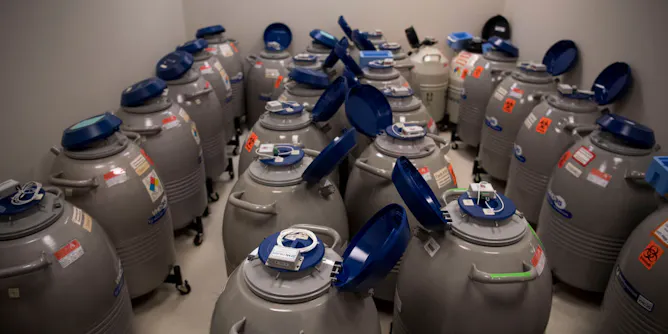
In vitro fertilization has become a bigger part of reproductive rights debates as a once-fringe movement to recognize embryos as people grows louder.
Articles on Human embryos
Displaying 1 - 20 of 26 articles
I’m a scholar, not an activist or an advocate. But now one of the most intimate, personal events of our lives had been turned into a political event by the state’s highest court.
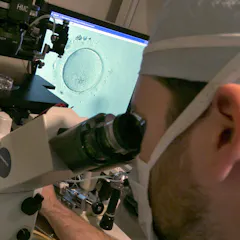
Alabama’s case began when three couples sued an IVF clinic where their frozen embryos had accidentally been dropped.
IVF is a decades-old procedure that has allowed increasing numbers of prospective parents to have children. Evolving legislation may put it under threat.

A recent ruling from the Supreme Court of Alabama implies frozen embryos are legally equivalent to living children. This creates risks for IVF providers, and therefore problems for patients.
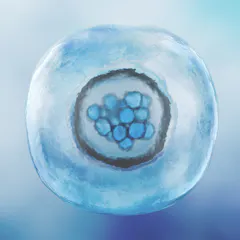
Early human development is a complex, multistep process that’s even more complicated to study in the lab. Models made from stem cells avoid some of the trouble with using real human embryos.
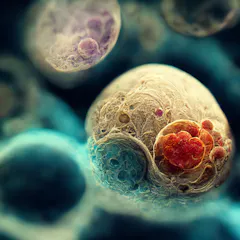
In June, the possibility of synthetic embryos was announced at a conference. This allows some research to extend beyond the 14-day rule, which restricts experimentation on embryos beyond this period.
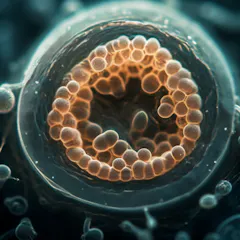
Scientists can create viable eggs from two male mice. In the wake of CRISPR controversies and restrictive abortion laws, two experts start a dialogue on ethical research in reproductive biology.
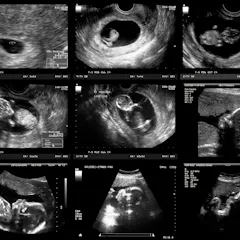
Some people seeking to influence public opinion about abortion rights claim the science is clear. It’s not, and that means abortion remains a political question – not a biological one.
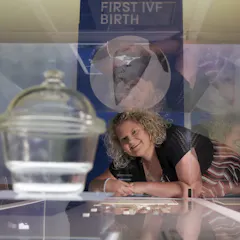
An unknown number of people have lost their dreams of parenthood because of storage disasters at fertility clinics. These experts note poor government oversight and the need for stronger regulation.
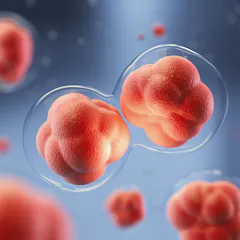
The rule, which previously acted as the upper time limit on human embryo research, has been dropped, paving the way for research on older human embryos.
Plus, how a new wave of South African romcoms is reimagining Johannesburg. Listen to episode 17 of The Conversation Weekly podcast.
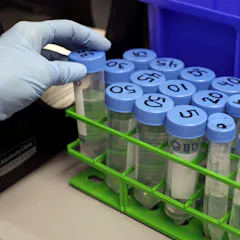
The International Society for Stem Cell Research’s newly released guidelines aim to address new ethical challenges posed by stem cell advances such as model embryos and human-monkey hybrid embryos.

Two research groups have turned human skin cells into structures resembling an early-stage human embryo, paving the way for exciting new research avenues, and opening up some tricky ethical questions.

A number of things may have gone wrong when researchers edited Chinese twins Lulu and Nana’s genome. Either way, the failed experiment is a cautionary tale for us all.
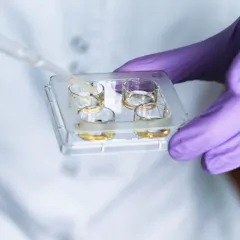
CRISPR technology could have momentous effects if it’s used to edit genes that will be inherited by future generations. Researchers and ethicists continue to weigh appropriate guidelines.

The genes in our cells’ mitochondria are passed on in a different way than the vast majority of our DNA. New studies shed light on how the unique process isn’t derailed by mutations.
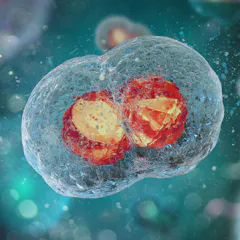
A new gene editing experiment explores human development. With this comes new ethical questions: How do scientists acquire embryos and how are their projects approved?

A landmark study in the UK discovered the gene that allows cells to form into embryos. If Australian researchers attempted this they could go to jail for 15 years.
Americans have moved on from worrying about ‘test-tube babies’ – but there are still ethical challenges to resolve as reproductive technologies continue to advance.
Top contributors
-

Professor - Emerging Technologies (Stem Cells) at The University of Melbourne and Group Leader - Stem Cell Ethics & Policy at the Murdoch Children's Research Institute, The University of Melbourne
-
Distinguished Research Professor, Emerita, Dalhousie University
-
Lecturer, Macquarie University
-
Political Scientist, RAND
-
Lecturer, Law, Western Sydney University
-
Professor of Biomedical Ethics, University of Virginia
-
Law Dean; Professor of Law; and Professor of Bioethics & Public Health, Case Western Reserve University
-
Postdoctoral Researcher of Evolutionary Biology, University of Pennsylvania
-
Chen Su Lan Centennial Professor in Medical Ethics, National University of Singapore; Distinguished Visiting Professor in Law, University of Melbourne; Uehiro Chair in Practical Ethics, The University of Melbourne
-
Professor, Head of the Department of Anatomy and Developmental Biology and Director of the Organoid Program, Monash Biomedicine Discovery Institute, Monash University
-
Assistant Professor of Political Science, Auburn University
-
Head of School (Computer Science) and Co-Director (Centre for Data Science), Queensland University of Technology
-
Research Group Head, Germ Cell Development and Epigenetics, Hudson Institute
-
Professor of Health Law, Public Health Law and Medical Ethics, University of South Florida
-
Science Strategy and Operations Manager, Victorian Heart Institute, Monash University