
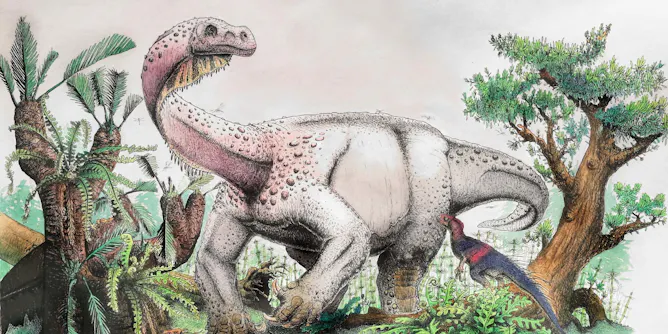
Five major finds this year adds to our understanding of evolution and ancient life history.
Articles on Homo sapiens
Displaying 81 - 100 of 124 articles
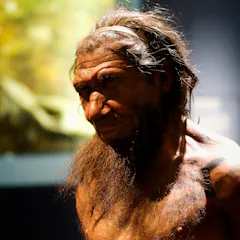
Nimble-fingered Neanderthals went about their daily business in a similar way to modern humans.
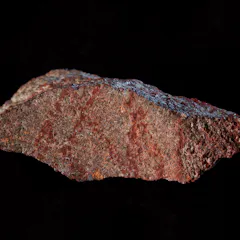
A new discovery adds to our existing understanding of Homo sapiens in Africa.
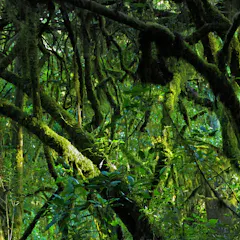
Rainforests may have played far more of a role in shaping human evolution than previously thought.
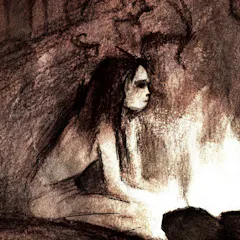
Ancient DNA in a 50,000+ year old bone tells us that two species of early humans did produce offspring together.
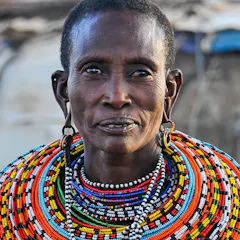
Why is jewellery so important to the story of human evolution? Because it provides a public message – even to people we don’t know.

Modern day people of short stature became physically small due to the effects of living on a small island or forested environment. But we’re not sure why “the Hobbit” of Flores was so small.

A manifesto from 23 researchers challenges old models, and outlines the major new directions archaeology should follow to solve the puzzling origins of modern humans.
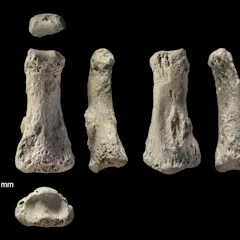
How we found the oldest human fossil ever discovered outside Africa and the Levant.
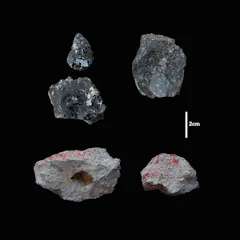
Scientists have discovered sophisticated tools in Kenya that are much older than expected.
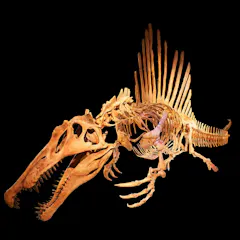
You might recognise Spinosaurus, from Jurassic Park 3, but did you realise it is 100% an African dinosaur?
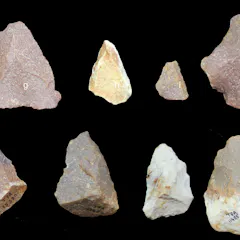
Modern humans could have left Africa shortly after evolving, making it to India in tens of thousands of years.

New discoveries are changing archaeologists’ ideas about the origins of our own species and our migration out of Africa. This fossil pushes Homo sapiens’ African exodus date back by 50,000 years.

The story of where humans come from is growing as new evidence – and new methods of analysis – emerge all the time.

I try to learn who are the ancestors of Indonesian people through genetics. The genetics of Indonesian people are a mix between different groups of humans.

The belief that ancient Egyptians needed help from supernatural beings to built the Giza pyramids relies, unavoidably, on racism and colonial attitudes.
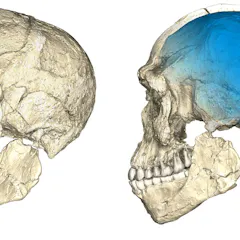
New paired research papers have pushed back by 100,000 years the time frame in which humans (Homo sapiens) are thought to have lived in Africa.
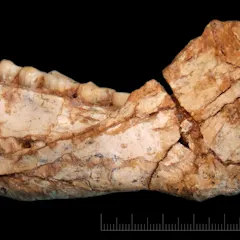
A researcher tells the story of how he and his team discovered the oldest Homo Sapiens fossil bones to date in Morocco.

How do scientists figure out when evolutionary events – like species splitting away from a common ancestor – happened? It turns out our DNA is a kind of molecular clock, keeping time via genetic changes.
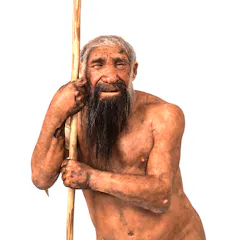
A new study estimates the nutritional value of human flesh and challenges the belief that prehistoric humans engaged in cannibalism just to fill their stomachs.
Top contributors
-

Research Associate, African Centre for Coastal Palaeoscience, Nelson Mandela University
-
Honorary Associate Professor, UNSW
-
Senior Lecturer in Paleontology and Evolutionary Biology, Life Sciences at the University of Bath, University of Bath
-
Associate Professor of Archaeology, Griffith University
-
Archéologue et chercheur au CNRS, Auteurs historiques The Conversation France; Université de Toulouse
-
Director, ARC Centre of Excellence for Australian Biodiversity and Heritage (CABAH), University of Wollongong
-
Professor of Archaeology and Biological Anthropology, School of Social Science, The University of Queensland
-
Senior Research Associate in Translational Genomics, University of Oxford
-
Associate professor in Vertebrate Palaeontology, University of the Witwatersrand
-
Professor in Geochronology and Geochemistry, Southern Cross University
-
Professor of Earth System Science, UCL
-
Associate Professor of Anthropology, Binghamton University, State University of New York
-
Researcher, Centre for Archeological Science, University of Wollongong
-
Emeritus Professor, University of Cape Town
-
Professor of Evolutionary Studies, Professor of African Prehistory, University of Bergen