
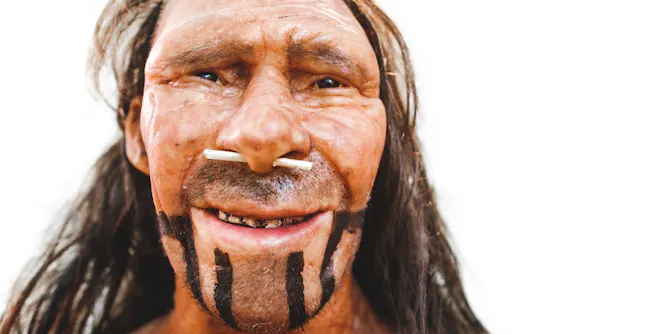
Neanderthals were wiped out by chance changes in the environment. The rise of Homo sapiens wasn’t inevitable.
Articles on Homo sapiens
Displaying 41 - 60 of 124 articles

Only insects populations can compare to rising human numbers.
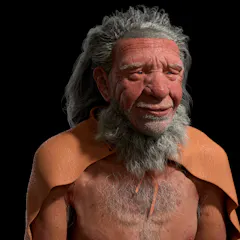
Zinc in their bones reveal that these early humans were top of the food chain.
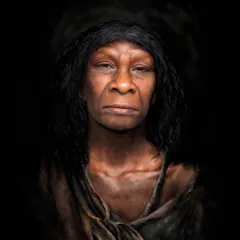
Here’s what we can learn from our closest extinct relatives.
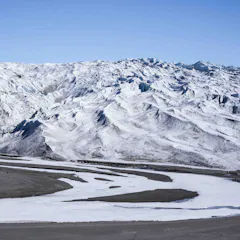
The Earth has had at least five major ice ages, and humans showed up in time for the most recent one. In fact, we’re still in it.

Ukrainian families’ anguish at not being able to bury their loved ones underscores a deep human need, an anthropologist writes.
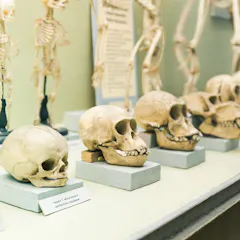
We’ll probably be less aggressive and more agreeable, but have smaller brains – a bit like a Golden Retriever, we’ll be friendly, but maybe not that interesting or bright.
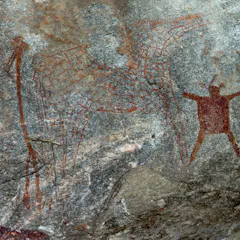
A new study doubles the age of ancient DNA in sub-Saharan Africa, revealing how people moved, mingled and had children together over the last 50,000 years.

Human tracks registered in aeolianites - cemented dune surfaces - are rare at a global level.
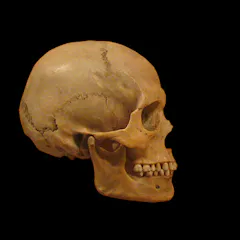
What looks like a bright, sharp dividing line between humans and other animals is really an artefact of extinction.
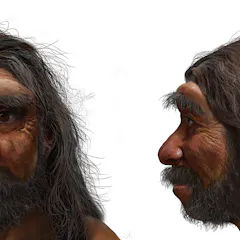
A new analysis of a ‘lost’ skull rewrites the recent family tree of the human species, showing our closest relatives lived in China.
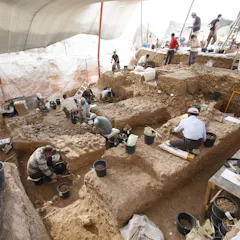
The 140,000-year-old skull fossils are leading to more questions than answers. Also found was the oldest intact campfire ever found in the open air.

Our research has also uncovered major long-term changes in ancient animal populations at Denisova Cave, and has provided the first direct evidence of Homo sapiens having lived there.
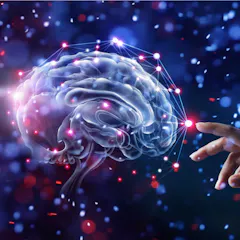
We studied people’s brains while they held tools correctly and incorrectly.
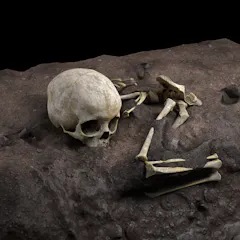
Burials seem to have been uncommon in Africa some 80,000 years ago, although they were widespread in Eurasia.

Our biggest evolutionary advantages are an ability to walk on two legs and our big brains.
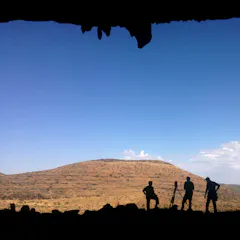
Researchers unearthed the 105,000-year-old artefacts from a spiritual site in southern Africa. Although far from the coast, the area is associated with stories of a great water snake.

The ancestors of modern-day people living on Southeast Asian islands likely interbred with a prehistoric species called Denisovans - raising the possibility of fresh and intriguing fossil discoveries.
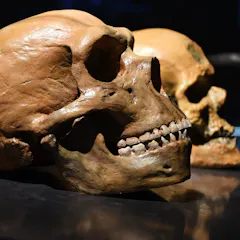
Neanderthal-human hybrid brains grown in the lab give fascinating insights into evolution.

A war with Neanderthals makes a compelling narrative but the evidence is limited is best.
Top contributors
-

Research Associate, African Centre for Coastal Palaeoscience, Nelson Mandela University
-
Honorary Associate Professor, UNSW
-
Senior Lecturer in Paleontology and Evolutionary Biology, Life Sciences at the University of Bath, University of Bath
-
Associate Professor of Archaeology, Griffith University
-
Archéologue et chercheur au CNRS, Auteurs historiques The Conversation France; Université de Toulouse
-
Director, ARC Centre of Excellence for Australian Biodiversity and Heritage (CABAH), University of Wollongong
-
Professor of Archaeology and Biological Anthropology, School of Social Science, The University of Queensland
-
Senior Research Associate in Translational Genomics, University of Oxford
-
Associate professor in Vertebrate Palaeontology, University of the Witwatersrand
-
Professor in Geochronology and Geochemistry, Southern Cross University
-
Professor of Earth System Science, UCL
-
Associate Professor of Anthropology, Binghamton University, State University of New York
-
Researcher, Centre for Archeological Science, University of Wollongong
-
Emeritus Professor, University of Cape Town
-
Professor of Evolutionary Studies, Professor of African Prehistory, University of Bergen