
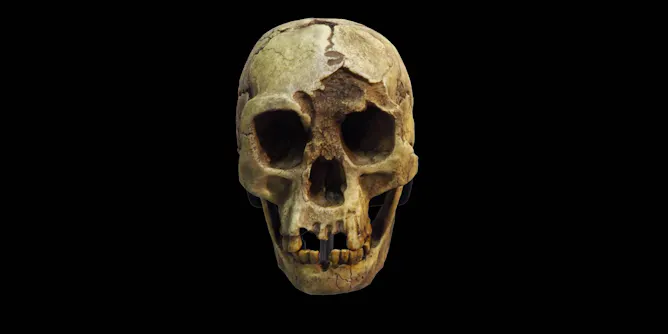
For a million years, one of humanity’s last cousins lived on an island in Indonesia. Why did they disappear?
Articles on Homo floresiensis
Displaying all articles
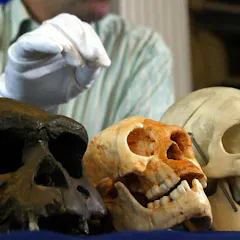
New research on the size relationship between brains and wisdom teeth suggests that bigger brains aren’t necessarily the driving force in human evolution.

New 700,000-year-old fossils from island east of Bali hint at ancient shrinking of extinct miniature humans.
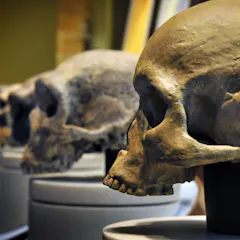
Ancient DNA helps reveal the tangled branches of the human family tree. Not only did our ancestors live alongside other human species, they mated with them, too.

The ancestors of modern-day people living on Southeast Asian islands likely interbred with a prehistoric species called Denisovans - raising the possibility of fresh and intriguing fossil discoveries.
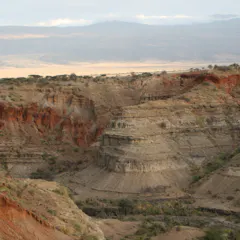
20 years ago, who could predict how much more researchers would know today about the human past – let alone what they could learn from a thimble of dirt, a scrape of dental plaque, or satellites in space.

300,000 years ago, there were lots of different species of human. Now it’s only us – and we’re probably the reason why.

New research models how the Homo floresiensis species could have evolved its small size remarkably quickly while living on an isolated island.

Modern day people of short stature became physically small due to the effects of living on a small island or forested environment. But we’re not sure why “the Hobbit” of Flores was so small.

Humans butchered a rhino in a remote part of the Philippines 700,000 years ago, but who were they and how did they get there?

New research on Indonesian fossils reveals clues to an ancient expansion out of Africa.
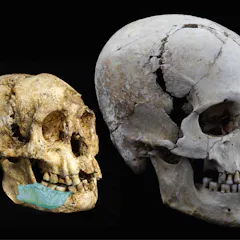
Fossil finds on another dig on an Indonesian Island show the Hobbits may have been around for much longer than first thought.
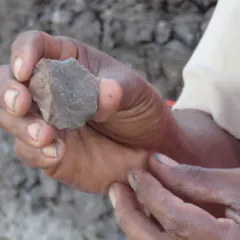
New fossil finds show the first large-bodied inhabitants of an isolated Indonesian island evolved to Hobbit-size, but they always remembered how to make and use stone tools.
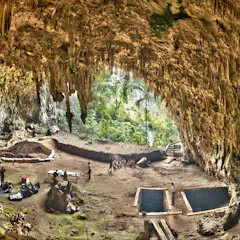
New excavations at an Indonesian cave have pushed back the time the ‘hobbits’ disappeared to about 50,000 years ago.

Claims that bones found in an Indonesian cave are not the remains of a new species of extinct hominin but more likely modern humans suffering from a chromosomal disorder have been disputed by a new look…
Top contributors
-

Researcher in Palaeontology, University of Wollongong
-
Professor of Archaeology, Griffith University
-
Professor of Archaeology and Biological Anthropology, School of Social Science, The University of Queensland
-
Associate Professor of Anthropology, Kansas State University
-
Professor in Archaeology, University of New England
-
Researcher, Centre for Archeological Science, University of Wollongong
-
Honorary Professor, Palaeoclimate, University of Wollongong; The University of Queensland
-
Research Fellow, Palaeoclimate, Maynooth University
-
Canada Research Chair in Human Origins, Lakehead University
-
Director, ARC Centre of Excellence for Australian Biodiversity and Heritage (CABAH), University of Wollongong
-
Researcher in Palaeontology, Bandung Institute of Technology, Institut Teknologi Bandung
-
Associate Professor of Anthropology, Rice University
-
Research associate, Adelaide University
-
Adjunct professor, University of Technology Sydney
-
Professor at the Lewis-Sigler Institute for Integrative Genomics, Princeton University