
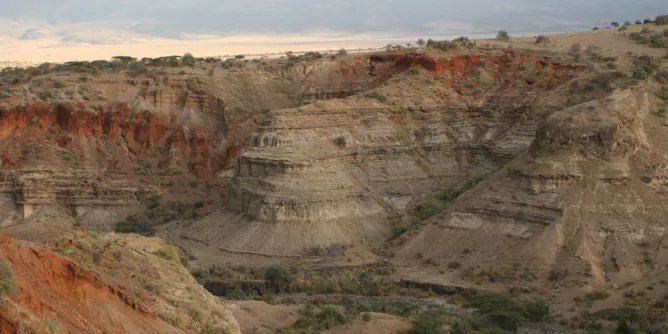
20 years ago, who could predict how much more researchers would know today about the human past – let alone what they could learn from a thimble of dirt, a scrape of dental plaque, or satellites in space.
Articles on Hominins
Displaying 41 - 53 of 53 articles

Given that we know humans moved across these landscapes, we wondered whether there might also be evidence of other forms of human activity on these surfaces of sand.
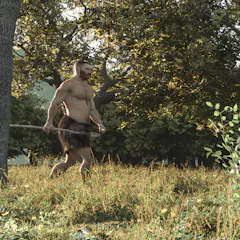
New research suggests humans spread to Europe at least 50,000 years earlier than previously thought.
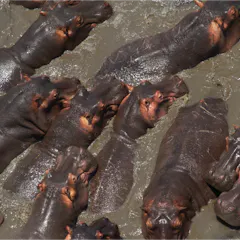
Long-standing assumption that humans killed large mammals 4.5m years ago has been debunked by researchers – but some experts still think humans played a part in the demise of biodiversity

New studies reveal when the Denisovans and their Neanderthal cousins occupied a cave in southern Siberia. It’s the only site known to have been inhabited by them and by modern humans.

Ancient stone tools found in what is now Algeria show early humans likely spread across Africa more rapidly than first thought.

South Africa’s fossils can step out of the shadows of being undated and undateable.

New discoveries are changing archaeologists’ ideas about the origins of our own species and our migration out of Africa. This fossil pushes Homo sapiens’ African exodus date back by 50,000 years.
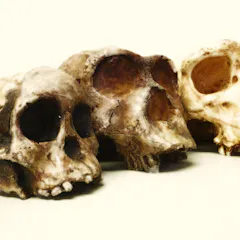
Recent research suggests that humankind’s origins lay outside of Africa. This is the nature of science: a paradigm that cannot be questioned on a regular basis becomes a dogma.
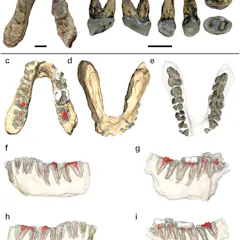
The theory that humankind originated in Europe is an old one. It was abandoned in 1924 when the first Australopithecus was discovered in South Africa.
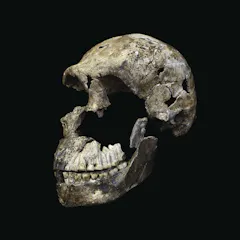
Evidence of Homo naledi’s age suggests we need to rethink our understanding of human history and evolution.
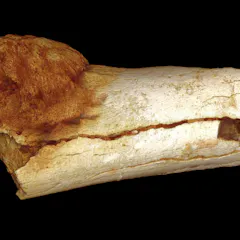
Cancer is a deadly disease and would have been particularly lethal before the recent development of effective treatments. So why didn’t it – or our susceptibility to it – die out long ago?
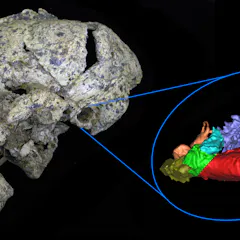
Beyond the cool factor of figuring out hominin hearing capacities two million years ago, these findings could help answer the tantalizing question of when did human vocalized language first emerge.
Top contributors
-

Research Associate, African Centre for Coastal Palaeoscience, Nelson Mandela University
-
Professor, Palaeontology, Griffith University
-
Honorary Research Associate, Evolutionary Studies Institute, University of the Witwatersrand
-
Associate professor, University of Cape Town
-
Professor of Archaeology, Griffith University
-
Research Fellow in Biological Anthropology, Monash University
-
Director, Australian Research Centre for Human Evolution, Griffith University
-
Associate professor in Vertebrate Palaeontology, University of the Witwatersrand
-
Senior Research Scientist, National Museums of Kenya
-
Research Scientist and Museum Educator, Smithsonian Institution
-
Associate Professor of Anthropology, Binghamton University, State University of New York
-
Professor, Environmental Futures Research Centre, School of Science, University of Wollongong
-
Researcher in Palaeontology, University of Wollongong
-
Professor of Archaeological Theory and Method, University of Liverpool
-
Curator of Human Evolution of the Cleveland Museum of Natural History and Research Assistant Professor of Anthropology, Stony Brook University (The State University of New York)