Speaking with: Dr. John Gerrard on infectious diseases
The Conversation, CC BY-ND23.2 MB(download)
William Isdale speaks to Dr. John Gerrard about the constant threat of infectious diseases and what we can do to prevent a deadly pandemic from establishing itself in Australia.
Different local or state government laws apply in different parts of the country in Australia, Germany, the US and Mexico.
Reuters/Kimberly White
Understanding laws that govern sex work can be complicated and confusing, especially because laws are not uniform globally, or even within each country.
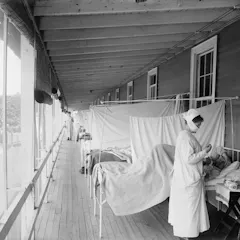
Spanish flu killed more people than the Great War that preceded it. And tuberculosis even more than that.
from www.shutterstock.com.au
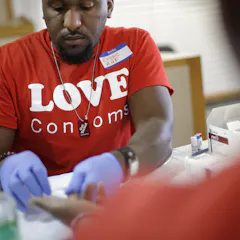
The number of new HIV-positive cases has sharply declined – in most parts of the country. Nonurban areas, particularly in the South, are showing sharp increases. Why?
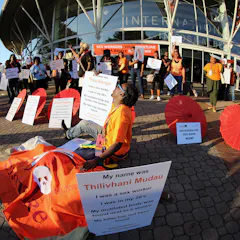
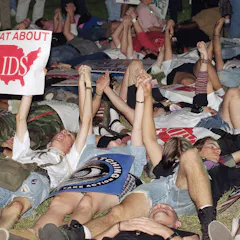
Activists supporting the decriminalisation of sex work at the 21st International AIDS Conference in Durban, South Africa.
International AIDS Society/Abhi Indrarajan
South Africa has launched a plan to tackle HIV, TB and sexually transmitted infections – but much depends on its implementation over the next five years.
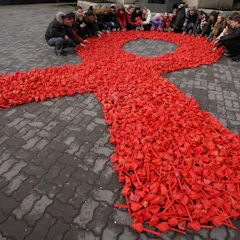
New treatments and prevention programs have inhibited the spread of HIV/AIDS since June 5, 1981, when the CDC first reported what would become HIV. Here’s why it’s important not to cut funding now.
Donald Trump’s first budget request for fiscal year 2018 includes drastic cuts for diplomacy and overseas aid.
Jonathan Ernst/Reuters
In the last decade, the United States has been the leading funder for preparing and responding to global infectious outbreaks, and the delivery of basic health care to low-income countries.
Africa’s scientists are doing remarkable work.
Shutterstock
Africa’s overall contribution to research might be small, but smart people are undertaking smart and important work on and about the continent.
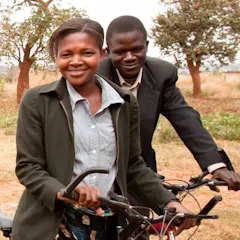
Community health workers like these visit patients’ homes in Malawi to help prevent mother-to-child transmission of HIV.
Baylor College of Medicine Children's Foundation–Malawi/Chris Cox
All recent Republican presidents have cut off foreign aid tied to abortion. Trump’s expansive version of those restrictions endangers billions slated for HIV/AIDS, malaria and other diseases.
For the decolonisation of knowledge to be successful, it must be driven by critical thinking.
Shutterstock
Phrases like “knowledge production” conceal the fact that knowledge answers to something beyond itself and beyond us. To produce knowledge is to find out about something.
US President Donald Trump is threatening drastic cuts in foreign aid.
EPA/Michael Reynolds
Peter Meylakhs, Russian National Research University The Higher School of Economics ; Yadviga Sinyavskaya, Russian National Research University The Higher School of Economics , and Yuri Rykov, Russian National Research University The Higher School of Economics
In Russia, social networks have given a new life to the conspiracy theory that HIV-AIDS is a global hoax.
South Africa might want to consider raising its retirement age to 70 to cope with a challenge of an ageing population that’s under-insured and relying on an already pressured public purse.
Better technology to diagnose, treat and manage the disease early enough is needed to improve the survival rates of childhood cancer in sub Saharan Africa.
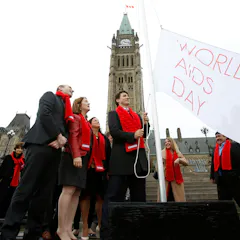
Canada is a pioneer in providing universal, immediate access to treatment for people living with HIV.
Chris Wattie/Reuters
Also known as the Mexico City policy, the rule increases abortion demand and has consequences for a range of other health matters such as HIV/AIDS, cervical cancer and child health and well-being.
Professor of medicine and deputy director of the Desmond Tutu HIV Centre at the Institute of Infectious Disease and Molecular Medicine, University of Cape Town
Distinguished Professor, Infectious Disease and Oncology Research Institute, Faculty of Heath Sciences, University of the Witwatersrand, Executive Director Perinatal HIV Research Unit, Chief Scientific Officer, South African Medical Research Council