

The focus of the 2016 International AIDS Conference has on access to necessary antiretrovirals, equity and making sure no-one is left behind. But there is a funding gap that needs to be addressed.
Articles on International Aids Conference 2016
Displaying 1 - 20 of 36 articles

Studies have suggested that women using a particular kind of injectable contraceptive are more susceptible to HIV infection. Research in mice offers new insights.

Taking antiretrovirals is key to reducing HIV infection rates, but the challenge lies in making sure people who know they are infected actually take the drugs.

Mobility is not only a risk factor for HIV – it is also a structural determinant in how HIV responses are designed and implemented.
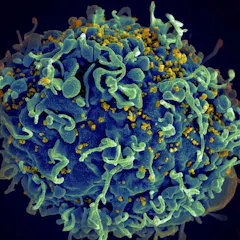
HIV research continues to search for a cure. The focus is on developing therapies to cure HIV infection or allow people with HIV to safely stop antiretroviral therapy and keep the virus under control.
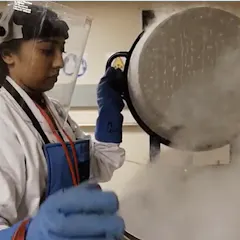
A new centre in South Africa will work to significantly reduce emerging HIV and TB co-infections.

Three new studies conducted in South Africa provide insights into the engine that drives HIV transmission in the country.

The International AIDS Conference is more than just a talk shop. The platform it offers for engagement between governments, scientists and civil society is of undisputable value.

Chikwe Ihekweazu relives his experience from 2000, when the International AIDS Conference was last hosted in South Africa.

Activists, health-care workers and scientists in South Africa were faced with a horrific epidemic but went on a ruthless crusade to turn it around.

The 90-90-90 strategy is an attempt to get the HIV epidemic under control by adopting a ‘test and treat’ approach. This is part of the plan to eliminate AIDS by 2030.

The brain function of HIV-positive women who experienced childhood trauma is more compromised than that of women who are only HIV positive.

Mental health problems need to be addressed to control the HIV epidemic, but such treatment is not yet part of the HIV care package in sub-Saharan Africa.

Creating HIV services at primary health-care centres in Nigeria may improve the uptake of antiretrovirals, but it won’t tackle the issue of stigma.

In South Africa, female sex workers go for HIV tests, receive counselling and use condoms – but don’t access antiretroviral treatments. More options are now available and can change this.

Understanding what causes diseases is a life-and-death matter. It is a complicated issue that has generated a great deal of debate in the medical community.

In countries such as South Africa with a high burden of TB and HIV, vitamin D could be an extremely effective and cheap weapon to include in the arsenal against TB and HIV.
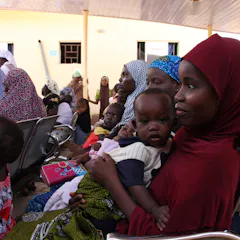
Antiretroviral treatment has been free at Nigeria’s health facilities. But the other costs involved for those living with HIV, such as transport and food, have been problematic.

If the vaginal ring becomes available for commercial use it will become one of the tools in the HIV prevention toolbox for women alongside female condoms and daily pre-exposure prophylaxis.
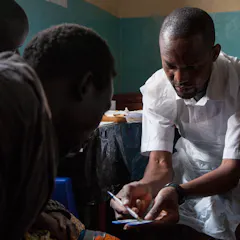
In sub-Saharan Africa more women may be infected with HIV than men - but men are more likely to die because of poor testing and treatment regimes.
Top contributors
-

Professor of Global Health and Director, O'Neill Institute, Georgetown University
-
Associate Professor and Director: Research at the Wits Reproductive Health and HIV Institute I, University of the Witwatersrand
-
Professor of Epidemiology and Public Health, University of Malawi
-
Director of the Africa Centre for Population Health and Professor of Virology, University of KwaZulu-Natal
-
Professor of Health Economics and Policy and Pharmaco-economics/pharmaco-epidemiology in the Departments of Health Administration & Management and Pharmacology and Therapeutics, College of Medicine, University of Nigeria
-
Distinguished Professor, Infectious Disease and Oncology Research Institute, Faculty of Heath Sciences, University of the Witwatersrand, Executive Director Perinatal HIV Research Unit, Chief Scientific Officer, South African Medical Research Council
-
Associate Professor in Medical and Health Humanities, University of Cape Town
-
Lecurer, Department of Psychology, University of Cape Town
-
Senior Research Scientist, African Population and Health Research Center
-
Senior Honorary Lecturer on Infectious Diseases, UCL
-
Honorary Senior Lecturer, School of Public Health, University of Cape Town
-
Associate Professor of Otolaryngology, The Ohio State University
-
Clinical Research Fellow, The Peter Doherty Institute for Infection and Immunity
-
Director: Clinical Trials, Wits Reproductive Health and HIV Institute, University of the Witwatersrand
-
Director of Implementation Science, Wits Reproductive Health & HIV Institute, University of the Witwatersrand