

Effective treatment means people with HIV can live long lives and cannot sexually transmit the virus when undetectable, yet stigma persists.
Articles on Antiretroviral therapy
Displaying 1 - 20 of 61 articles
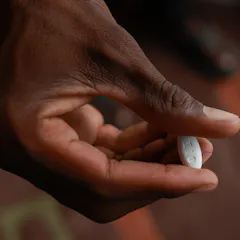
By integrating HIV care with non-communicable disease prevention and care, healthcare systems can help people living with HIV remain healthy.

Ageing with HIV is now a global public health reality, especially in sub-Saharan Africa, and the response must evolve to reflect that.

Finding a cure for HIV is hard, because it locks into an individual’s DNA.
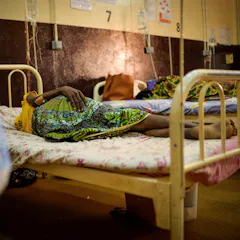
Each life lost to Aids is a life too many. As donor funds dry up, Africa needs new ways to fight this epidemic.
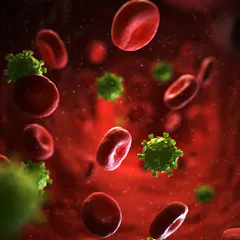
A significant number of older adults in rural South Africa are HIV-positive. Awareness programmes and self-testing would reduce cases.

Some children of HIV-positive parents drop out of school to look after their mothers and fathers. Others skip class to earn cash for the family by selling goods.

The vulnerability of migrants was highlighted during the COVID-19 pandemic when restrictions affected people’s ability to travel to access treatment.

The US PEPFAR initiative has brought HIV medication to millions of people globally. Behind this progress are the activists that pressured politicians and companies to put patients over patents.
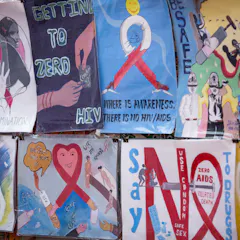
Dec. 1 marks World AIDS Day. Canada has the tools and means to end the epidemic. The question remains, are we up to the task?

The benefit of an injectable product is that it avoids the adherence issues related to taking a pill daily.
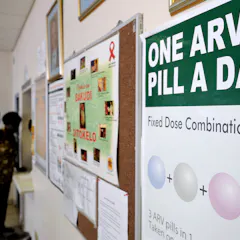
When antiretroviral therapy is working effectively, HIV cannot be transmitted. This allows people with HIV to live fuller lives without the fear of infecting others.

Antiretroviral therapies for HIV, while extremely effective, need to be taken daily for life. Designing antibody treatments that need to be taken only once could improve compliance and reduce drug resistance.
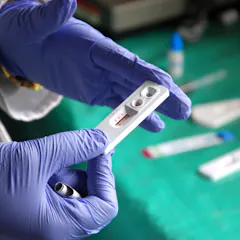
Patients with low HIV viral loads are just as likely to harbour HIV variants with drug resistance mutations as those with high viral loads.

The omission of growing evidence that Māori, and Māori women in particular, have worse health outcomes after HIV infection could derail New Zealand’s elimination plans and exacerbate disparities.

We expected to find that screening everybody for TB would identify individuals not yet diagnosed, and treating them quickly would reduce the prevalence of TB in the community.

Unless special attention is given to conflict and HIV the war will undermine the achievement of the 2030 goals to end AIDS, discrimination, and new infections.
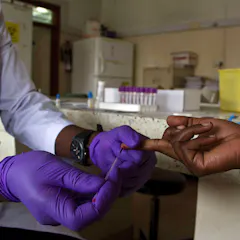
HIV services must be comprehensive to ensure that people take their medication as prescribed and avoid onward transmission of the virus.
Even before the advent of COVID-19, donors had begun to exit HIV programmes with increasing frequency.

It is urgent and overdue to implement PrEP in pregnancy and during breastfeeding. Failure to do so allows ongoing avoidable HIV infection among women in South Africa and their infants.

People with HIV need to take daily medication to keep the virus at bay. A study has found that a new treatment combination could boost immunity and control virus levels even after stopping medication.
Top contributors
-

Professor: Health and Population Division, School of Public Health, University of the Witwatersrand
-
Professor of medicine and deputy director of the Desmond Tutu HIV Centre at the Institute of Infectious Disease and Molecular Medicine, University of Cape Town
-
Senior lecturer in Paediatrics and Child Health, Stellenbosch University
-
Honorary Research Associate, Centre for Infectious Disease Epidemiology and Research, University of Cape Town
-
Health Systems Researcher, Makerere University
-
Research Manager at MRC/Wits Agincourt Research Unit, University of the Witwatersrand
-
University of the Witwatersrand
-
Associate Professor (Reader), Wits School of Public Health, University of the Witwatersrand
-
Assistant Professor, Africa Health Research Institute (AHRI)
-
Assistant Professor, Family Health Care Nursing, University of California, San Francisco
-
Doctoral Researcher, School of Public Health and Public Health Technical Advisor, Anova Health Institute, University of the Witwatersrand
-
Associate Professor and Director of the Centre for Infectious Diseases Epidemiology and Research, University of Cape Town
-
Assistant Professor, Harvard University
-
Head: Cell Biology, Centre for HIV and STIs, National Institute for Communicable Diseases
-
Public Health Medicine Specialist, University of the Witwatersrand