

A landmark report has clearly attributed the June heat wave in Canada to climate change. The lessons from this report can help inform climate policy in a changing Canada.
Articles on Heat wave
Displaying 41 - 60 of 225 articles
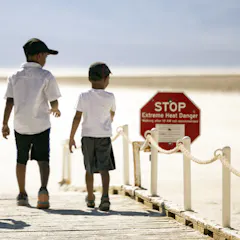
Global temperatures have averaged at least 1.5 degrees Celsius warmer than preindustrial times for over a year. Two scientists explain what that means and what humanity can do.

The June heat wave triggered warnings of a flash drought and caused a surge in ER visits. Many other countries have been facing extreme heat at the same time.

Hot temperatures can be dangerous for anyone – regardless of your age or what health conditions you have.

The heat comes from everywhere when you’re active outside on hot days – the Sun’s rays, the air around you, the ground and even your own body.

The answer depends in part on where you live. If it’s extremely hot and humid, the health risks are much higher.
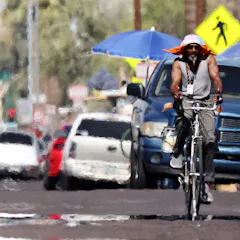
A risk expert explains how to read the heat index and interpret extreme heat warnings, and how to stay safe.
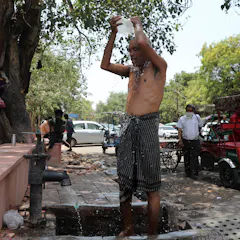
A record-breaking heatwave hit Delhi this week, hot on the heels of heat in Asia and Africa. Australians take note, we are not safe here. We need to prepare for heat to hit us just as hard.

Extreme heat will continue to affect Canada, but the negative impacts on the most vulnerable, including those living with mental illness, can be reduced by taking steps to ensure healthier cities.

Older adults face greater health risks from extreme heat for several reasons, including their medications..

Global climates are changing and the world is rapidly warming. Canada’s labour laws must keep pace with the rate of change to protect workers.

Practices such as redlining left marginalized groups in more disaster-prone areas with poorer quality infrastructure − and more likely to experience prolonged power outages.
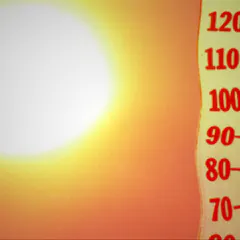
Ghana is experiencing record high temperatures and rainfall patterns have become inconsistent.

About 60% of the human body is made up of water. Excessive water loss can be fatal.
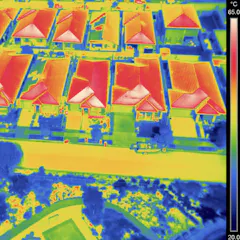
Western Sydney residents whose homes often get hotter inside than outside during heatwaves have learnt to be resourceful in adapting to the increasing heat.
The strong El Niño that started in 2023 will still have big impacts at least through March. Here’s what to watch for next.

Canada, and particularly the Canadian Arctic, is warming at a considerably higher rate than the global average. The consequences for Canada could be devastating.
An atmospheric scientist explains how rising temperatures are helping to fuel extreme storms, floods, droughts and devastating wildfires.
The US saw a record number of billion-dollar disasters in 2023, even when accounting for inflation. The number of long-running heat waves like the Southwest experienced is also rising.
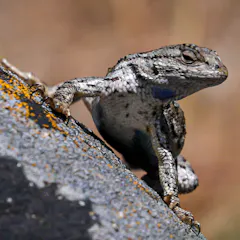
From dark dragonflies becoming paler to plants flowering earlier, some species are slowly evolving with the climate. Evolutionary biologists explain why few will evolve fast enough.
Top contributors
-

Professor of Geology and Environmental Geosciences, University of Dayton
-
Deputy Director, Engagement and Impact, The ARC Centre of Excellence for the Weather of the 21st Century, Australian National University
-
Distinguished Scholar, National Center for Atmospheric Research; Affiliate Faculty, University of Auckland, Waipapa Taumata Rau
-
Honorary Associate Professor in Environmental Health, Australian National University
-
Professor of Atmospheric Science, Colorado State University
-
Professor of Climate Science, UMass Lowell
-
Professor of Physical Geography, University of the Witwatersrand
-
Assistant Professor of Architecture, University at Buffalo
-
Senior Lecturer of Physical Geography and GIS, University of the Free State
-
Climate scientist, Australian Bureau of Meteorology
-
ARC DECRA Fellow, UNSW
-
Climate Scientist, Australian Bureau of Meteorology
-
Associate Professor of Civil Engineering, Boise State University; United Nations University
-
ARC Future Fellow and Associate Professor in Climate Science, ARC Centre of Excellence for 21st Century Weather, The University of Melbourne
-
Climate Scientist, Australian Bureau of Meteorology