
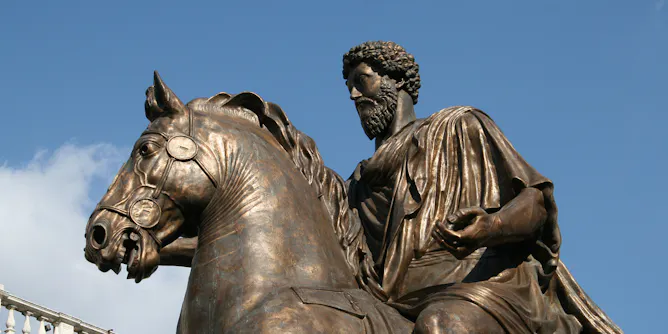
The Meditations, by Stoic philosopher Marcus Aurelius, has been described as an ageless, secular gospel. Written in a time of pandemic, it speaks powerfully to us today.
Articles on Guide to the Classics
Displaying 61 - 80 of 108 articles

H. G. Wells helped pioneer science fiction with his 1898 book The War of the Worlds. Many iterations later, it still scares and fascinates us.
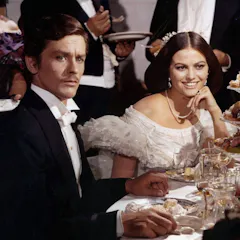
The Leopard (Il Gattopardo) has been regarded as a classic of European literature since soon after its publication in 1958. It recounts the decline and fall of Sicily’s aristocracy.

What would happen if plague destroyed all of humanity? Mary Shelley’s 1826 book suggests Earth would be better off.

Camus’ The Plague is an uncannily prescient description of the world of COVID-19, giving us reasons for reflection, and finally for hope.
The oldest surviving novel in Latin literature, Satyricon follows three young men on their misadventures and homosexual love triangle.
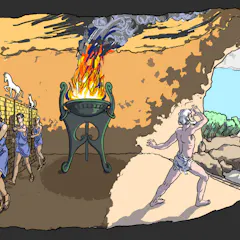
Plato’s Republic is one of the most influential books in history. It has been claimed by people on all sides of the political spectrum and continues to resonate today.

The protagonist of Calvino’s novel takes to the trees in a fit of adolescent rebellion and never comes down. Yet from his self-imposed isolation he remains enviably connected and committed to his community.

Status anxiety and conspicuous consumption generate a dazzling, often surreal poetry in F. Scott Fitzgerald’s The Great Gatsby. But Gatsby’s rise and fall exposes deep fissures underlying the American Dream.
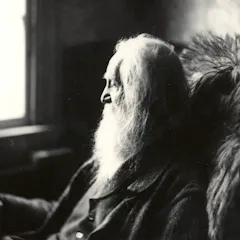
Walt Whitman is perhaps America’s most admired poet. His work, now praised for its themes of equality and democracy, was once shunned for its experimental verse and discussion of sexuality.

George Orwell’s dystopian classic can tell us a lot about contemporary politics and power, from Donald Trump to Facebook.
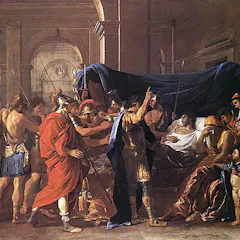
Tacitus’ Annals is a powerful and darkly humorous examination of imperial Rome. Though his work was little read in the Roman world, it has influenced great thinkers such as Hobbes and Montesquieu.
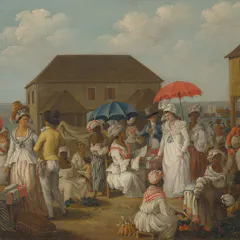
Jean Rhys’s prequel to Jane Eyre explores the monstrous figure of Rochester’s mad wife Bertha, prompting readers to think about the racialised legacies of colonialism.
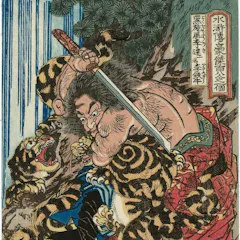
In The Water Margin, first put to paper in the 14th century, local injustice is the rule, and defence against cruel local authority is a matter of vengeance, stratagem, and violence
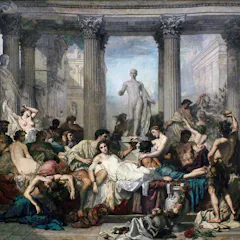
Juvenal wrote 16 satires, divided into five books, each with their own target from decadent aristocrats to Egyptian cannibals.
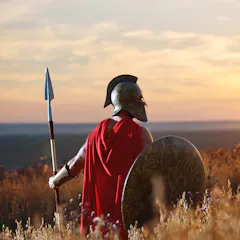
From about age seven, Spartan children learned to fight and practise obeying orders. They also staged pretend battles. Boys and girls were trained separately.
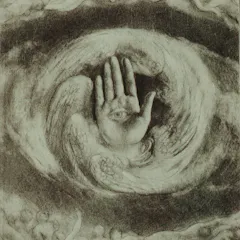
After Shakespeare and Laozi, Kahlil Gibran is the highest selling poet ever, largely thanks to The Prophet, a set of 26 prose poems.
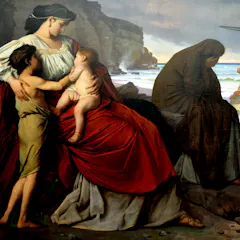
Euripides’ dismissal by some as a misogynist sits uncomfortably alongside his complex and sympathetic female characters.
Across her long career, Dobson was celebrated as a poet who could take the reader beyond the immediate image to another insight.

A lack of respect for history, a population conditioned to consume goods at breakneck pace, and pacification of individuals via an entertainment culture: parts of Huxley’s novel strikingly resemble our own world.
Top contributors
-

Lecturer in Politics and International Relations, University of Sydney
-
Professor in Philosophy, Australian Catholic University
-
Emeritus Professor of Classics, La Trobe University
-
Professor, Department of Classics and Ancient History, University of Sydney
-
Lecturer in Literary Studies, Monash University
-
Professor of Classics and Head of the Centre for Classical Studies, Australian National University
-
Associate Professor, English and Creative Writing, Edith Cowan University
-
Senior Lecturer in English, University of Sydney
-
Lecturer, the School of Liberal Arts, The University of Wollongong, University of Wollongong
-
Associate Professor in Chinese Studies, University of Sydney
-
Honorary Professor of Classics and Ancient History, School of Historical and Philosophical Inquiry, The University of Queensland
-
Associate Professor in Writing Studies, Discipline of English and Writing, University of Sydney
-
Honorary Associate, Classics and Ancient History, La Trobe University
-
Professor, School of Culture and Communication, The University of Melbourne
-
Senior Lecturer in English, UNSW