

Human beings have always turned to oracles and divination for answers to difficult questions. Today, AI might be fulfilling that role.
Articles on Ancient Greece
Displaying 1 - 20 of 247 articles
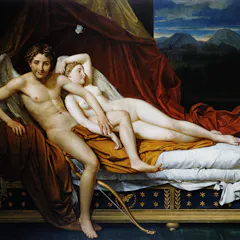
Modern societies, argues Michel Foucault, think and talk about sex far more than their forebears ever did. But this has not been liberating.

Concerns about the effect of social media on young minds mirror fears in ancient times around the way heightened drama affected audiences of public theatre.
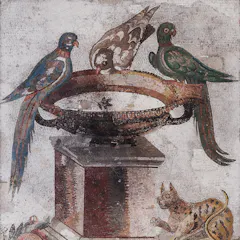
Greek and Roman writers were already asking how birds became sick, what signs to look for, and what could be done when disease appeared in them.

Authorities in Greek and Roman times tried hard to put limits on gambling. They weren’t particularly successful.
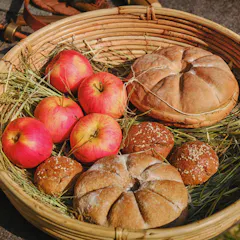
The ancients ate mountains of bread and cheese, but you’d never know from today’s version of the Mediterranean diet.
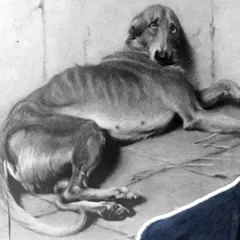
The bonds between humans and animals are richly represented in both literature and visual arts throughout ancient Greek culture.
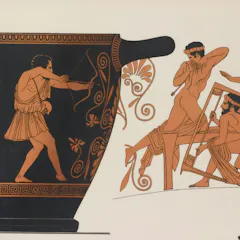
When the Odyssey first began to circulate in ancient Greece, no one knew its author. So how did ‘Homer’ become the name on the book’s cover?
The magic flower is used by the nymph Calypso to purge Odysseus’ trauma.
The Sea Peoples are widely blamed for the collapse of the interconnected world of the Bronze Age. But what’s the evidence say?
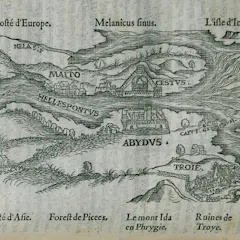
Control of the Dardanelles and the Bosphorus strait was life and death for ancient Athens. Waterways are no less important – and contentious – today.
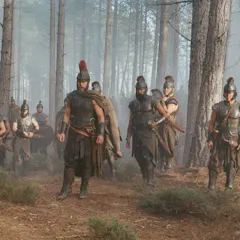
The Greeks didn’t locate their deep past in far-off fantasy lands. These stories happened in places all around them.
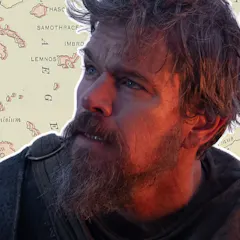
Attempts to transpose the locations of The Odyssey accurately to modern maps have proved difficult.
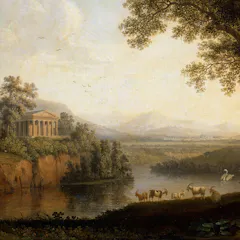
Until recently, it was impossible to directly assess the diet and mobility of ancient Greek animals and settle this debate.
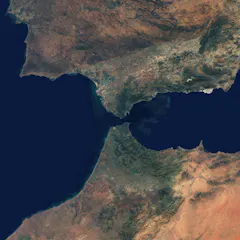
New research shows northwest African communities actively shaped connections and exchange between many cultures.

Among the Romans, fathers had complete legal control over their sons and daughters. This included the right to inflict capital punishment.
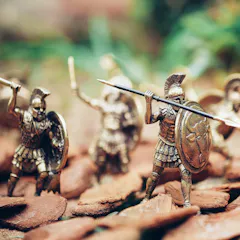
The Theban Sacred Band – made up of ‘lovers and their loves’ came to be known for their strength, discipline, and ferocity.
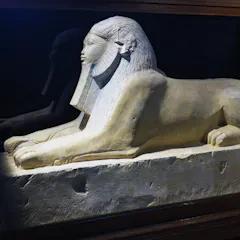
There is evidence of people who crossed gender boundaries even in ancient civilizations, though the terms naming them have evolved over time.
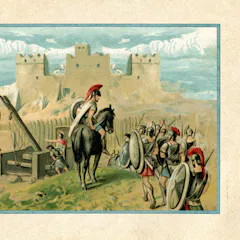
What did Thucydides really say on this? And what’s Athens and Sparta got to do with the current state of US-China relations?

What should we call the words that this ultramodern technology produces? For clues, a professor looks to some of the world’s earliest authors.
Top contributors
-

Lecturer in Classics and Ancient History, The University of Western Australia
-
Emeritus Professor of Classics, La Trobe University
-
Professor of Classical Studies, Brandeis University
-
Honorary Professor of Classics and Ancient History, School of Historical and Philosophical Inquiry, The University of Queensland
-
Professor, Department of Classics and Ancient History, University of Sydney
-
Associate Professor of Greek History, The University of Queensland
-
Paul Eliadis Chair of Classics and Ancient History, The University of Queensland
-
Professor of Political Science, Macalester College
-
Associate Professor in Ancient History, Macquarie University
-
Professor in Philosophy, Australian Catholic University
-
Professor of Law, Wayne State University
-
Professeur d'histoire ancienne, Université de Lorraine
-
Research Scholar, Classics and History and Philosophy of Science, Stanford University
-
Senior lecturer, UNSW
-
Associate Professor of Classics, University of Winnipeg