
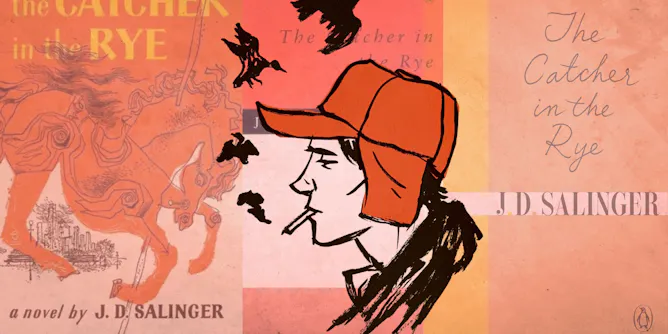
The rebellious teen narrating J.D. Salinger’s classic novel of arrested development still speaks to us. But should we be listening?
Articles on American literature
Displaying 1 - 20 of 66 articles

Emily St John Mandel’s new novel presents divergent visions of our world and future – particularly of the US as a state at a crossroads.

By providing a more expansive ‘Little House’ world, the show respects Wilder’s writing while redressing racist depictions.
Ray Carney is back in the concluding chapter of the Harlem Trilogy, and finally trying to kick his criminal side hustle.

Charles Brockden Brown’s work addressed the violence, psychological torment and corruption that Americans faced in urban centres and along the frontier.

East of Eden offers a melodramatic conflict between good and evil, but more remarkable is its sense of human relations evolving, shaped by destiny and choice.
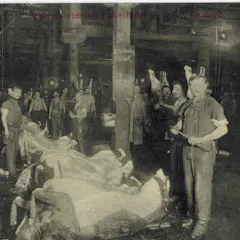
Upton Sinclair’s The Jungle, which exposed hazardous working conditions in Chicago’s meatpacking plants, first appeared serially in a socialist newspaper before being published as a novel.
Vigil shies away from elaborating on the perils of its subjects: late capitalism and the climate apocalypse.

Infinite Jest is a kind of geological cross-section of a writer and a literary culture at a moment of major upheaval.
With Shadow Ticket, Pynchon reminds us the line between chaos and order, corruption and truth, remains as thin, porous and perilous as ever.

What can a grisly meth-fuelled murder in northern Minnesota’s Iron Range tell us about post-industrial decline and the malaise of contemporary America?

Vineland is set in Reagan’s America: an era of conservative backlash and retreat from progressive ideals. Paul Thomas Anderson’s adaptation reflects similar trends now.
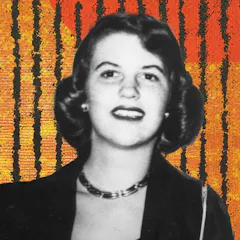
Sylvia Plath’s writing was witty, political, emotional and sharp. A substantial new collection includes more than 50 previously unpublished stories.

‘Frankly, I think the whole society is nuts,’ Joseph Heller once said – ‘and the question is: What does a sane man do in an insane society?’

‘Gentleman’s Agreement,’ a novel by Laura Z. Hobson, was considered groundbreaking for its depiction of everyday prejudice.
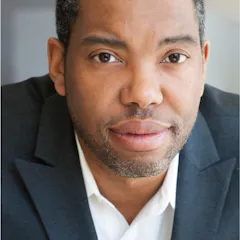
Ta-Nehisi Coates said going to Palestine, shortly before the Hamas attacks, was ‘a huge shock’ – and he felt a responsibility to yell about what he saw there. In The Message, he does just that.

At the heart of Erdrich’s novel is the centrality of family and the way unhappiness itself can be deeply political.

Richard Powers has a gift for making complexity feel majestic rather than overwhelming.

Julia Phillips’s second novel plays in the slippages between fantasy and the realities that constrain the lives of working-class people.
Poets take us outside ourselves. In their transmission of atypical experiences, they teach us empathy and compassion.
Top contributors
-

Lecturer in English Literature, Adelaide University
-
Lecturer in Literary Studies, Monash University
-
Professor of English, Institute for Humanities and Social Sciences, ACU, Australian Catholic University
-
Senior Lecturer, Discipline of English and Writing, University of Sydney
-
Senior Lecturer, Writing, Department of Media and Communication, Swinburne University of Technology
-
Jury Professor of English and Language and Literature, Adelaide University
-
Senior Lecturer in American Literature and Film, Loughborough University
-
Professor of Contemporary Literature, University of Reading
-
Professor of History and American Studies, Cornell University
-
Professor of Philosophy and Intellectual History
-
Lecturer in English Literature, Bath Spa University
-
Professor in English Literature, University of Essex
-
Senior Lecturer, University of Aberdeen
-
Senior Lecturer, School of Arts & Humanities, Nottingham Trent University
-
Senior Lecturer in Twentieth-Century Literature and Culture, Newcastle University