
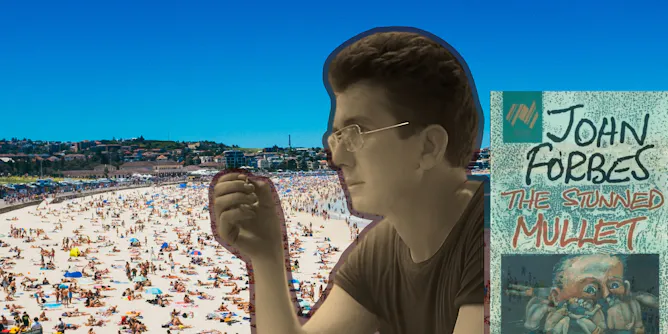
David Malouf declared John Forbes ‘the most elegant and inventive poet’ of his
generation.
Articles on Guide to the Classics
Displaying 1 - 20 of 107 articles

Charles Brockden Brown’s work addressed the violence, psychological torment and corruption that Americans faced in urban centres and along the frontier.
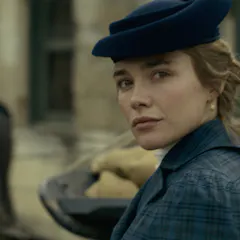
East of Eden offers a melodramatic conflict between good and evil, but more remarkable is its sense of human relations evolving, shaped by destiny and choice.

Sigmund Freud’s 800-page book on dreams introduced a new way of thinking about the mind that reverberated through the 20th century.
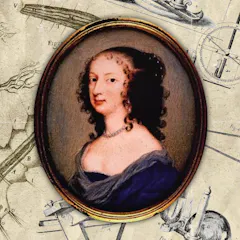
The Blazing World is an amazing vision which ends as bewilderingly as it begins, making the reader’s head spin.
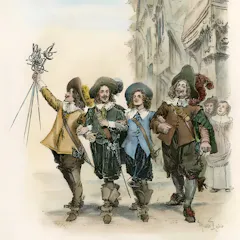
Alexandre Dumas’ classic novel suggests solidarity is possible, but only under conditions of risk and mutual obligation.
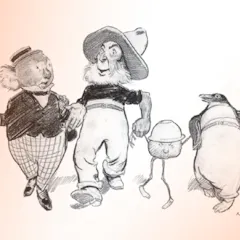
The Australian way of life displayed in The Magic Pudding revolves around the life of the belly, not the life of the mind.
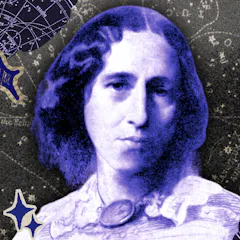
George Eliot saw literature as uniquely capable of extending our sympathies, but her work engaged deeply with scientific questions too.
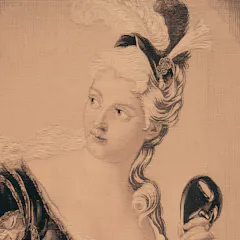
First published in 1725, Fantomina tells of a woman who adopts disguises to keep her lover’s attention. While avoiding moralism, it skirts questions of consent.

The ‘vile’ side of humanity William Golding saw in World War II haunts his famous novel. He later came to dislike the book, dismissing it as ‘boring’ and ‘crude’.

The dire social and political landscape of Sadeq Hedayat’s time contributed to the existential despair and pessimism of his writing.
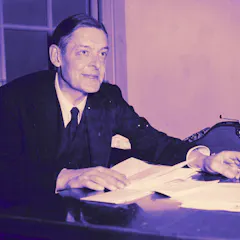
Diagnostic and symptomatic, accusatory and culpable, communal and personal, The Hollow Men is a poem about that which ails society at large.

The Protestant Ethic and the Spirit of Capitalism is neither a history of economics, nor a religious history. It borrows from both, but is stranger than either.
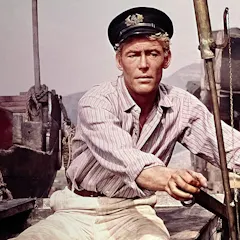
Conrad suggests our sense of being good derives from our belonging – yet that to which we belong is not necessarily good.
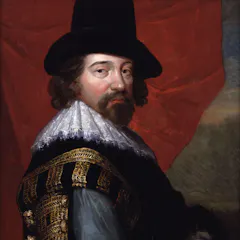
First published in 1625, the British philosopher’s collected essays mix poetic aphorisms with prescient reflections on ‘false news’ and ‘cunning men’.
Food, religious rituals, gender relations … Ibn Battuta described them all in his travelogue, which covered the medieval Islamic world, India, China and beyond.
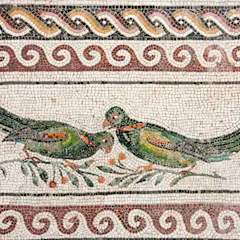
One of the world’s oldest cookbooks, De Re Coquinaria, contains recipes for familiar staples, along with more exotic fare.

‘If the book we are reading doesn’t wake us up with a blow on the head, what are we reading it for?’
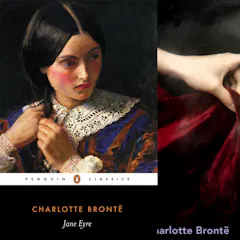
Charlotte Brontë’s first-person masterpiece is a landmark in the novel of interiority, the history of feminism, and the representation of religion and race.
No other classic text has left such a mark on how we tell stories, create theatre, and structure film. But what does it actually say?
Top contributors
-

Lecturer in Politics and International Relations, University of Sydney
-
Professor in Philosophy, Australian Catholic University
-
Professor, Department of Classics and Ancient History, University of Sydney
-
Emeritus Professor of Classics, La Trobe University
-
Lecturer in Literary Studies, Monash University
-
Professor of Classics and Head of the Centre for Classical Studies, Australian National University
-
Senior Lecturer in English, University of Sydney
-
Professor, School of Culture and Communication, The University of Melbourne
-
Associate Professor, English and Creative Writing, Edith Cowan University
-
Lecturer, the School of Liberal Arts, The University of Wollongong, University of Wollongong
-
Associate Professor in Chinese Studies, University of Sydney
-
Associate Professor in Writing Studies, Discipline of English and Writing, University of Sydney
-
Honorary Associate, Classics and Ancient History, La Trobe University
-
Honorary Professor of Classics and Ancient History, School of Historical and Philosophical Inquiry, The University of Queensland
-
Senior Lecturer in English, UNSW