
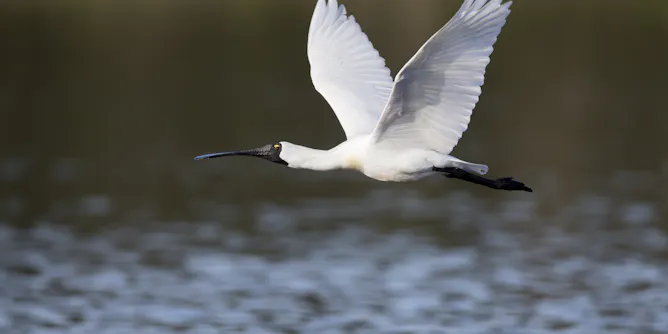
When landscapes change, exotic species take advantage of new habitats. Such a pulse of colonisation coincided with the Ice Age some 2.6 million years ago.
Articles on Glaciers
Displaying 41 - 60 of 164 articles
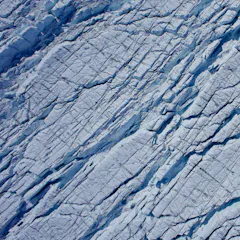
We analysed 8,000 maps and found crevasses are increasing in size and depth.
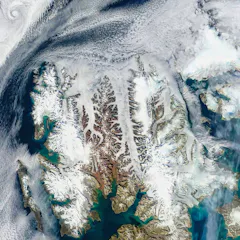
Scientists have tracked decades of glacier retreat in the fast-warming Arctic islands of Svalbard.
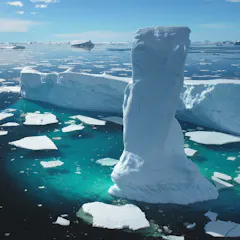
New research shows melting ice is causing the Atlantic Meridional Overturning Circulation (AMOC) to slow down, with widespread consequences for the world’s climate and ecosystems.
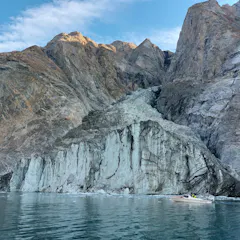
This tsunami, triggered by a melting glacier in Greenland, is a sign of things to come.
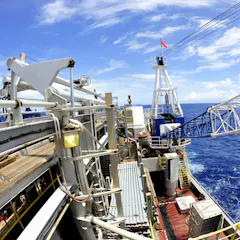
The National Science Foundation says that the JOIDES Resolution has become too costly to fund. But scientists say its $72 million annual budget pales compared with discoveries the ship has enabled.

From ice cores extracted from the Tibetan Plateau, scientists recovered the equivalent of 1,705 virus species. Reading their genomes tells the story of 41,000 years of climate change.
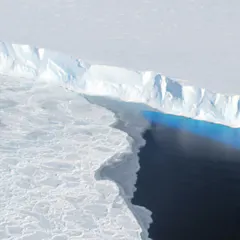
Antarctica’s riskiest glacier is a disaster in slow motion, a polar scientist writes. But in a rare bit of good news, the worst-case scenario may be off the table.
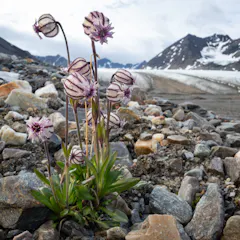
From the Arctic to the Himalayas, New Zealand and even Mexico, glaciers worldwide are retreating. But what happens when the ice is gone?
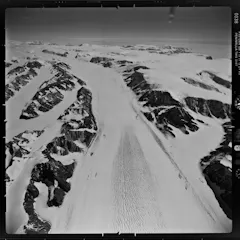
Few observations exist from before the 2002 Larsen B Ice Shelf collapse. We’ve now estimated how many billions of tons of glacier ice were lost – and what it means for the future.
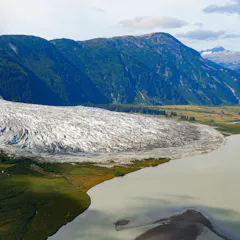
The Juneau Icefield may now keep melting even if global warming stopped.
Understanding the evolution of purple algae could help us to protect glaciers.
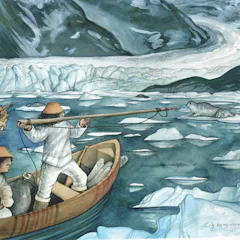
Collaborative research by archaeologists, environmental scientists and tribal elders combines science and Indigenous knowledge to tell the story of centuries of life at a glacier’s edge.
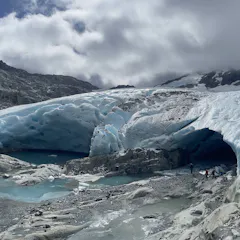
An estimated 13 trillion litres of ice has already been lost from glaciers in New Zealand’s Southern Alps since 1978. Several are now approaching extinction.
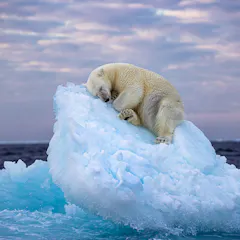
Image of the majestic creatures remain powerful communicators of humanity’s connection with nature.
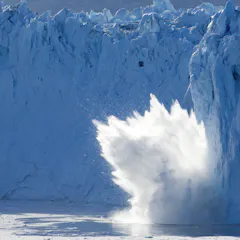
Scientists now have a better understanding of the risks ahead and a new early warning signal to watch for.
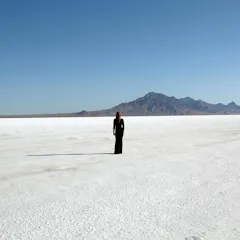
Sarah Nance uses geologic data and a variety of artistic media to help people think about their place in the landscapes they use and occupy.

Pine Island Glacier passed a tipping point decades ago, and it could do again in the future.
The world is on track to exceed 2°C warming within the next five years, with dire consequences for polar ice, mountain glaciers and permafrost – and human society.

If this case succeeds, it could set a precedent to hold major polluters responsible for the effects of climate change – even on the other side of the world.
Top contributors
-

Principal Scientist & Programme Leader of Southern Hemisphere Climates and Environments, National Institute of Water and Atmospheric Research (NIWA)
-
Professor of Glaciology and Earth Observation, University of Bristol
-
Research Fellow, Antarctic Research Centre, Te Herenga Waka — Victoria University of Wellington
-
Professor of Geography, University of Aberdeen
-
Professor of Geography and the Environment, School of Geosciences, University of Aberdeen
-
Harold T. Stearns Professor of Earth Science, Wesleyan University
-
Professor of Glaciology, Newcastle University
-
Research Fellow in Glacial Geomorphology, Monash University
-
Professor of Geography, The Ohio State University
-
Reader, Manchester Metropolitan University
-
Senior Lecturer, Glaciology, University of Portsmouth
-
Climate Scientist, British Antarctic Survey
-
Professor of Earth Sciences, Dartmouth College
-
Distinguished University Professor, Earth Sciences, The Ohio State University
-
PhD Researcher, Aberystwyth University