
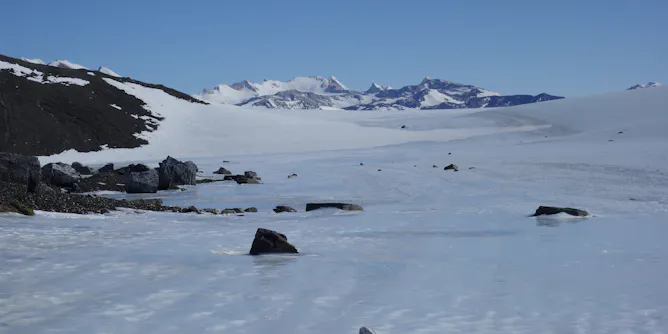
If all glaciers melt, sea level will rise by about 24cm. If the polar ice sheets melt, sea level will rise by more than 65m; almost 300 times more.
Articles on Glaciers
Displaying 21 - 40 of 164 articles
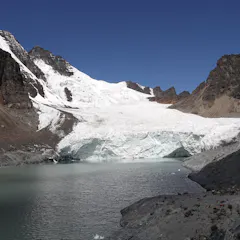
Bolivia is home to nearly a fifth of the world’s tropical glaciers. but they are shrinking at an alarming rate.
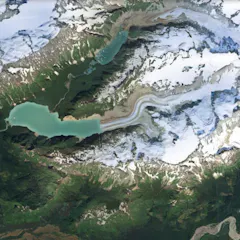
Scientists mapped the evolution of 140 glacial lakes in Alaska and found a way to tell how much larger and destructive they can get as their glaciers melt.
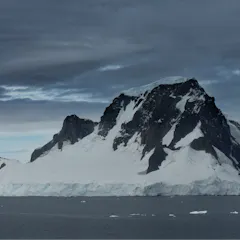
In the Antarctic Peninsula, precipitation is increasingly falling as rain rather than snow, with consequences for glaciers, penguins and even scientists.
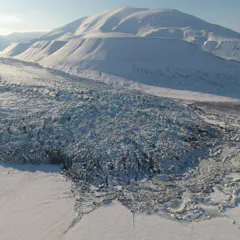
A global study of 3,000 glaciers reveals the risks of surging ice in a warming world.

US Olympic skiers and scientists explain the sharp differences between natural snow and machine-made snow, from the science to the rising risk of crashes.
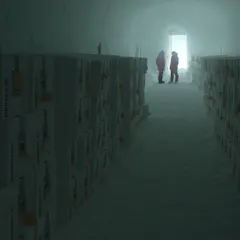
With an average temperature of -50°C, Antarctica’s first-ever 100% natural sanctuary protects endangered ice cores from global warming.
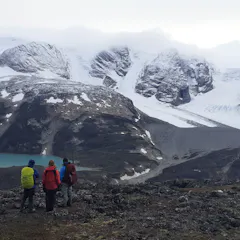
Snow loss is making the Arctic darker, reducing its ability to reflect solar radiation.
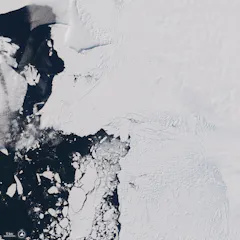
The seismic echoes of capsizing icebergs falling from Thwaites Glacier have been detected for the first time.
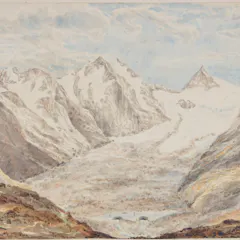
In the 19th century, scientists could see landscape signs suggesting glaciers were larger in the past, but they settled on tectonic uplift as an explanation.
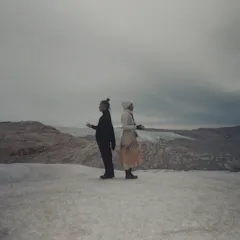
How activists and artists across the world are challenging popular, generalised climate memes, such as those of melting and sinking.

More powerful storms and melting glaciers are flooding communities across the region again, with devastating effects, particularly in the mountains.
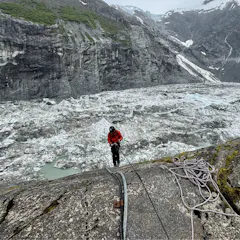
Suicide Basin, an ice-dammed lake on an arm of Mendenhall Glacier, has filled up with meltwater and sent destructive surges of water into Juneau for 3 straight summers.
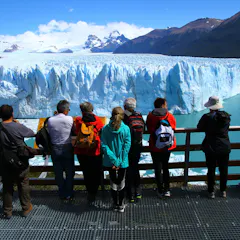
One of Patagonia’s few stable glaciers is now on the verge of collapse – new study.
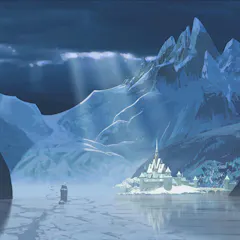
A glaciologist investigates a Disney classic.
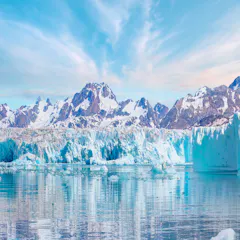
Greenland is key to understanding rising sea levels and the balance of global climate systems.
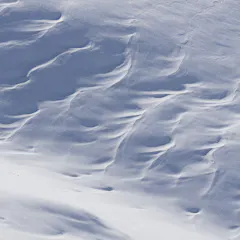
The mysterious ‘ghost mountains’ – buried beneath kilometres of Antarctic ice – have puzzled scientists for decades.
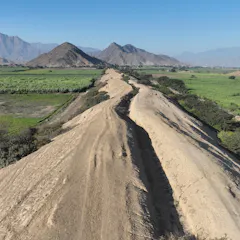
Ancient practices hold important lessons for farmers facing drying lands, but they were often more complex than modern societies realize. Glacier loss adds to the challenge today.

When mountain permafrost thaws and glaciers melt, glacial lakes can become lethal flood risks for anyone downstream.

Snow and ice loss warms the land surface and air, setting off a feedback loop of further ice loss. This destabilises the landscape, with potentially hazardous impacts.
Top contributors
-

Principal Scientist & Programme Leader of Southern Hemisphere Climates and Environments, National Institute of Water and Atmospheric Research (NIWA)
-
Professor of Glaciology and Earth Observation, University of Bristol
-
Research Fellow, Antarctic Research Centre, Te Herenga Waka — Victoria University of Wellington
-
Professor of Geography, University of Aberdeen
-
Professor of Geography and the Environment, School of Geosciences, University of Aberdeen
-
Harold T. Stearns Professor of Earth Science, Wesleyan University
-
Professor of Glaciology, Newcastle University
-
Research Fellow in Glacial Geomorphology, Monash University
-
Professor of Geography, The Ohio State University
-
Reader, Manchester Metropolitan University
-
Senior Lecturer, Glaciology, University of Portsmouth
-
Climate Scientist, British Antarctic Survey
-
Professor of Earth Sciences, Dartmouth College
-
Distinguished University Professor, Earth Sciences, The Ohio State University
-
PhD Researcher, Aberystwyth University