
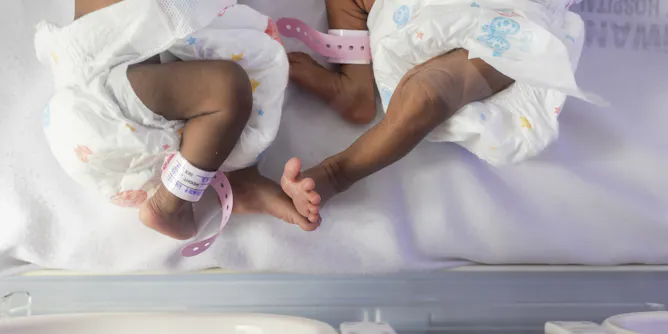
Preterm births are associated with enduring trauma for mothers.
Articles on Ghana
Displaying 21 - 40 of 679 articles

Foreigners have been shaping Ghana’s built environment for centuries.
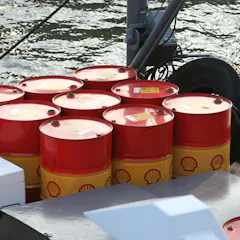
Rising energy prices and tighter global financial conditions are exposing the limits of Ghana’s
import-dependent fuel model.
Communities affected by mining project delays live in a state of suspended time for three years.
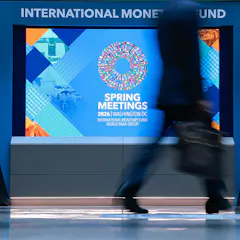
The IMF is not a neutral arbiter on any discussions relating to preferred creditor status. It is itself a direct beneficiary of the creditor hierarchy.
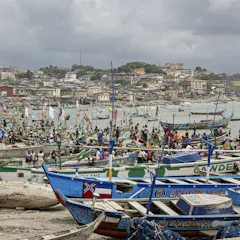
As ocean uses expand, it will be necessary to reduce disputes because they disrupt the environmental sustainability and equity central to a blue economy.

Nigeria’s reliance on imported medicines is the outcome of a policy vacuum that has entrenched interests in commercially attractive, low-risk imports.
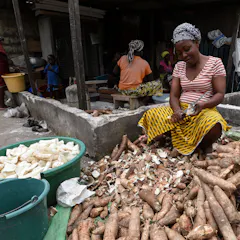
Cassava could thrive across more of Africa as the climate warms, but a deadly disease carried by whiteflies may spread faster, threatening the nutritious crop.

Legal frameworks that only regulate formal psychiatric facilities are written for a system the majority will not use.

Intra-African trafficking, particularly through digital deception and aspirational manipulation, remains largely invisible.
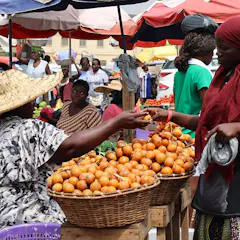
Supporting women in Ghana’s informal economy would strengthen local markets, reduce economic precarity and ensure more inclusive economic growth.

China’s zero tariff regime has the potential to boost trade between African countries and lead to better coordination.

Research showed that older women used safer methods of abortion. Fully safe methods did not dominate in any region of Ghana.

Digital identification is supposed to provide identity to all people. But sometimes it blocks access to essential services.
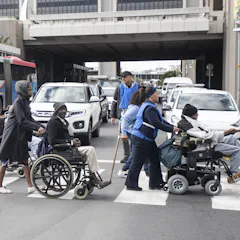
Structural barriers such as inaccessible infrastructure and lack of transport options affect South Africa’s reputation as a disability-friendly country.
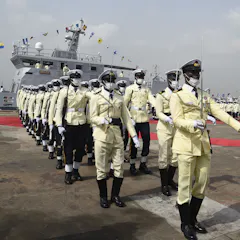
Across Africa, governments are finding ways to reduce dependence on foreign arms suppliers and building capabilities they can control, maintain and adapt.

Annual temperatures are rising in Ghana’s capital, Accra.
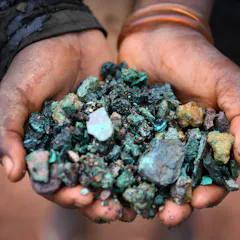
The supply of critical minerals like lithium faces serious risks because of the failure of community approval.
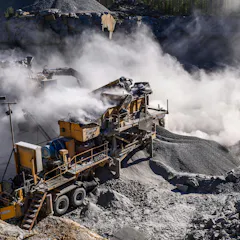
Civil-society organisations are changing Ghana’s accountability landscape.
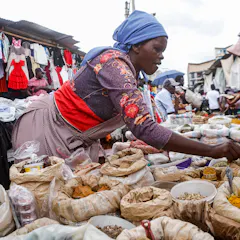
Technology can help countries with high levels of informal workers build stronger tax systems, if there are strong foundations and the right incentives.
Top contributors
-

Senior Research Associate, University of Oxford
-
Teaching Assistant Professor, University of Pittsburg and Visiting Associate Professor, The University of Osaka, University of Pittsburgh
-
Research Active Lecturer, Discipline of Psychology, Charles Darwin University, Charles Darwin University
-
Associate Lecturer, University of Aberdeen
-
Lecturer in Sustainability and Fellow of Indo Pacific Research Centre, Murdoch University
-
Senior Lecturer, University of Environment and Sustainable Development
-
Associate Professor, Oxford School of Global and Area Studies/ History, University of Oxford
-
Senior Lecturer, Department of Planning, Kwame Nkrumah University of Science and Technology (KNUST)
-
Senior Lecturer, Department of Planning, Kwame Nkrumah University of Science and Technology (KNUST)
-
Professor of Democracy, University of Birmingham
-
Lecturer, Department of Economics, University of Ghana
-
PhD Candidate, University of Memphis
-
Lecturer in Security, Development and Leadership in Africa, King's College London
-
Associate Professor and Director of Christiansborg Archaeological Heritage Project, Associate Graduate Faculty, Rutgers University
-
Senior Research Fellow in Global Health, University of Southampton