

A new paper describes the idea of “genetic nurture”, where parents’ genes, even those not passed on to their child, have major effects on kids’ health and educational attainment.
Articles on Genes
Displaying 121 - 140 of 208 articles
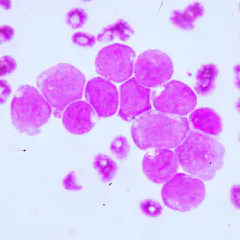
AML can kill with surprising rapidity. Luckily new treatments are on the horizon.

An ancient sexual conflict over mitochondrial inheritance may be responsible for the evolution of the two sexes as we know them.

Like it or not, evidence now shows that men and women differ genetically far more profoundly that we previously recognised. An analysis from the 2017 winner of the Prime Minister’s Prize for Science.
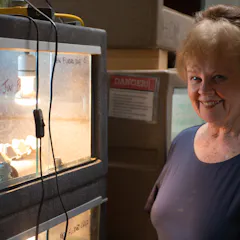
The 2017 Prime Minister’s Science Prize winner is genetic researcher Professor Jenny Graves, well known for her 2002 suggestion that the male Y chromosome will self-destruct.

Whether you’re a night owl or a morning lark, circadian rhythms control just about every aspect of your health.

Comparing genomes of more than 200,000 people, researchers identified genetic variants that are less common in older people, suggesting natural selection continues to weed out disadvantageous traits.
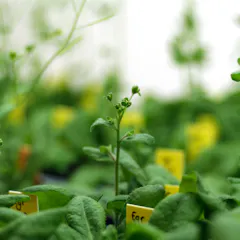
Inserting a random DNA mishmash into a plant or bacterium directs it to make a novel protein. Sifting through the resulting molecules, researchers may find ones have medical or agricultural uses.
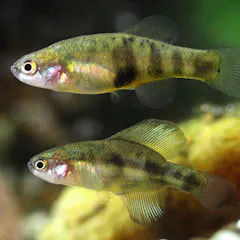
Parents’ DNA try to manipulate one another in a bid to shape junior in their mould.

Releasing just 100 mice carrying a faulty gene designed to stop them reproducing can remove an entire population of 50,000, a new study shows, paving the way for new eradication efforts.

Most people will be much better off putting the money spent on a genetic test towards a gym membership, or a pair of trainers.

Research finds genes account for 50% of differences in social mobility.

William Isdale talks to Professor Julian Savulescu about the ethical implications of geneticaly modifying humans.

Converting a DNA sequence into an audio could help us learn something useful about it, like where mutations occur.

According to a new study, the environment, especially traffic-air pollutants, can impact our genes and increase allergy risks prior to birth.
Stephen Hawking thinks we need to leave the planet. Do we?
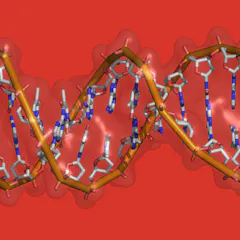
Researchers are starting to harness the potential of this much-hyped gene editing technique – with coming applications in medicine, biology and agriculture.

New research reveals why some people use food to soothe their emotions.
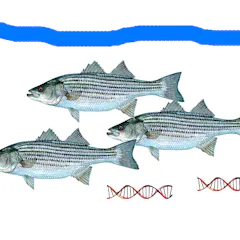
Animals shed bits of DNA as they go about their lives. A new study of the Hudson River estuary tracked spring migration of ocean fish by collecting water samples and seeing whose DNA was present when.

A new study shows cephalopods edit messages from their DNA, allowing them to adapt faster to their environment.
Top contributors
-
 Jenny Graves is a Friend of The Conversation.
Distinguished Professor of Genetics and Vice Chancellor's Fellow, La Trobe University
-
Sir Henry Wellcome Postdoctoral Fellow, King's College London
-
Professor in Functional Genetics, University of Aberdeen
-
Mark Elgar is a Friend of The Conversation.
Emeritus Professor of Evolutionary and Behavioural Ecology, The University of Melbourne
-
Research Scientist in Biostatistics, University of Washington
-
Assistant Professor of Environmental Health Sciences, UMass Amherst
-
Associate Professor in Obesity, UCL
-
Research Fellow at Institute of Psychology, Psychiatry and Neuroscience, King's College London, King's College London
-
Postdoctoral Researcher of Evolutionary Biology, University of Pennsylvania
-
Associate professor and Royal Society Research Fellow, Department of Psychiatry, University of Oxford
-
PhD Candidate, University of Cambridge
-
Emeritus Professor, University of Cape Town
-
Professor of Genetic Epidemiology, King's College London
-
Assistant Professor of Psychological Science, Boise State University
-
University Academic Fellow, University of Leeds