
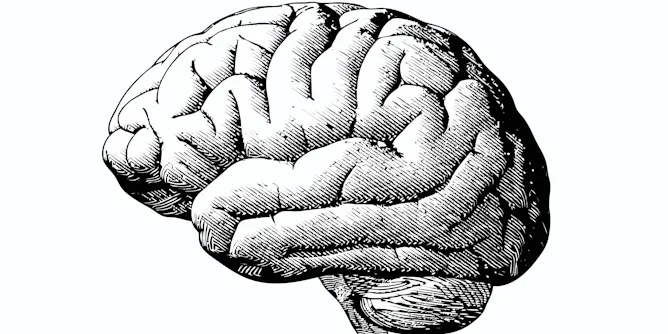
Symptoms for Huntington’s disease typically only start to be experienced in mid-adulthood.
Articles on Genes
Displaying 101 - 120 of 208 articles

DNA evidence tracks the ancient history of the Jewish people.

New research is pinpointing how much genes influence the stability of educational achievement.
New mouse study suggests that a heavy meal may be a better test than the glucose tolerance test.
How do brains convert experiences into memories? New research explores the chain of events by focusing on what genes shift into gear when neurons are firing.

Your weight during your youth could have an effect on your heart for the rest of your life.
A philosopher’s take on the ethics of products that allow parents to lighten the skin colour of their unborn baby.
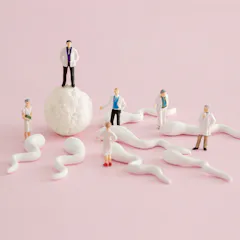
The debate about the pros and cons of genetically screening embryos is deeply entrenched. Perhaps we should let couples decide.

New research could allow us greater control over what happens to genetically modified organisms once they’re in the wild.
Genetics is influencing more and more of our decisions, but we can’t make the right choices if we don’t understand it.
Data and privacy issues are tangled up in the DNA reports consumers get from big genetic testing companies – and the third-party sites they turn to in order to glean more from their raw DNA.

More people are sending off saliva samples to find out about their genetic roots. But the raw DNA results go way beyond genealogical data – and could deliver unintended consequences.
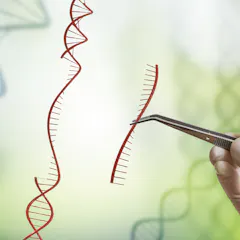
Most of our genes descend directly from the last common ancestor of animals.

Why was one gene mutation that affects hair, teeth, sweat glands and breasts ubiquitous among ice age Arctic people? New research points to the advantage it provided for ancestors of Native Americans.
A core idea in molecular biology is that one gene codes for one protein. Now biologists have found an example of a gene that yields two forms of a protein – enabling it to evolve new functionality.
They were discovered over 100 years ago – but we still don’t know exactly what genes are.

The genes in our cells’ mitochondria are passed on in a different way than the vast majority of our DNA. New studies shed light on how the unique process isn’t derailed by mutations.
The short answer is no. An individual of one species cannot, during its lifetime, turn into another species. But your question helps us think about life, evolution and what it means to be human.

A new study has assessed the links between cholesterol and cognitive function.

Scientists may have discovered why cancer incidence rises with age, and it’s got more to do with the immune system than people thought.
Top contributors
-
 Jenny Graves is a Friend of The Conversation.
Distinguished Professor of Genetics and Vice Chancellor's Fellow, La Trobe University
-
Sir Henry Wellcome Postdoctoral Fellow, King's College London
-
Professor in Functional Genetics, University of Aberdeen
-
Mark Elgar is a Friend of The Conversation.
Emeritus Professor of Evolutionary and Behavioural Ecology, The University of Melbourne
-
Research Scientist in Biostatistics, University of Washington
-
Assistant Professor of Environmental Health Sciences, UMass Amherst
-
Associate Professor in Obesity, UCL
-
Research Fellow at Institute of Psychology, Psychiatry and Neuroscience, King's College London, King's College London
-
Postdoctoral Researcher of Evolutionary Biology, University of Pennsylvania
-
Associate professor and Royal Society Research Fellow, Department of Psychiatry, University of Oxford
-
PhD Candidate, University of Cambridge
-
Emeritus Professor, University of Cape Town
-
Professor of Genetic Epidemiology, King's College London
-
Assistant Professor of Psychological Science, Boise State University
-
University Academic Fellow, University of Leeds