

The prestige and visibility that is often associated with women on boards of directors can ultimately hinder their advancement, rather than help it.
Articles on Gender equality at work
Displaying 1 - 20 of 40 articles

Compassion is an underrated leadership strength among both men and women, and research shows it is an asset that is key to efficient team management, particularly in challenging times.

New research using Canadian workplace data finds that men who take six months or more of parental leave are seen as warmer and more leadership-ready by colleagues.
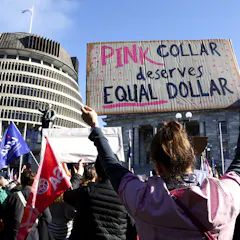
Over 50 years, NZ women moved into men’s jobs but men didn’t move the other way. New data, published ahead of a major report, shows why pay equity still matters.

Many women in the skilled trades are turning to online communities for mentorship, advice, and support to help them stay in the field.

The major sticking point is Australia’s highly segregated jobs market by gender.

It is often difficult to tell where gender inequalities might be at play.
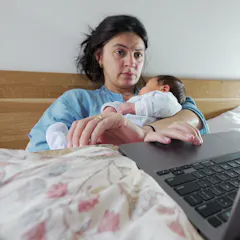
Mothers and those who care about them must come together to demand better workplace conditions, not just for mothers, but for others as well.

Menstrual leave alone cannot address the broader needs of menstruating workers. This is where menstrual flexibility policies come in.

Businesses with more than 500 employees will need to meet targets against at least three gender equality indicators.

The most recent data from Statistics Canada shows that, while gender inequalities in the workplace remain fairly large between women and men, there are some notable exceptions.

In the Japanese workplace, women face discrimination, restrictive behaviour and appearance codes and a lower glass ceiling than elsewhere. Only a profound cultural shift will change that.

The burden of changing workplace gender relations has traditionally been on women, but men have an important role to play in creating gender equality at work and beyond.

At the beginning of the pandemic, it was predicted that the shift to remote work would lead to more equal division of domestic labour. Recent research shows this was not the case.
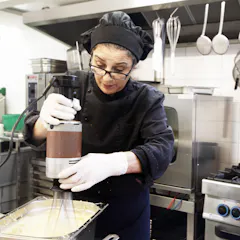
Many UK employers have moved ahead of the government to make working life easier for menopausal employees.

Men and women both offer unique, valuable contributions to company boards. To reap these benefits, organizations should continue to increase gender diversity.

The COVID-19 pandemic exacerbated social and economic inequality for women. Women have lost ground in the workforce and have been slower to return to work than men.

Despite gender equality progress being made in many male-dominated fields, some professions like longshoring are still difficult for women to break into.

A new French research collective, Orelig, set out to answer the question.

While women felt more included when they perceived male colleagues as allies, men who saw themselves that way reported more personal growth as a result.
Top contributors
-

Associate Professor of Organisation and HRM, Warwick Business School, University of Warwick
-
RBC Professor in Responsible Organizations and Full Professor, Concordia University
-
Professor of Leadership and Organisation, King's College London
-
Director, Bankwest Curtin Economics Centre (BCEC) and John Curtin Distinguished Professor at Curtin Business School, Curtin University
-
Lecturer, The University of Melbourne
-
Visiting fellow, Australian National University
-
Professor of Law, The University of Melbourne
-
Adjunct Associate Professor, Monash University
-
Professor of Organization and Management, BI Norwegian Business School
-
Professor, Australian National University
-
Professor of Work and Organisation, University of Nottingham
-
Associate Professor, Bankwest Curtin Economics Centre, Curtin University
-
John Curtin Distinguished Professor, Curtin University
-
Senior Lecturer at York Business School, York St John University
-
Guest Lecturer, Department of Informatics, University of Oslo