
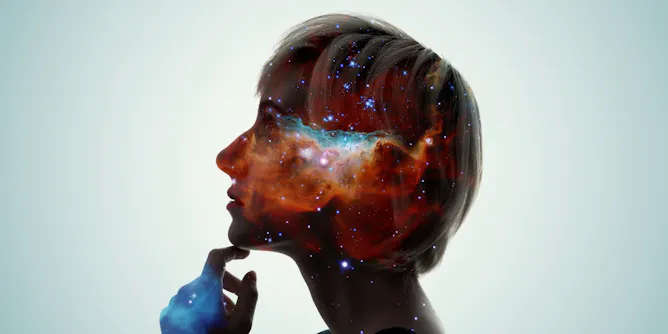
How my understanding of the night sky was transformed by observing stars with a hi-tech telescope.
Articles on Gamma ray bursts
Displaying 1 - 20 of 23 articles
Gold and platinum are found in space, created when two stars collide. Astrophysicists can even trace this process further back, to the merger of galaxies.
Astronomers captured the clearest example yet of one of these hidden explosions.
Analysis of two major cosmic blasts deepens the mystery of where the universe’s ‘heavy’ elements come from.

Where specialized algorithms fail to classify star-borne pulses, human volunteers with just a little training can step in.

Some ancient texts record what were likely dying stars, faintly visible from Earth. If close enough, these events can disturb telescopes and even damage the ozone layer.
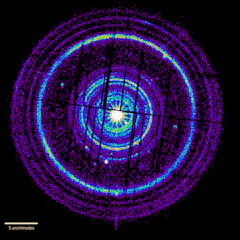
Radiation from the brightest cosmic explosion ever seen may have been mixing with gas and dust around its dying star – making the signal last longer.
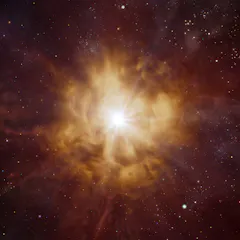
It’s long been a mystery how black holes form, now astronomers are on the verge of cracking it.
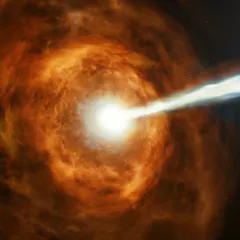
Did we observe the most distant gamma ray burst yet seen, or was it something closer to home?
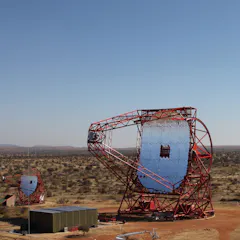
Mysterious cosmic flashes known as gamma-ray bursts are caused by the death throes of massive stars.
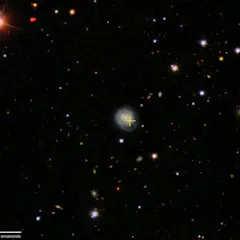
Odd event could be explained by a star being ripped apart by a black hole.
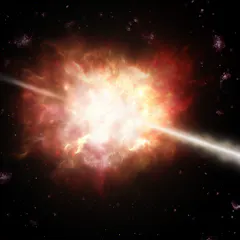
New research may help us to look for messages from alien civilisations.
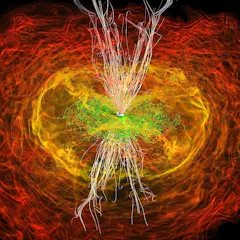
The gravitational wave itself is the least exciting part of the announcement from LIGO and Virgo. Observing this new source answers many longstanding questions.
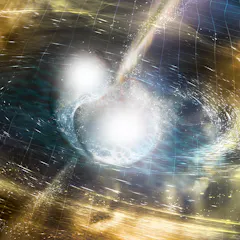
The discovery of tiny ripples in space from the violent collision of dense stars could help solve many mysteries – including where the gold in our jewellery comes from.
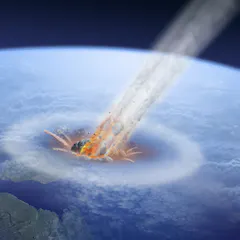
Hardy lifeforms such as tardigrades can survive almost anything.
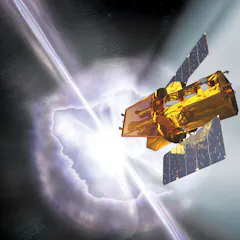
A burst of gamma rays in a distant part of the universe reveals the birth of another black hole.
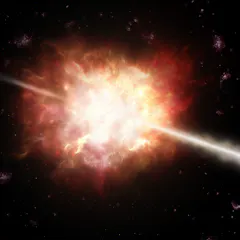
If we survive for another 7.59 billion years, our planet will spiral into the outer layers of the dying sun and melt away forever.
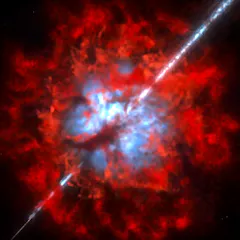
Our understanding of gamma ray bursts (GRBs) – flashes of gamma rays from explosions in distant galaxies – since they were discovered more than 50 years ago may not be as solid as first thought. Research…
A titanic eruption in our neighbouring galaxy, Andromeda, has sent shockwaves through the astronomical community here on Earth. NASA’s Swift satellite detected a flood of gamma rays at 21:15 UTC yesterday…
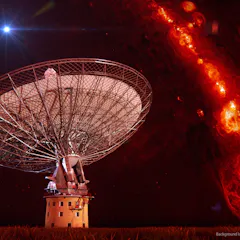
How many electrons are there in the universe? That may seem nigh on impossible to calculate – let alone comprehend – but the discovery of a new population of astrophysical events called Fast Radio Bursts…
Top contributors
-

Associate professor, The University of Western Australia
-
Professor at the School of Mathematics and Physics, Queen's University Belfast
-
Professor of Gravitational Astrophysics and Cosmology, University of Glasgow
-
Research Associate Professor of Astronomy, Wesleyan University
-
Postdoctoral research associate, University of Oxford
-
Postdoctoral research associate, University of Oxford
-
Lecturer in Astronomy, Nottingham Trent University
-
Senior Research Scientist, UCL
-
Postdoctoral Fellow in High Energy Astro-particle physics
-
Pro Vice-Chancellor Flagship Initiatives, Swinburne University of Technology
-
Postdoctoral Researcher in Astronomy, University of Hertfordshire
-
Reader of Astrophysics, Liverpool John Moores University
-
Assistant Professor of Physics, University of Tampa
-
Professor in High Energy Astrophyics, Adelaide University
-
University Distinguished Professor of Astronomy, University of Arizona