

A recent paper claimed that dark energy might not exist. But new research suggests this conclusion was premature.
Articles on Supernovae
Displaying 1 - 20 of 22 articles

Ghost particles from ancient stellar explosions could be detected for the first time this year.

Or perhaps there was no star at all.

Will the universe keep existing forever? An astrophysicist explains how scientists aren’t entirely sure, but they can make predictions.
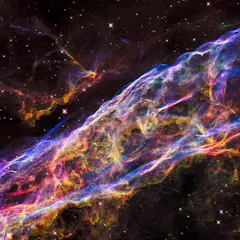
Almost everything on Earth is made up of atoms, but where do these fundamental building blocks come from?
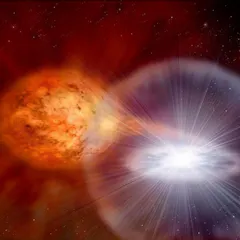
Your favorite TV show isn’t the only place where guest stars might appear. Keep an eye on the sky for the second half of 2024 and you might be able to witness a rare astronomical event.
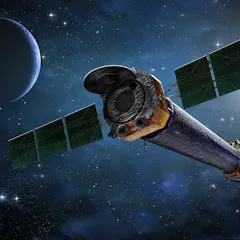
2024 marks 25 years since NASA’s Chandra X-ray Observatory started detecting X-rays from energetic astronomical events.
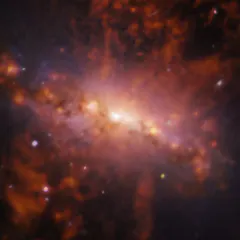
When astronomers focused on the galaxy NGC 4383, they didn’t expect the data to be so spectacular. This is the first detailed map of gas flowing from this galaxy as stars burst within.

Where specialized algorithms fail to classify star-borne pulses, human volunteers with just a little training can step in.

Some ancient texts record what were likely dying stars, faintly visible from Earth. If close enough, these events can disturb telescopes and even damage the ozone layer.
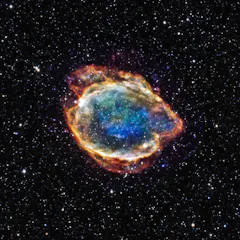
After a decade studying thousands of supernovae, astronomers are still perplexed by the enigma that led Einstein to his ‘greatest mistake’.
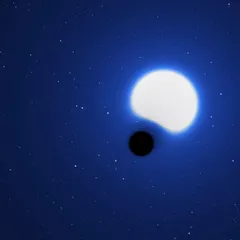
Astronomers have discovered the first dormant black hole outside of the Milky Way. These black holes are not absorbing matter from a nearby star, making them incredibly hard to find.
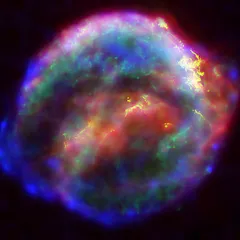
By studying old and dead stars, we can discover what will happen to our sun in the far, far future. And it won’t end with a big explosion.

Are there stars other than the Sun that might explode soon close to us? Yes, there are! As long as by ‘soon’ we mean within a million years.

There are lots of places where it’s much, much hotter than the Sun. And the amazing thing is that this heat also makes new atoms - tiny particles that have made their way long ago from stars to us.
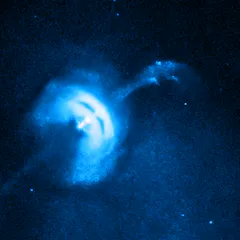
Pulsars are rapidly rotating neutron stars and some of them are know to have a “glitch”, and astronomers have captured one as it hapened.
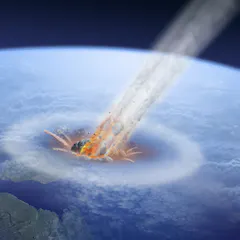
Hardy lifeforms such as tardigrades can survive almost anything.

From supernovae explosions to the expansion of the universe and why the sky is blue: you can learn a lot about the universe in the kitchen.

Stargazing seems such a quiet, calm activity. But whether our eyes can see or not, those stars out there are in constant flux. Time-domain astronomy studies how cosmic objects change with time.
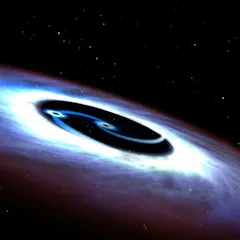
It takes something as stupendous as the merger between two black holes to generate detectable gravitational waves. Here’s how such incredible cosmic objects form.
Top contributors
-

PhD, The University of Queensland
-
Postdoctoral research associate, University of Oxford
-
Senior Lecturer in Physics, Queensland University of Technology
-
Professor (Physics), University of Southern Queensland
-
Director of the John Adams Institute, University of Oxford
-
Postdoctoral research associate, University of Oxford
-
Professor, Centre for Astrophysics and Supercomputing, Swinburne University of Technology
-
PhD Student, Imperial College London
-
Emeritus Professor, ARC Centre of Excellence for Gravitational Wave Discovery, OzGrav, The University of Western Australia
-
PhD Candidate, University of Southern Queensland
-
Dean of Science, University of California, Santa Cruz
-
Academic Faculty in Physics & Astronomy, Georgia State University
-
Professor of Physics and Astronomy, USC Dornsife College of Letters, Arts and Sciences
-
Researcher, University of Tasmania
-
Senior Astrophysicist, Smithsonian Institution