
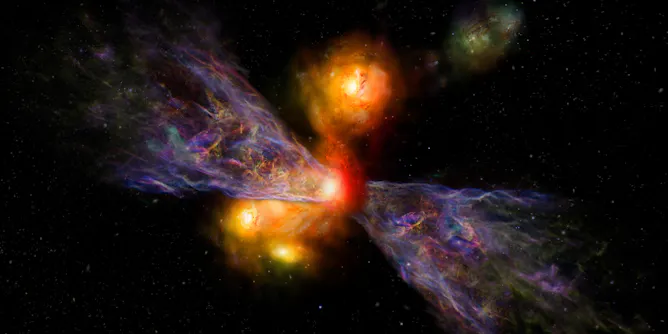
All things die, even galaxies.
Articles on Supernovas
Displaying 1 - 20 of 50 articles
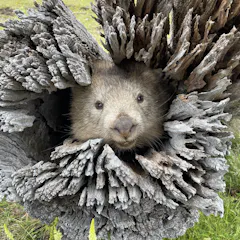
From wombat and mozzie surveillance to deciphering climate history and spotting star explosions, citizen scientists are instrumental in contributing knowledge.

Ghost particles from ancient stellar explosions could be detected for the first time this year.
Astronomers have been watching the supergiant WOH G64 for decades – and it might have turned into a hypergiant and be heading for self-destruction.
The WOH G64 star looked to be accelerating to its end of life. But now astronomers are not sure that’s the case.
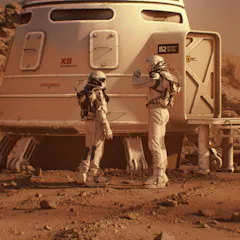
High-energy particles streaming through space can damage DNA and increase cancer risk, but antioxidants, tardigrades and hibernation could help astronauts make the journey safely.
Global cooling associated with the impact of supernova remnants may have affected plants and animals, including species related to humans.
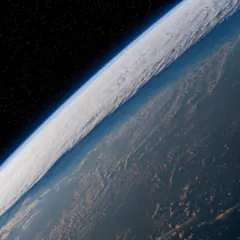
There seems to be too much of a radioactive element in rocks deep in the Pacific Ocean – how did it get there 10 million years ago?
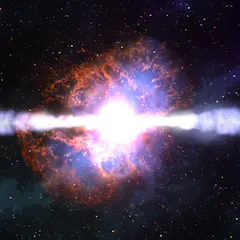
A new study on exploding stars has provided the first evidence for an alternative model of the universe, known as Timescape.
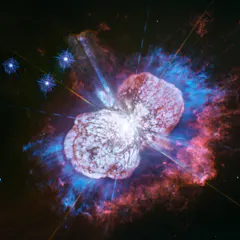
Just like volcanologists monitor volcano activity to predict eruptions, astronomers can monitor stars to predict explosions.
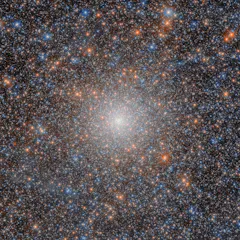
If dark energy isn’t constant, we may need to rewrite the standard model of cosmology.
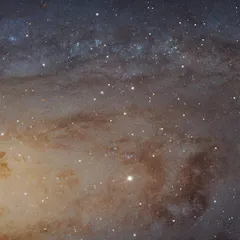
One hundred years ago, one star changed our view of the universe, proving that the Andromeda “nebula” was a galaxy like our Milky Way.
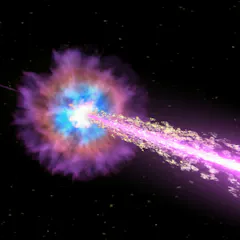
Analysis of two major cosmic blasts deepens the mystery of where the universe’s ‘heavy’ elements come from.

Where specialized algorithms fail to classify star-borne pulses, human volunteers with just a little training can step in.
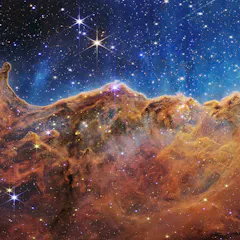
Analysis of fragments of the first solids that emerged out of the birth of the sun date our supernova as being 4.6 billion years old.
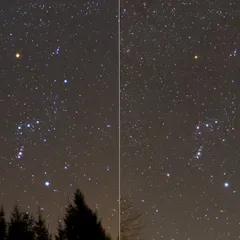
There are signs that Betelgeuse may be evolving rapidly – meaning a supernova explosion may happen sooner rather than later.
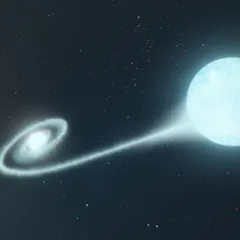
Our Sun will likely go out quietly – but not all such stars do. A new radio detection of a supernova can help us better understand these cosmic cataclysms.
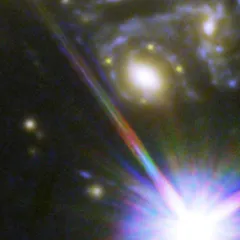
Different measures of the rate of the Universe’s expansion give different results – and a new measurement technique only makes matters more complicated.
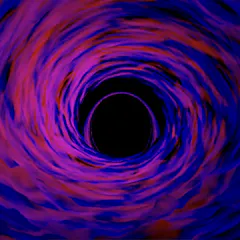
Astronomers have found that mysterious dark energy may originate in black holes.

Our galaxy should be full of traces of dead stars. Until now, we have found surprisingly few of these supernova remnants, but a new telescope collaboration is changing that.
Top contributors
-

Senior Curator (Astronomy), Museums Victoria Research Institute; The University of Melbourne
-
Lecturer in Astronomy, Nottingham Trent University
-
Professor of Astrophysics, University of Manchester
-
Honorary Lecturer, Nuclear Physics, Australian National University
-
CSIRO
-
PhD Candidate, University of Hertfordshire
-
Senior Research Scientist, UCL
-
Research scientist, CSIRO
-
Professor of Astronomy, Macquarie University
-
Dean of Science, University of California, Santa Cruz
-
Graduate student of Astronomy, California Institute of Technology
-
Postdoctoral Researcher in Astronomy, Stockholm University
-
Research scientist & Head of Science Operations and Support, e-MERLIN/VLBI National Radio Astronomy Facility, Jodrell Bank Centre for Astrophysics, University of Manchester
-
Astrophysicist/Cosmologist, Australian National University
-
Associate Professor, Department of Earth Sciences, Carleton University