

No Australian pets have contracted H5 bird flu, but overseas outbreaks suggest cats are particularly vulnerable.
Articles on Contamination
Displaying 1 - 20 of 61 articles

History has shown that when manufacturers skimp on sterile filtration of drugs, the consequences can amount to the loss of hundreds of lives and millions of dollars.
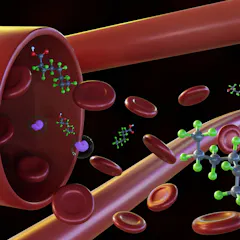
Your body likely contains an accumulation of various PFAS types, making it difficult to trace them to their sources.

Cancer-linked chemicals can remain hidden in drinking water supplies for decades.

Millions of Australians now have tattoos. Yet unlike other countries, we don’t have rules on what’s in the ink.

An innovative study mapped preterm births, low birth weights and infant mortality to municipal water wells downstream from PFAS-contaminated sites. The results show the high cost of PFAS harm.
An environmental engineer explains how his research team is developing a system containing bacteria, biochar and gel to break down pollutants in waterways.
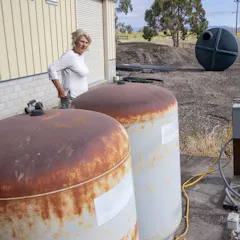
PFAS exposure can vary significantly from one community to the next. A close-up view of three Great Lakes states offers some insights for everyone.

It’s taken years for Australia to ban three types of forever chemicals. But Europe plans to ban thousands of these chemicals to avoid future issues.

Water systems are vulnerable to melting plastic components, toxic contamination and failures that can leave firefighters without flowing water.

We are exposed to countless chemicals every day, some of which can harm our health. Measuring the effects of this pollution is a major challenge.

Current science communications in Cape Town are not serving the public well.

Aflatoxin can cause serious damage to the liver, including cancer. But contamination recalls are rare.

The Australian Bureau of Statistics looked at concentrations of 11 types of PFAS, or ‘forever chemicals’, in our blood. Here’s what the results show.
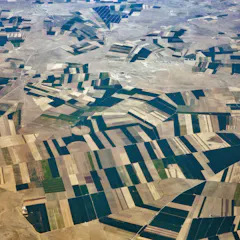
Heavy metals are a silent threat to our food – here’s what we can do about it.
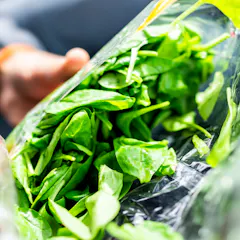
The culprit behind the recalls is ‘shiga-toxin-producing E. coli’. What do you need to know about this bacterium?
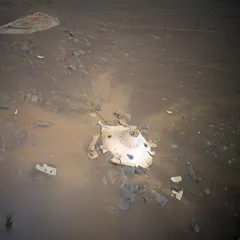
The US wants to put a flag on Mars. But there’s a risk it could carry unwanted stowaways that might compromise future scientific investigations.
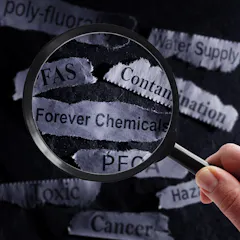
Scientists and engineers are developing new ways to destroy PFAS efficiently and sustainably.
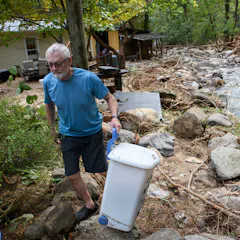
Weather disasters, particularly floods, can create health threats that linger for months, from infected cuts to mold growth to mental stress.

Just like fires can contaminate municipal water systems by melting pipes, farms’ and ranches’ water supply systems are at risk. A first-of-its-kind study after the Maui fires explores the harms.
Top contributors
-

Associate Professor in Environmental Science, Western Sydney University
-
PhD Candidate, Western Sydney University
-
Distinguished Professor of Pharmacy Practice, University of Connecticut
-
Professor of Planetary Geosciences, The Open University
-
Professor of Civil, Environmental and Ecological Engineering, Purdue University
-
Postdoctoral research fellow, University of the Ryukyus, Okinawa Japan, Madonna University, Nigeria
-
Associate Professor of Hydrology, University of Arizona
-
Professor of Medicine, Monash University
-
Reader / Associate Professor in Environmental Geoscience, Sheffield Hallam University
-
Professor, Centre for Research into Topical Drug Delivery and Toxicology, University of Hertfordshire
-
Senior Lecturer in Earth System Science, Northumbria University, Newcastle
-
Associate Professor, Northumbria University, Newcastle
-
Faculty in Medical Toxicology, Brigham & Women's Hospital, Harvard University
-
Professor of Economics, University of Arizona
-
Assistant professor, University of Nottingham