
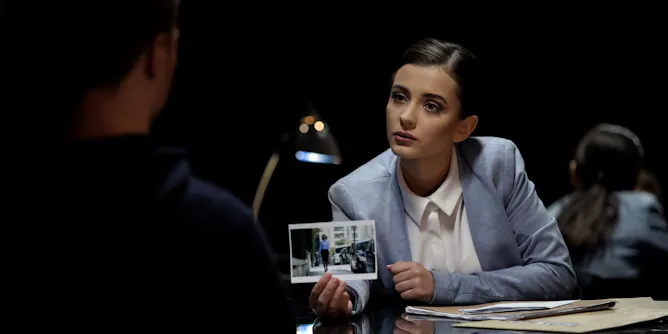
It turns out liars and truth-tellers behave very differently when questioned.
Articles on Forensic science
Displaying 41 - 60 of 131 articles

A forensic archaeologist and former Zimbabwe police officer uses his investigative skills to find the missing and the dead in his homeland.
New research shows fibres can transfer between people without any contact.
Eyewitness testimony can hold a lot of weight with jurors. But eyewitnesses aren’t always right, and poor investigative practices can make matters worse.
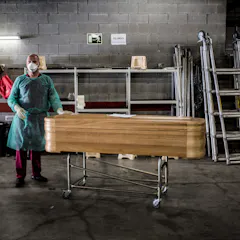
An expert on forensic science explains the critical role of coroners and pathologists in the COVID-19 crisis, as many cities struggle to manage the soaring number of dead bodies.
You’ve had your own personal set of fingerprints since before you were born, and they’ll be with you throughout your whole life.
No one knows exactly how AI-based DNA analysis software works, so it can’t be scrutinised in court.
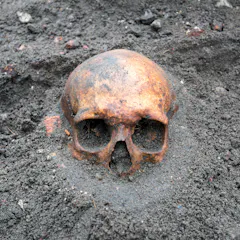
Scientific advances are allowing forensic archaeologists to shed light on mysteries long thought unsolvable.
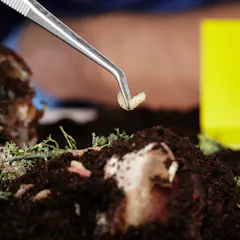
Trust Me, I’m An Expert: forensic entomology, or what bugs can tell police about when someone died
The Conversation, CC BY58.8 MB (download)
James Wallman is one of Australia's few forensic entomologists. It’s his job to unpack the tiny clues left behind by insects that can help police solve crimes.
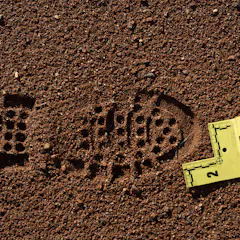
The debate about the reliability of forensic evidence reflects a lack of understanding of how forensic science is best used in the justice system, rather than a problem with forensic science itself.
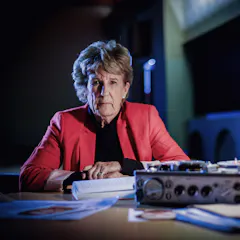
Readers are invited to a special screening and Q&A with former detective Jackie Malton, criminologist Fiona Brookman and forensic scientist Martin Evison.
What happens during a forensic medical examination? And if you’ve been sexually assaulted, what can you expect?
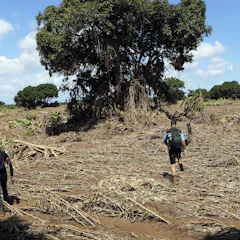
Meet the unsung aid workers who put their lives on the line during war and natural disaster to make sure the dead are treated with respect – and that their grieving families get closure.
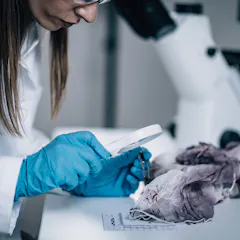
DNA profiling is one of the most reliable techniques we have, but it can be misused.

‘This is going to affect how we determine time since death’: how studying body donors in the bush is changing forensic science
The Conversation, CC BY77.2 MB (download)
On the outskirts of Sydney, in a secret bushland location, lies what's officially known as the Australian Facility for Taphonomic Experimental Research. In books or movies, it'd be called a body farm.
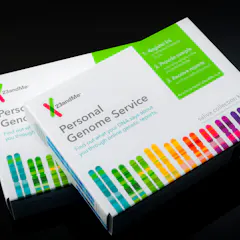
Despite privacy concerns over police use of DNA uploaded to ancestry websites, many people are just excited that their genetic material could get a killer off the streets.
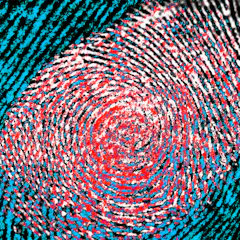
A failure to introduce robust science means forensic science has reached crisis point. The UK has to act now to address this threat to justice.
Indistinct forensic audio is often ‘enhanced’ to make it sound clearer. But how effective are the techniques that are used? A new experiment suggests they can be highly misleading.
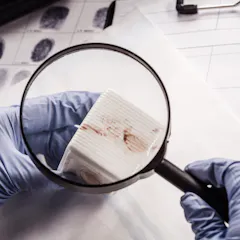
UK forensic science and technology is lurching from crisis to crisis. A fundamental reform of governance and policy making is needed.
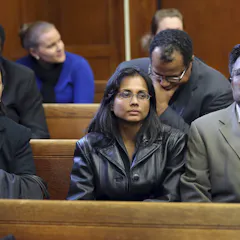
Forensic science is only as good as the equipment and the people who calibrate it, some high-profile cases indicate. Thousands of innocent people have been harmed. Here’s how.
Top contributors
-

Associate Professor of Forensic Science, Murdoch University
-
Visiting Scholar, University of Wollongong in Dubai (UOWD), University of Wollongong
-
Adjunct Professor, Medical, Molecular & Forensic Sciences, Murdoch University
-
Professor of Forensic Sciences, School of Law and Policing, University of Lancashire
-
Professor in Biological Anthropology, Division of Clinical Anatomy and Biological Anthropology, University of Cape Town
-
Director of the Research Hub for Language in Forensic Evidence, The University of Melbourne
-
Professor of Forensic Science, University of Hull
-
Chancellor’s Postdoctoral Research Fellow, University of Technology Sydney
-
Professor of Archaeological Science, Flinders University
-
Lecturer, Business School & Centre for Policy Futures, The University of Queensland
-
Forensic Pathologist at Monash University and Deputy Director, Victorian Institute of Forensic Medicine
-
Assistant Professor, Northumbria University, Newcastle
-
Research fellow, The University of Queensland
-
Professor of Evidence Law, University of Sydney
-
Reader in Forensic Geoscience, Keele University