
Fatal stabbings are the leading cause of homicide in countries with restricted access to firearms, including Australia. New research could help solve these cases.
Articles on Forensic science
Displaying 21 - 40 of 131 articles

The Titan disaster happened in international waters, in a commercially operated vessel, and with victims of different nationalities. Any details that emerge will likely be treated with sensitivity.

Such bodies have proven to bring a cost-effective improvement to the accuracy of criminal justice systems overseas.
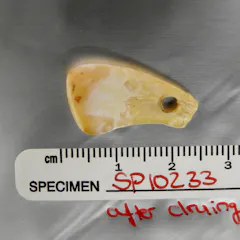
A way to recover the owner’s DNA from ancient artefacts will help archaeologists understand past societies in more detail than ever before.

CCTV is a popular form of digital evidence but it can be unreliable and problematic.

Most methods for detecting lies actually detect signs of stress – which makes them extremely unreliable.

Our vehicles hold a remarkable amount of information, which can be used by digital forensic investigators in the detection of crime.
Modern DNA sampling is shockingly sensitive – you can get someone’s profile from just 80 cells.

Human memory doesn’t work like a video camera, simply recording a scene as it happens. But researchers know how to help children recall information accurately.

The remains of murder victims often turn up in suitcases, bins, and similar items. Forensic researchers in Australia are leading the way in helping to solve such cases.
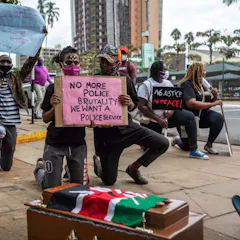
A host of problems are behind police failures, including poor evidence gathering and the mistreatment of witnesses.
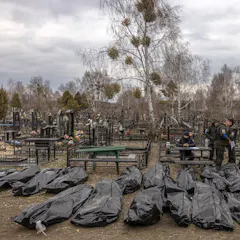
Identifying the victims of a mass casualty event is a crucial part of grieving and community healing.

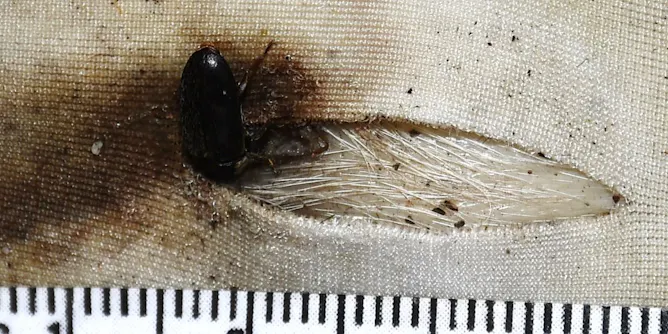
Forensic entomologists analyse blowflies and cocoon cases to help solve crimes.
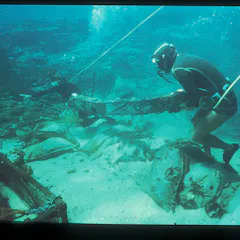
We’re searching for ways to use recovered bones and teeth to better understand time spent in the sea, and the overall journey of the mortal remains.
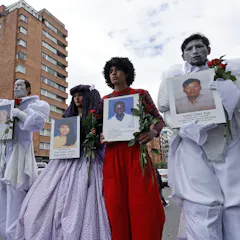
Researchers are using modern forensic techniques to find the bodies of victims of civil conflict in Latin America.
The Australia Federal Police is set to start using controversial technology that predicts the ancestry and appearance of suspects from DNA samples.
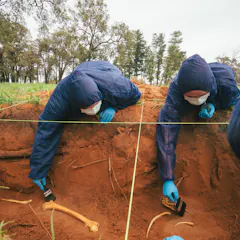
As a forensic scientist who has worked at thousands of homicide, sexual assault and serious crime scenes, I can tell you the process is not as straightforward as depicted on popular true crime shows.

Artificial intelligence could help police catch criminals – but we need human experts for the big cases.

The science behind today’s petition to pardon Kathleen Folbigg has been peer reviewed. Here’s what it says.
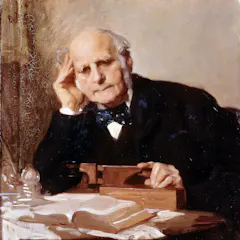
Smart people can have really bad ideas – like selectively breeding human beings to improve the species. Put into practice, Galton’s concept proved discriminatory, damaging, even deadly.
Top contributors
-

Associate Professor of Forensic Science, Murdoch University
-
Visiting Scholar, University of Wollongong in Dubai (UOWD), University of Wollongong
-
Adjunct Professor, Medical, Molecular & Forensic Sciences, Murdoch University
-
Professor of Forensic Sciences, School of Law and Policing, University of Lancashire
-
Professor in Biological Anthropology, Division of Clinical Anatomy and Biological Anthropology, University of Cape Town
-
Director of the Research Hub for Language in Forensic Evidence, The University of Melbourne
-
Professor of Forensic Science, University of Hull
-
Chancellor’s Postdoctoral Research Fellow, University of Technology Sydney
-
Professor of Archaeological Science, Flinders University
-
Lecturer, Business School & Centre for Policy Futures, The University of Queensland
-
Forensic Pathologist at Monash University and Deputy Director, Victorian Institute of Forensic Medicine
-
Assistant Professor, Northumbria University, Newcastle
-
Research fellow, The University of Queensland
-
Professor of Evidence Law, University of Sydney
-
Reader in Forensic Geoscience, Keele University