
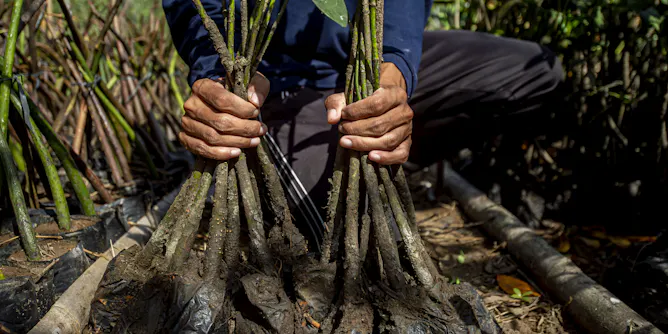
A new study suggests the world’s mangrove forests are expanding.
Articles on Floodplains
Displaying 1 - 20 of 33 articles
Brazil holds 12% of the world’s freshwater reserves and yet growing water insecurity reveals some of the country’s deepest sanitation inequalities, which are particularly relevant to Marajó, its largest coastal island.
We have for too long persisted with approaches that seek to persuade, instruct, or direct people toward predetermined behaviours. Here’s a better way.

New research shows how river flows in the once-mighty Murrumbidgee have dwindled over time, leaving the floodplain high and dry. But the main culprit is not climate change and we can fix it.
Knowing the ‘next drought is just around the corner’, Australia’s Water Minister Tanya Plibersek is striking a new agreement to return water and health to the Murray-Darling Basin.

Projects have not been delivered. States are bickering. If the Albanese government is to uphold its election promise to deliver the Murray plan, hard tradeoffs are needed.
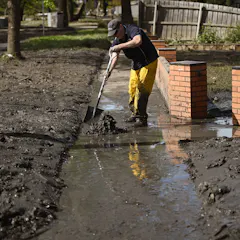
Foods stir up river sediments and can spread contaminants across the floodplain. It’s a risk in areas with a history of industrial pollution, like Maribyrnong, but EPA test results are reassuring.
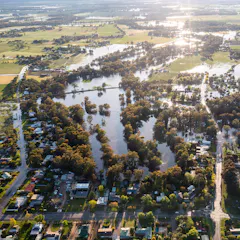
Local councils are on the front line in a planning system that lacks an up-to-date planning framework to properly assess flood risks and prepare responses.

Climate change is colliding with old factory sites where soil or water contamination still exist, and the most vulnerable populations are particularly at risk.
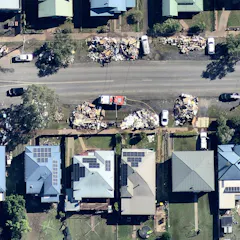
Lismore’s residents and businesses on the floodplain need to look at relocation, not rebuilding.
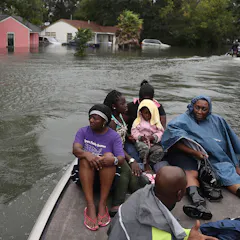
A street-by-street analysis shows where the risks are rising fastest and also lays bare the inequities of who has to endure America’s crippling flood problem.
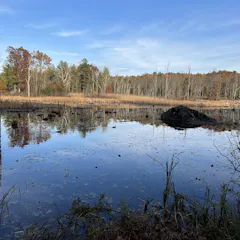
Beavers in our landscapes have great potential to provide small-scale adaptations to climate change – if humans can figure out how to live with them.
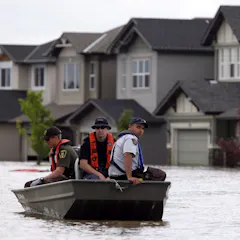
Many cities continue to allow developers to build homes in areas that have a high risk of flooding.
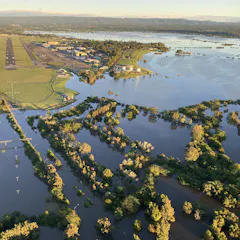
Floodplains are among the most productive ecosystems on the planet – they are biodiversity hotspots. That’s in large part due to periodic flooding between different parts of a river-floodplain system.
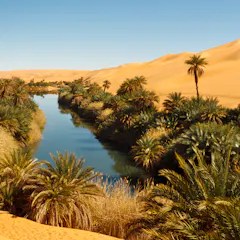
Wetlands in drylands seem impossible, but their benefits to people and wildlife are very real.
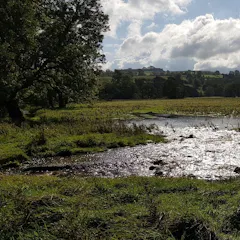
Flooding isn’t always destructive – it can be part of our toolkit for restoring ecosystems.
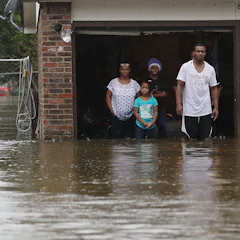
New risk models show nearly twice as many properties are at risk from a 100-year flood today than the government’s flood maps indicate.
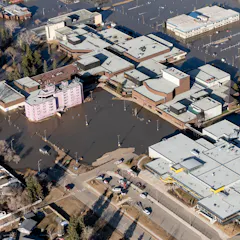
Blaming flooding on an act of God wrongly absolves government and developers of their liability for poor decisions that unfairly burden taxpayers.
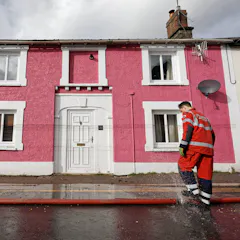
Residents need the necessary support to adapt their homes and make collective decisions about flood prevention.

It’s imperative that we understand what creates and sustains the delta for the future management of the system.
Top contributors
-

Professor Emeritus of Risk Management and Insurance, Georgia State University
-
Professor of Hydrology, Lancaster University
-
Professor, Fenner School of Environment & Society, Australian National University
-
Regius Professor of Meteorology and Climate Science, University of Reading
-
Research Associate, RMIT STEM College, RMIT University
-
Professor of Limnology, University of Montana
-
Professor in Physical Geography, University of Southampton
-
Assistant Professor, Disaster and Emergency Management, York University, Canada
-
Assistant Professor of Economics, Case Western Reserve University
-
Communication officer, Institut de recherche pour le développement (IRD)
-
Associate Professor, Macquarie University
-
Senior Professional Staff, Johns Hopkins University
-
Research Fellow, University of Bristol
-
Professor of Sociology, Rice University
-
Senior Lecturer in Water and Environmental Engineering, University of Bristol