
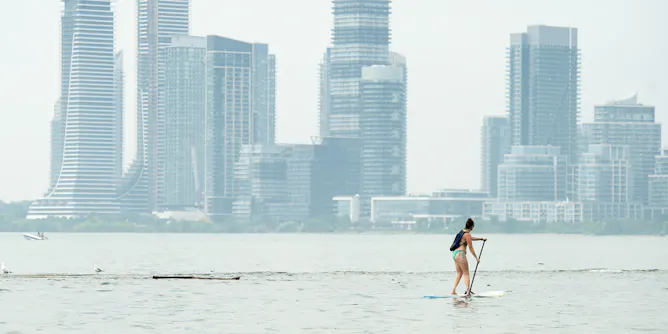
Shoreline communities are already faltering under the weight of billions of dollars in damages — and worrying that climate change will continue to make things even worse.
Articles on Flooding
Displaying 321 - 340 of 562 articles
New technologies can help reduce the cost of producing maps that warn where floods might happen.
Flooding constitutes a threat to Nigeria achieving the global sustainable development goals.
More than half of the world’s population lives in cities, and that share is growing. Rapid climate change could make many cities unlivable in the coming decades without major investments to adapt.
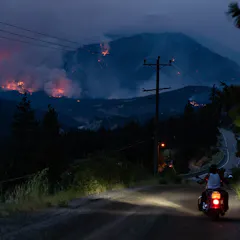
While climate migration may be on the rise in Canada, it has been disproportionately impacting Indigenous people and communities for years.
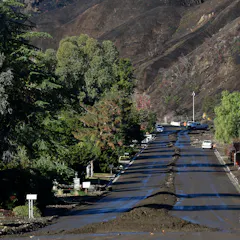
76 per cent of Canadians say environmental policy and sustainability is a priority when considering where to live.
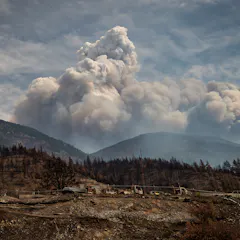
An atmospheric scientist and sailplane pilot describes why large areas of burned land can produce clouds and rainstorms.

Southern Québec is warming twice as rapidly as the rest of the world due to the progressive loss of snow cover. An average annual warming of 3 C to 6 C is expected by the end of the century.

Images of water gushing into subway stations filled social media following heavy rain in New York City. Solutions are at hand – but it takes money and political will, an expert explains.
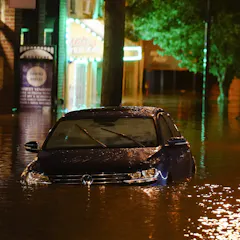
Evidence is mounting that, as the climate warms, the amount of rain falling in heavy storms is increasing, especially in the central and eastern US.
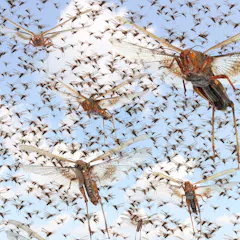
Every increase in one degree of global warming will increase losses of crops to insects from 10% to 25%.
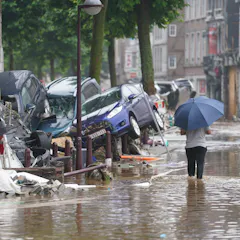
A new attribution study finds human-caused climate change made Europe’s July floods more likely. What about Tennessee’s flooding? An atmospheric scientist explains how scientists make the connection.
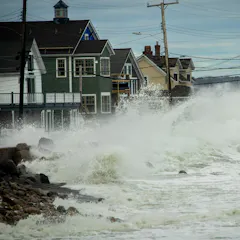
The IPCC report has laid out some alarming sea level projections for the future. But the relationship between sea level rise and real-world risk is complex.
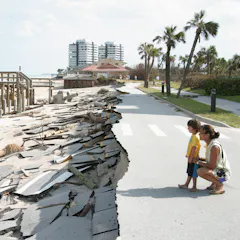
A bipartisan group of senators said it reached a deal on $550 billion in new spending on infrastructure.
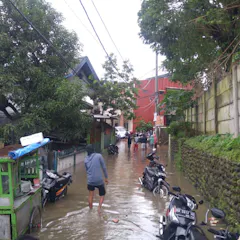
Residents of flood-prone areas have been counting on local knowledge and community support to deal with floods for centuries. Can scientists work with them to better understand floods?
The water cycle is intensifying as the world warms, bringing heavier downpours and longer droughts.
Not every extreme weather event is caused by climate change, but heat waves that were once ridiculously improbable are showing up more often. Just ask Portland.
The triple whammy of the moon’s wobble, sea level rise and more intense storms will bring worse tidal floods into coastal communities in the 2030s. This includes in Australia.
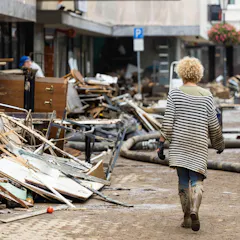
I helped forecast disaster – but nothing prepared for me what happened next.
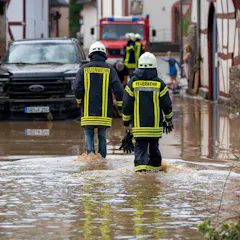
Catastrophic floods in north-western Europe have shown how badly early warning systems can fail.
Top contributors
-

ARC Future Fellow and Associate Professor in Climate Science, ARC Centre of Excellence for 21st Century Weather, The University of Melbourne
-
Adjunct Professor of Environmental Geography, CQUniversity Australia
-
Professor of Geology and Environmental Geosciences, University of Dayton
-
Professor and Director of the Institute for Water Research, Rhodes University
-
Professor of Sociology, Rice University
-
Senior Research Associate, Institute for Environment and Human Security (UNU-EHS), United Nations University
-
Regius Professor of Meteorology and Climate Science, University of Reading
-
Professor of Physical Geography, University of the Witwatersrand
-
Professor of Landscape Architecture and Urban Planning, Texas A&M University
-
Professor Emeritus of Climate and Space Sciences and Engineering, University of Michigan
-
Distinguished Scholar, National Center for Atmospheric Research; Affiliate Faculty, University of Auckland, Waipapa Taumata Rau
-
Research Fellow, Australian Rivers Institute, Griffith University
-
Senior Research Fellow, The University Centre for Rural Health, University of Sydney
-
Professor Emeritus of Risk Management and Insurance, Georgia State University
-
Professor, Department of Forest Resources Management, University of British Columbia