

Childcare responsibilities, housing access and regional cultural norms influence where Nigerian women work.
Articles on Flexible work
Displaying 1 - 20 of 28 articles

Teachers need to spend a lot of time face-to-face with students. But they also do a significant amount of work beyond the classroom.

For many employees, flexibility is no longer a nice-to-have luxury but a fundamental requirement. Yet many requests are still being turned down.

Workplace culture is still adapting to new hybrid rules and expectations. Here’s what I learned from companies and workers trying to get it right.

Where, when and how Americans work has dramatically shifted since the COVID-19 pandemic disrupted the routines of everyday life.

The pandemic – and the emergency responses to it – laid bare fissures in New Zealand society, while permanently shifting the way many live, work and shop.

With burnout remaining a persistent challenge across Canada, remote and hybrid work arrangements provide a meaningful solution.

If you have a toxic boss – and who hasn’t? – you can find solace online, or at home.
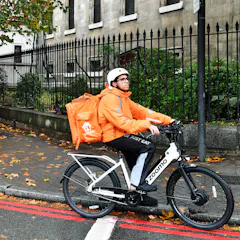
Not all jobs and pay levels will be conducive to a four-day working week.

More men are keen to find the best balance when it comes to work and family but there are still significant barriers facing many fathers.

The way jobs are structured affects employee mental health, an analysis of more than 18,000 workers shows.

Acknowledging that factors like the built environment, social and health systems, and outdated policies are the problems — rather than people — is a step towards healthier and safer workplaces.

Should companies offer tailored timetables and workplaces on the basis of our different bodies, or are universal solutions, such as the four-day week, the way forward?

New research shows that breastfeeding rates peaked in 2020, a time of strict COVID restrictions.

Workplaces are increasingly recognizing that productive employees seek out workplaces that prioritize mental well-being and offer flexible working conditions.

More choice over when we work be the next big gain in productivity.

A transcript of episode 8 of The Conversation Weekly podcast, including new research on why people react to cold temperatures differently.

Flexible arrangements might help women maintain a work-life balance, but can also weaken their position in the labour market and lose them earnings in the long term.

2020 has been the greatest ever global experiment in working from home. The pandemic will be the catalyst the flexible work discussion really needed.

Our latest research also shows that retirement allows us to finally get as much sleep as our body needs each night.
Top contributors
-

Professor of Economics, University of Canberra
-
PhD Student, Queensland University of Technology
-
Research Fellow, Melbourne Institute: Applied Economic & Social Research, The University of Melbourne
-
PhD Candidate in Anthropology, UCL
-
Assistant professor in leadership, IÉSEG School of Management
-
Professor of Sociology and Founding Director of The Future of Work Lab, Podcast at MissPerceived, The University of Melbourne
-
Professor, Curtin University
-
Full Professor and Associate Vice-President, Research, Mount Saint Vincent University
-
Management Professor, McGill University
-
Senior Lecturer, Organisational Behaviour & Management, Adelaide University
-
Professeur-chercheur en management, EM Lyon Business School
-
Educational Developer, Mount Saint Vincent University
-
Associate Professor of Management, Curtin University
-
Senior Staff Specialist, Medical Oncology, National Breast Cancer Foundation Practitioner Fellow, Flinders University
-
Research assistant professor, Vrije Universiteit Amsterdam