

Our research shows most organisations have adapted well to staff working from home. But there’s a hole in workplace laws we need to address.
Articles on Flexible work
Displaying 21 - 28 of 28 articles

More workplaces are allowing employees to telecommute, but there are still barriers to more flexible arrangements.

E-changers are the latest group to move from the big cities to escape high living costs and congestion. But because they remain very productive remote workers some employers are embracing the trend.
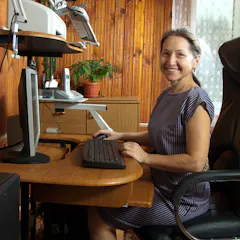
Two-thirds of surveyed workers work from home one day a week on average, but could do at least half their work out of the workplace. If they commuted less often, congestion could be greatly reduced.

Australia loses nearly A$2 billion of GDP every year due to people with cancer leaving the workforce.

Businesses are not considering that roles need to be redesigned to be part-time and this causes problems in managing employees’ workloads and interacting with other employees.
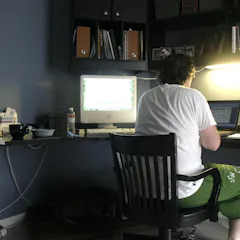
Rather than having a fear of being monitored, remote workers want the option of being visible.

The ABS’ labour force survey is more than 50 years old. We need a new way of measuring employment for a new modes of work.
Top contributors
-

Professor of Economics, University of Canberra
-
PhD Student, Queensland University of Technology
-
Research Fellow, Melbourne Institute: Applied Economic & Social Research, The University of Melbourne
-
PhD Candidate in Anthropology, UCL
-
Assistant professor in leadership, IÉSEG School of Management
-
Professor of Sociology and Founding Director of The Future of Work Lab, Podcast at MissPerceived, The University of Melbourne
-
Professor, Curtin University
-
Full Professor and Associate Vice-President, Research, Mount Saint Vincent University
-
Management Professor, McGill University
-
Senior Lecturer, Organisational Behaviour & Management, Adelaide University
-
Professeur-chercheur en management, EM Lyon Business School
-
Educational Developer, Mount Saint Vincent University
-
Associate Professor of Management, Curtin University
-
Senior Staff Specialist, Medical Oncology, National Breast Cancer Foundation Practitioner Fellow, Flinders University
-
Research assistant professor, Vrije Universiteit Amsterdam