
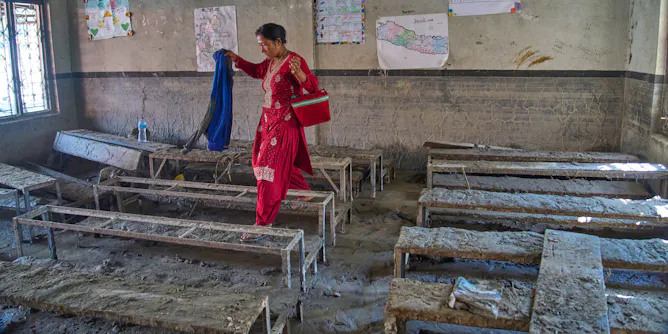
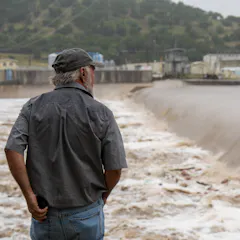
Villagers are picking up the pieces after a catastrophic flash flood ripped through the region.
Articles on Flash floods
Displaying 1 - 20 of 51 articles

A catastrophic flash flood ripped through local villages and has claimed hundreds of lives.
Could more lives be saved if people were trained to act immediately when a flood warning arrives? I believe the answer is yes.

What responsibilities do governments, researchers, humanitarian organizations, and corporations have for the conditions that repeatedly turn hazards into human catastrophes?

Early evidence suggests this was not an ordinary rain-driven flash flood. So what caused it?
Increasing flash flooding is exhausting communities as they’re hit again and again.

We must get used to the idea such events will become more common as the climate changes, and adapt accordingly.
The US had a rare year without a hurricane make landfall, but it saw too much extreme rainfall and flash flooding across the country.
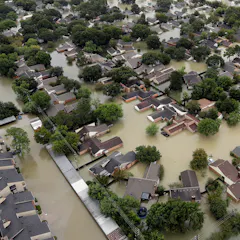
In general, people are moving to safer homes after disasters, but the vast majority are selling, meaning someone else is now taking on that risk. Buyout programs can help.
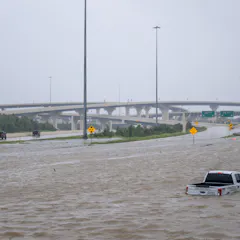
None of the three main options could handle another Hurricane Harvey, but they would give varying benefits based on different sizes, costs and timelines.
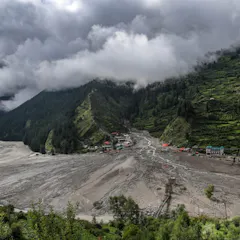
Himalayan floods are natural, but poor planning turns rain into disaster. Reading the land could save lives.
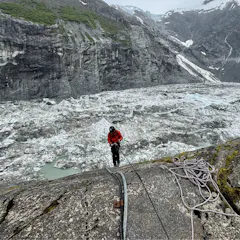
Suicide Basin, an ice-dammed lake on an arm of Mendenhall Glacier, has filled up with meltwater and sent destructive surges of water into Juneau for 3 straight summers.
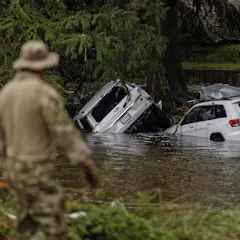
Large parts of the central and eastern U.S. have seen at least 50% more precipitation than normal. An atmospheric scientist explains why and what creates flash flood weather.
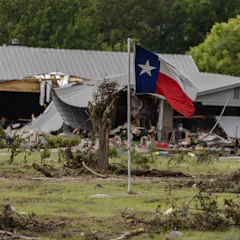
There are ways the state could help these communities, as a team of disaster planning specialists explains.
Understanding the combination of meteorological, geomorphological and hydrological factors that led to the Texas flood could help prevent future disasters.
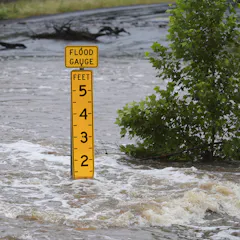
As flash floods ravage areas like the Texas Hill Country, research shows that technology alone cannot save lives during flooding emergencies.

How ready is Australia for its next sudden flood? And what could help to encourage people to leave while there’s still time?
A hydrologist explains why the region is known as Flash Flood Alley and how its geography and geology can lead to heavy downpours and sudden, destructive floods.

Risk models can’t rely just on the past anymore. A team of geoscientists suggests new ways to forecast evolving hazards in real time as cascading disaster risk worsens.
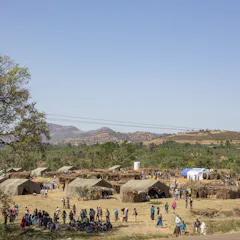
Refugee camps in Ethiopia need to be made more liveable. Creating wetlands to provide greenery, absorb flash floods and purify polluted water may help.
Top contributors
-

Professor of Geology and Environmental Geosciences, University of Dayton
-
Professor of Climate Science, UMass Lowell
-
Faculty Research Scientist, Institute of Arctic and Alpine Research, University of Colorado Boulder
-
Professor of Landscape Architecture and Urban Planning, Texas A&M University
-
Associate Professor of Landscape Architecture and Urban Planning, Texas A&M University
-
Harold T. Stearns Professor of Earth Science, Wesleyan University
-
Disaster Risk Expert, University of Reading
-
Professeur titulaire, groupe de recherche HC3 - Hydrologie Climat & Changements Climatiques, École de technologie supérieure (ÉTS)
-
Vice Chancellor's Research Fellow in Ecology and Entomology, Edith Cowan University
-
Associate professor, Delft University of Technology
-
Assistant Professor of Environmental Studies, University of Tampa
-
Professor Emeritus of Climate and Space Sciences and Engineering, University of Michigan
-
Senior Lecturer in Hydraulics and Water Engineering, University of Greenwich
-
Professor, School of Mathematical And Physical Sciences, University of Technology Sydney
-
ARC Future Fellow and Associate Professor in Climate Science, ARC Centre of Excellence for 21st Century Weather, The University of Melbourne