
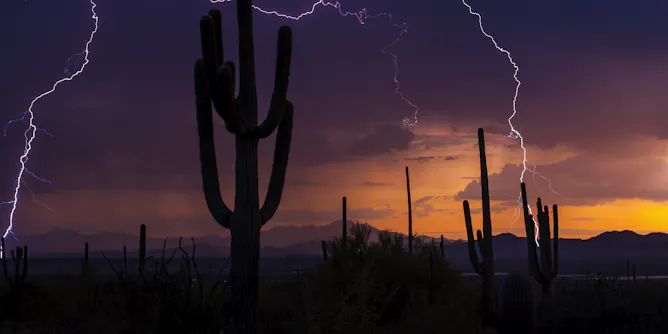
Monsoons are weather patterns that bring thunderstorms and heavy rains to hot, dry areas when warm, moist ocean air moves inland. They’re challenging to forecast, especially in a changing climate.
Articles on Flash floods
Displaying 41 - 51 of 51 articles

Southern Québec is warming twice as rapidly as the rest of the world due to the progressive loss of snow cover. An average annual warming of 3 C to 6 C is expected by the end of the century.
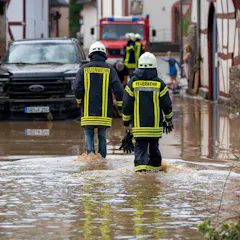
Catastrophic floods in north-western Europe have shown how badly early warning systems can fail.
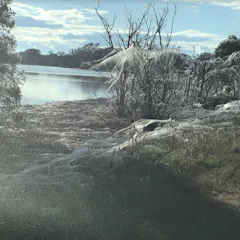
What’s going on here? Why do spiders do this after floods and does it happen everywhere?
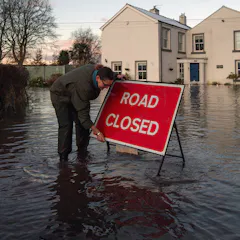
Clear messaging is crucial when dealing with multiple disasters.
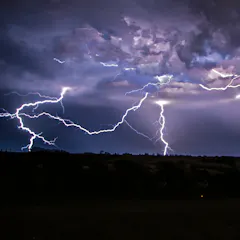
Volatile, unstable air means that it is very tricky to work out exactly where each thunderstorm will be.
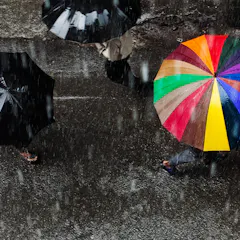
Some rainstorms drench you in a second, while others drop rain in a nice peaceful drizzle. A meteorologist explains how rainstorms can be so different.
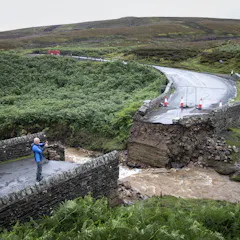
Bridges were often built for pedestrians and small, old cars – not heavy modern traffic and climate-linked flooding.

Climate change is expected to bring the UK both more heatwaves, and more intense rainfall.
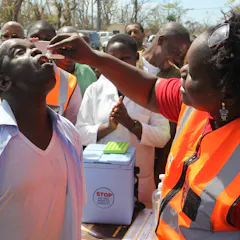
Cyclone Idai showed just how unprepared SADC is to respond to major natural disasters.
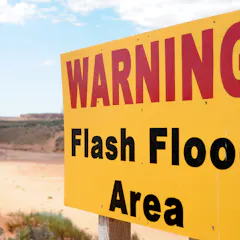
To lessen the impacts of flash flooding in dry regions like Jordan, we need to educate local authorities on how best to manage their water.
Top contributors
-

Professor of Geology and Environmental Geosciences, University of Dayton
-
Professor of Climate Science, UMass Lowell
-
Faculty Research Scientist, Institute of Arctic and Alpine Research, University of Colorado Boulder
-
Professor of Landscape Architecture and Urban Planning, Texas A&M University
-
Associate Professor of Landscape Architecture and Urban Planning, Texas A&M University
-
Harold T. Stearns Professor of Earth Science, Wesleyan University
-
Disaster Risk Expert, University of Reading
-
Professeur titulaire, groupe de recherche HC3 - Hydrologie Climat & Changements Climatiques, École de technologie supérieure (ÉTS)
-
Vice Chancellor's Research Fellow in Ecology and Entomology, Edith Cowan University
-
Associate professor, Delft University of Technology
-
Assistant Professor of Environmental Studies, University of Tampa
-
Professor Emeritus of Climate and Space Sciences and Engineering, University of Michigan
-
Senior Lecturer in Hydraulics and Water Engineering, University of Greenwich
-
Professor, School of Mathematical And Physical Sciences, University of Technology Sydney
-
ARC Future Fellow and Associate Professor in Climate Science, ARC Centre of Excellence for 21st Century Weather, The University of Melbourne