
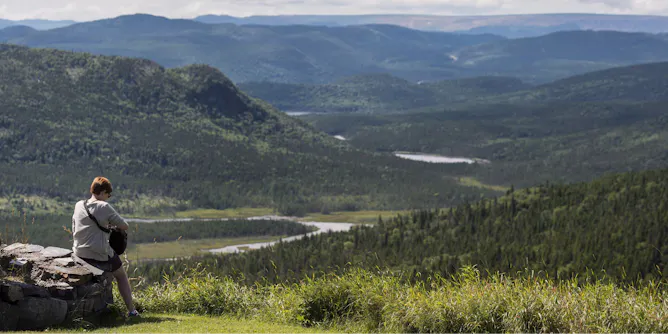
Indigenous Protected and Conserved Areas face significant hurdles but nevertheless remain a key way to advance reconciliation and environmental goals.
Articles on First Nations
Displaying 181 - 200 of 434 articles
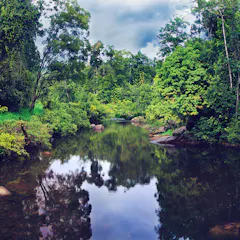
When people first came to Australia 65,000 years ago, the Earth was in an ice age. Then the seas rose, drought and floods came – and still people endured.

Our new study reveals a mosaic of habitable landscapes – now submerged by the ocean – once supported up to 500,000 people living in Australia’s northwest.

Dogs have lived with Indigenous Americans since before they came to the continent together 10,000 years ago. A new analysis reveals the lineage of one 1800s ‘woolly dog’ from the Pacific Northwest.
Seven Williams Treaties First Nations continue to call on the provincial government to adequately consult them when making important decisions on their lands in the Greenbelt and beyond.

Justin Trudeau has been in power for almost a decade, achieving some of his objectives and stalling on others. What will be his legacy, and is constitutional reform in the cards in the next two years?
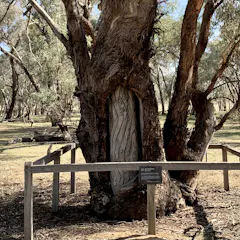
A new study unlocks the mysteries of ancient burial marker trees made by Wiradjuri people in southeastern Australia.

Poor sleep deprives First Nations people of the chance to connect with culture. So they co-designed a sleep apnoea program they’d actually use.
The river wasn’t merely a physical entity – it was a symbol of spiritual and cultural significance, serving as the life force which flows through Country.

The tiny remote community of Santa Teresa spent seven years fighting for compensation for poor public housing. Now that the High Court has ruled in their favour, what does it mean for other renters?

Australia’s road to net zero must pass through Indigenous-held land, which is likely to host many clean energy projects. First Nations people want partnerships that help them protect their Country.
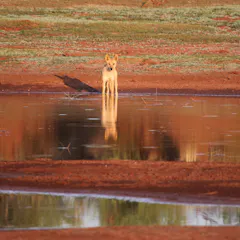
There’s been a long-standing debate over whether dingoes started out wild or domesticated. One thing is clear – they had a close relationship with First Peoples.
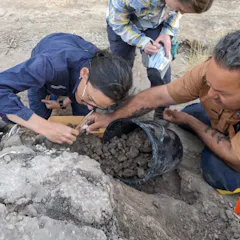
The bones of the animal were found eroding from the ground. After careful analysis, it will be reburied on Country.
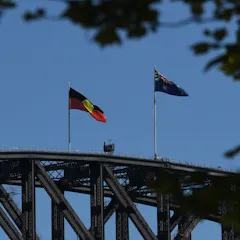
In the end, the “yes” case failed to answer two basic questions: what was the problem to be solved, and how would the Voice help solve it?
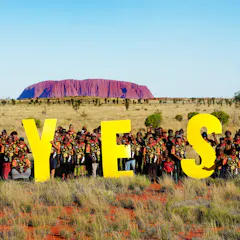
Voice supporters are not looking for division, but rather a desire to play a role in the future of a nation that accepts it’s our country, too.
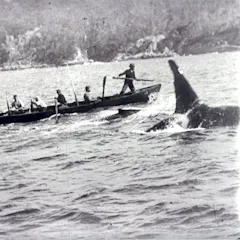
On New South Wales’ southern coast, First Nations groups and European whalers hunted alongside orcas. But what happened to this unusual group?
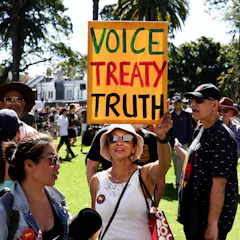
Plus a view on the Voice referendum from Canada. Listen to The Conversation Weekly podcast.
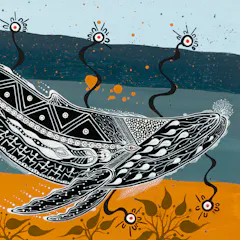
For Australia’s saltwater people, the migration routes of humpback whales represents an important songline

Saskatchewan’s provincial government must work with Indigenous nations on a shared vision for the future that is more likely to withstand the tests of time and litigation.

To honour Truth and Reconciliation Day, we spoke with Terri Cardinal, who headed up one of the many community searches for the children who went missing while attending an Indian Residential School.
Top contributors
-

Professorial Fellow, University of Canberra
-
Professor, Australian and Aboriginal History, Faculty of Arts, Design and Architecture, Convenor: Indigenous Land & Justice Research Group, UNSW
-
Professor of Law, University of Technology Sydney
-
Director of Monash Indigenous Studies Centre, Chief Investigator for the Australian Research Council Centre of Excellence for the Elimination of Violence against Women (CEVAW), School of Philosophical, Historical & International Studies, School of Social Sciences (SOSS), Monash University
-
Executive Co-Director, UNU Hub on Empowering Communities to Adapt to Environmental Change, United Nations University; University of Calgary
-
Associate professor, Faculty of Law, L’Université d’Ottawa/University of Ottawa
-
Adjunct Professor, Stout Research Centre, Victoria University of Wellington and Auckland University of Technology, Professor of Political Science, Charles Sturt University
-
Associate Dean of Business (Indigenous Leadership & Engagement); Director, UTS Centre for Indigenous People and Work, University of Technology Sydney
-
Senior Lecturer, School of Geography, Earth and Atmospheric Sciences, The University of Melbourne
-
York Research Chair in Environmental Law & Justice in the Green Economy, York University, Canada
-
Research Fellow in Disaster Resilience, Monash University
-
Senior research fellow, Curtin University
-
Adjunct Senior Research Fellow, Department of Archaeology and History, La Trobe University
-
Associate Professor of Public Policy, Crawford School of Public Policy, Australian National University
-
Assistant Professor, Indigenous Methodologies, Chanie Wenjack School of Indigenous Studies, Trent University