
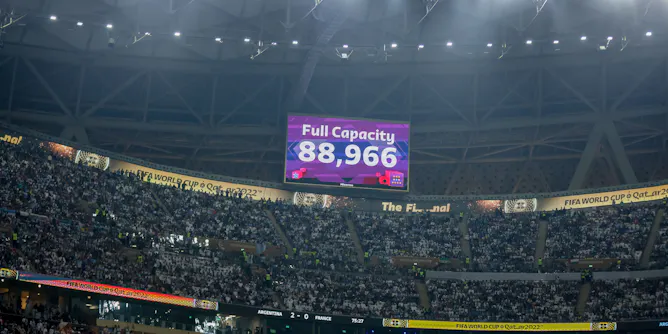
The economic outlook for World Cup host cities isn’t looking good – but there’s still time to change that.
Articles on FIFA World Cup 2026
Displaying 101 - 120 of 124 articles

More matches, smaller nations, significant rule changes – the 2026 World Cup will be vastly different to the 1994 version in the US.
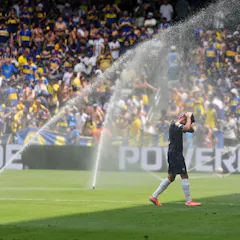
The heat stress players may face during the 2026 FIFA World Cup could negatively affect their performance and pose a threat to their health.

Public awareness campaigns around the World Cup and other sporting events are well intentioned – but not backed by research.

The author of a book chronicling the evolution of the global game explores the origins of association football.

Rather than a tourism event, Canada should use the 2026 FIFA World Cup spotlight to attract international talent and convert them into residents and economic contributors.
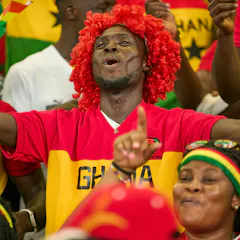
Africa is finally ready to disrupt the global football status quo.

Extreme weather, both heat and rain, are expected to hit World Cup venues this summer.

Canada’s tourism industry enters the summer riding one of the strongest years on record, but high airfares, rising fuel costs and a troubled geopolitical climate could change this year’s outlook.
Betting has turned passion into a transaction, with poor families in Brazil and elsewhere spending money that could have gone to food, transport, diapers, electricity, or rent.

As FIFA comes to town with Saudi Aramco in tow, now is the time for Toronto City Council to revive discussions about banning fossil fuel advocacy ads.
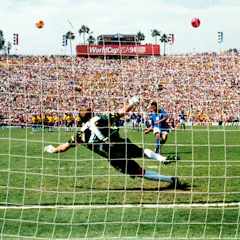
Global soccer was in the doldrums in the early 1990s – with poor ethics and boring defensive tactics. Then FIFA set about changing the game.

While FIFA’s revenues have exploded as fans pay higher-than-ever prices, the relative share of money going to support global soccer development has decreased.

The 2026 World Cup is likely to reveal a deep ethical poverty at the heart of ‘the world game’ thanks to two leaders who have much in common.

On the field, football has the power to bring cultural unity. But crackdowns on immigrants and soaring costs will make it more difficult to attend.

In crowded events like the FIFA World Cup, a single imported measles case can spread rapidly due to visitors from areas with varying vaccination coverage.

As Canada co-hosts the 2026 World Cup, its men’s soccer team offers a more diverse and inclusive vision of national identity than the country’s traditional sports have provided.

For two decades, researchers have studied soccer ball aerodynamics. Latest tests suggest the 2026 ball is more stable, but with a slightly shorter range.
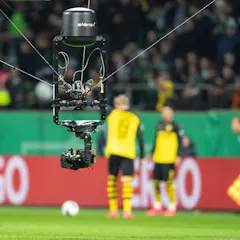
Cameras mounted on the referee, trialled at the Fifa Club World Cup last year, will show us what the ref can – and can’t – see.
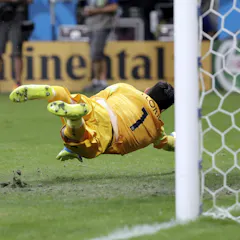
The new playing fields are rolling out in stadiums from Mexico to Canada. Creating the perfect pitch in very different climates requires the right grasses and some creative tricks.
Top contributors
-

Senior Lecturer of Pedagogy and Sports Studies, University of Sydney
-
Senior Lecturer in Health and Physical Education, University of Tasmania
-
Professor in Education, Flinders University
-
Emeritus Professor of Cultural Research, Institute for Culture and Society, Western Sydney University
-
Doctoral Researcher in Sport Policy and Governance, Loughborough University
-
Senior Lecturer in Sport Management, Loughborough University
-
Associate Professor in Data Science, Sports Analytics and AI, The University of Western Australia; Audencia
-
Senior Lecturer in Motor Learning and Skill Acquisition, Western Sydney University
-
Lecturer in Health and Physical Education, University of Tasmania
-
Senior Lecturer and Football Techncal Director, Curtin University
-
Assistant Professor, Sport Management, Brock University
-
Postdoctoral fellow, University of Groningen
-
Professor and Chair of Allied Health Studies, Stephen F. Austin State University
-
Professor of Engineering Practice, Purdue University
-
Professor of International Affairs, Georgia Institute of Technology