
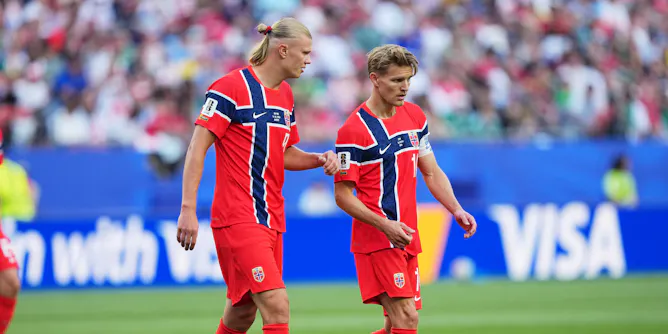
Despite some XL players, such as Norway’s 195cm Erling Braut Haaland, the average height of all the teams is strikingly similar.
Articles on FIFA World Cup 2026
Displaying 61 - 80 of 124 articles
Following the World Cup but confused by some of the language used by commentators and fans? You’re not alone.

A sport psychologist takes a look at disruption, tactical creativity and controlled mind-wandering in the modern game.
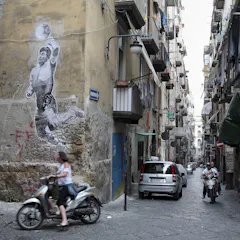
A philosopher of sport guides readers through the ethics of Diego Maradona’s most celebrated goal – and his most controversial.

Millions of World Cup visitors come from countries where tipping isn’t customary. A hospitality management professor explains what that means for service workers in Canada.
For most observers, the World Cup is about soccer, national pride and global celebration. But for host cities, it’s also a public health event. Here’s how nursing students could help.
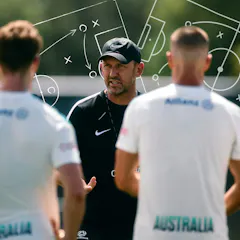
How did the Socceroos manage to stun Turkey at the World Cup, and what are their chances going forward?
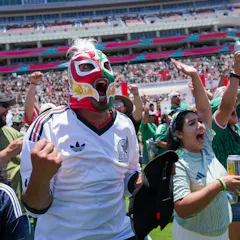
From the cringey ‘U-S-A!’ to the iconic ‘You’ll Never Walk Alone’, the battle for soccer’s top prize starts in the stands.
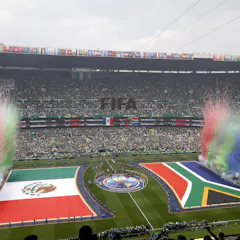
Among the 48 nations contesting the FIFA World Cup, how much do demographic factors like population and median age matter? See how your national squad compares.

Thanks to its strong assets, substantial financial reserves, and sustained investment capacity, FIFA remains one of the most powerful sports organizations in the world.
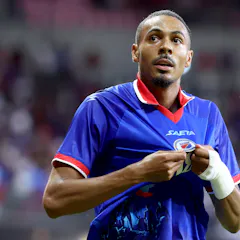
The move is part of a longer history of obscuring and demonizing the Haitian Revolution and its leader, Jean-Jacques Dessalines.
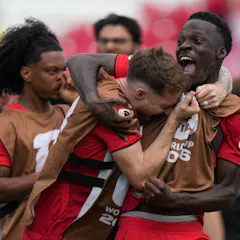
Team sports like soccer or hockey can include situational pressures on specific positions such as goalies or anyone taking a penalty shot.
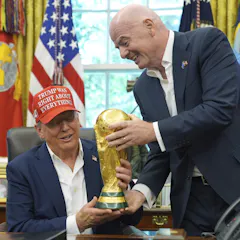
There’s a crucial difference between soft power and spectacle. Early signs indicate the World Cup will offer more of the latter for Trump’s America.
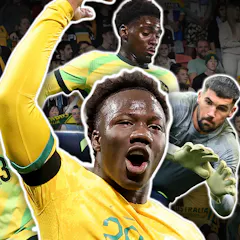
What to make of the Socceroos’ World Cup squad? It says plenty about which areas produce elite players – and the regions that miss out.
Dynamic pricing is not always a bad system. But monopolies usually are.
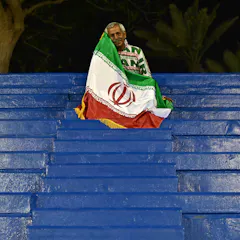
Iran’s team faces a hostile reception from the US government and some of its brethren in the diaspora. Yet others hope the event will trump politics — for now.

Listen to football historian John Sloop trace the history of soccer in the US on The Conversation Weekly podcast.
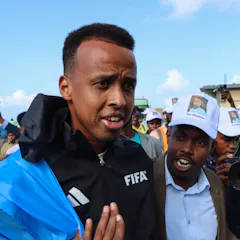
Instead of bringing people together, the World Cup is in danger of being remembered for the climate of exclusion and fear generated by one of its host nations.
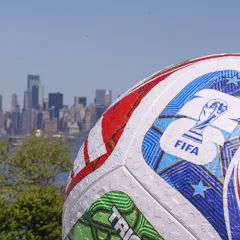
An expanded tournament means traditionally strong nations may not all progress as far as usual at the World Cup.
Test your knowledge of the beautiful game with this special World Cup trivia quiz based on The Conversation’s articles.
Top contributors
-

Senior Lecturer of Pedagogy and Sports Studies, University of Sydney
-
Senior Lecturer in Health and Physical Education, University of Tasmania
-
Professor in Education, Flinders University
-
Emeritus Professor of Cultural Research, Institute for Culture and Society, Western Sydney University
-
Doctoral Researcher in Sport Policy and Governance, Loughborough University
-
Senior Lecturer in Sport Management, Loughborough University
-
Associate Professor in Data Science, Sports Analytics and AI, The University of Western Australia; Audencia
-
Senior Lecturer in Motor Learning and Skill Acquisition, Western Sydney University
-
Lecturer in Health and Physical Education, University of Tasmania
-
Senior Lecturer and Football Techncal Director, Curtin University
-
Assistant Professor, Sport Management, Brock University
-
Postdoctoral fellow, University of Groningen
-
Professor and Chair of Allied Health Studies, Stephen F. Austin State University
-
Professor of Engineering Practice, Purdue University
-
Professor of International Affairs, Georgia Institute of Technology