
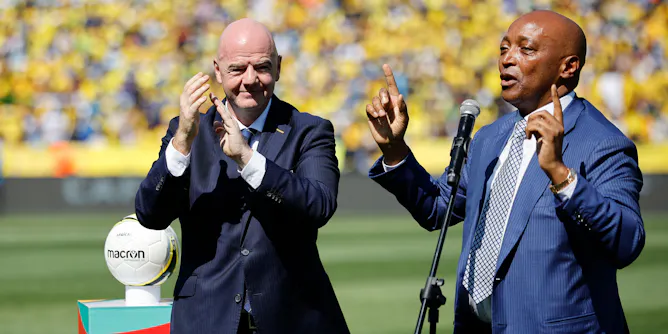
African nations consistently vote for Infantino because they depend on Fifa for financial support.
Articles on FIFA
Displaying 1 - 20 of 230 articles
An institution that belongs to everyone and to no one is a fragile thing. It survives on a shared conviction that some goods are not for sale and belong to the community.
Fifa’s recent sell-off controversy has reignited the debate about ownership of football and other sports.
Fifa’s expansionist strategy is pushing elite footballers beyond acceptable limits.
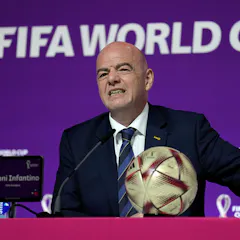
Recent FIFA controversies have exposed structural tensions within world soccer, which may result in significant change at the top.
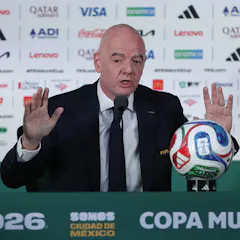
The threat is a response to FIfa’s proposal to sell stakes in its football competitions.
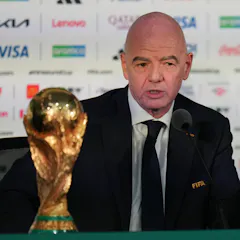
There is widespread unease about changes to the world game that will hyper-commercialise it, with the fallout potentially enormous.
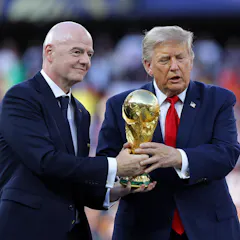
The game belongs to the fans. Fifa would do well to remember that.
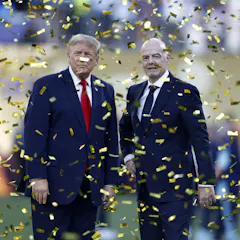
National football associations are lining up to endorse Infantino for a fourth term as Fifa president.
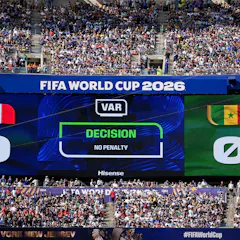
Two overturned World Cup goals, in Argentina-Egypt and Norway-England, show that replay can reveal a foul, but only a referee can decide how far back the review should go.
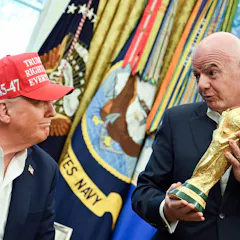
A string of controversies look set to turn the tournament into a lesson in how soft power can fail.

Soccer is already Canada’s most-played sport, but its fans have historically lagged behind its players. A recent record-breaking World Cup run may help close that gap.
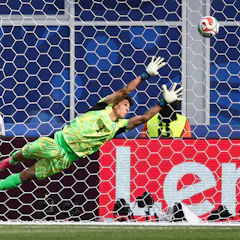
Is the Trionda ball being used at the tournament traveling too fast or flying unpredictably? We asked a physicist who tested the ball.

The FIFA decision to suspend Folarin Balogun’s red card is a compact case study in how power can shape the application of rules without ever rewriting them.

The decision to change the rules because of pressure from the White House will destroy all trust in football’s governing body.

Sport has always been political. But if reports Trump has wielded political power to change on-field decisions are true, it signals a dangerous precedent.
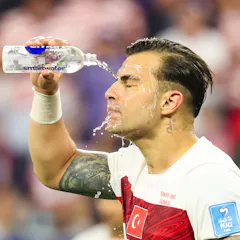
FIFA can pause the match and sell the spectacle, but the 2026 World Cup shows the limits of its control over global football.
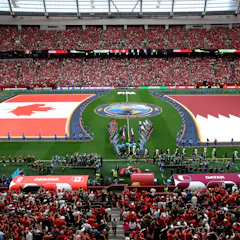
Hosting the FIFA World Cup games can prove a propaganda win for authoritarian nations. But the data suggests the tournament favors democracies.

While it’s impossible to predict the champion, the 2026 World Cup already has many winners: the qualifying teams, the host countries and FIFA are all reaping record financial and media benefits.

The football technology being showcased at the 2026 World Cup often has its origins in university research.
Top contributors
-

Professor of AfroEurasian Sport, EM Lyon Business School
-
Professor and Chair of Allied Health Studies, Stephen F. Austin State University
-
Professor of Communications, Howard University
-
Reader in Sociology of Sport, Loughborough University
-
Associate Professor in Accounting and Sport Finance, University of Portsmouth
-
Professor of Politics, University of Sussex
-
Emeritus Professor of Cultural Research, Institute for Culture and Society, Western Sydney University
-
Professor of Sport Management, University of Michigan
-
Professor of International Sport Business, Head of Sport Business Insights Group, Victoria University
-
Associate Professor of Sport Management, University of Technology Sydney
-
Professor, Kinesiology & Physical Education; Fellow, Balsillie School of International Affairs, Wilfrid Laurier University
-
Senior Lecturer, Modern European History and Sports History, Macquarie University
-
Senior Lecturer in Sport and Exercise Psychology, The Open University
-
Assistant Professor, Sport Management, Brock University
-
Senior Lecturer, Department for Health, Humanities and Social Sciences, University of Bath