
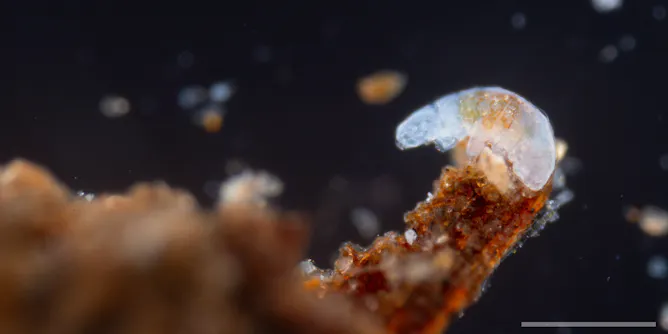
Tardigrades make a unique damage suppressor protein that researchers are working to harness for medicine, space, agriculture, data storage and more.
Articles on Extremophiles
Displaying all articles
Using digital blueprints of the metabolism of microbes, scientists can simulate expensive and time-intensive experiments set in space, power plants and farm fields.
A new database documents 16,000 proteins from deep-sea organisms that could yield new inventions.
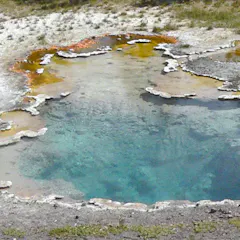
Computer analysis of the genomes of extremophiles — organisms that live in extreme environments — reveals that their living conditions are recorded in their DNA.

How do organisms survive extreme conditions – and how can their adaptations help us develop better technology?
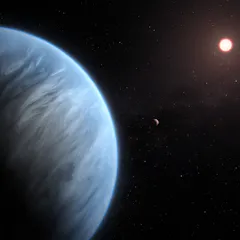
NASA scientists have discovered a new planet orbiting around a nearby star that is in a habitable zone. But does this planet have liquid oceans that can support life?

Microbes have the ability to survive in extremely hot and cold conditions. This makes them invaluable tools for research: they can teach us how life has evolved and how we survive.
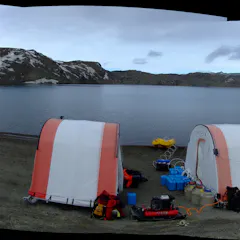
Imagine a lake so salty its water exists in a liquid state at -20 °C – then picture something thriving in that seemingly lethal environment. Such an organism exists; several of them, in fact. In a paper…
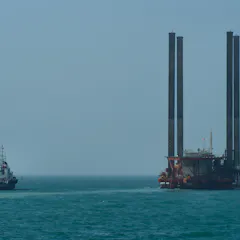
Over the past 20 years, research has revealed large populations of creatures living many miles below the Earth’s surface. Now, a new study published in the journal Nature Scientific Reports conducted by…
Top contributors
-

Director, Genomics Research Institute; Director, Centre for Microbial Ecology and Genomics, University of Pretoria
-
Professor of Biotechnology and Biomolecular Sciences, UNSW
-
Research Scientist of Planetary Studies, NASA
-
Professor of Geology and Petroleum Geology, University of Aberdeen
-
PhD Researcher in Earth and Environmental Science, Cardiff University
-
Researcher in Marine Governance, Stockholm University
-
Associate Professor in Ocean Stewardship, Stockholm University
-
Associate Professor Biology, Western University
-
Professor, Computer Science, University of Waterloo
-
Postdoctoral Research Associate in Microbial Genomics and Systems Biology, University of Wisconsin-Madison
-
Graduate Research Assistant, University of Iowa