
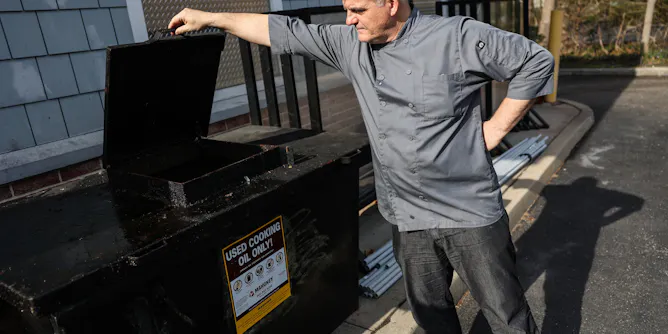
No longer viewed only as waste, used cooking oil is a common ingredient in biofuels.
Articles on Biofuels
Displaying 1 - 20 of 134 articles

Exciting as it sounds, most of this technology is still locked away in labs, not available in airports.

The new federal law favors energy technologies that are already profitable and increase global warming over cleaner approaches that could use the investment support.

Some technologies could rapidly cut emissions, while others do little to fight climate change. The House bill favors the latter while nixing support for the former.

A chance encounter on a rocky seashore led one professor to invent autonomous robotics that can harvest the power of seaweed.

The sargassum problem is just one of many creeping slow onset events that is being exacerbated by climate change.

Massive political efforts are needed to tackle the root causes of hunger – conflict, poverty, inequality. Technology alone is not sufficient.
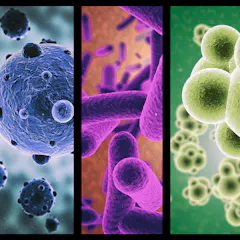
Using digital blueprints of the metabolism of microbes, scientists can simulate expensive and time-intensive experiments set in space, power plants and farm fields.
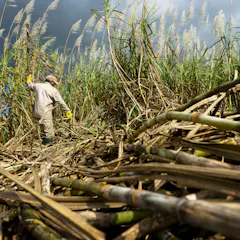
Burning sugarcane trash is common in South Africa. With support small-scale sugarcane farmers could turn this plant waste into bioenergy.
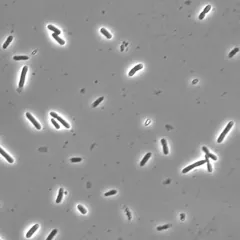
The world is full of microbes, and many of them like the taste of waste. Some carbon monoxide-loving microbes can be harnessed to transform waste into valuable biofuel.
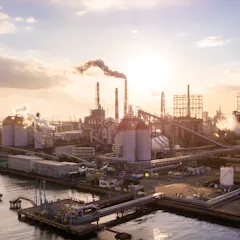
Repurposing fossil fuel infrastructures to supply clean fuels might make more immediate economic and environmental sense than mass electrification of transport and industry.

Sweet sorghum has multipurpose post-harvest uses. It can produce grains, animal feed and sugary juice, making it unique among crops.

Organisms that produce synthetic fuel and suck carbon out of the air are just some of the possibilities of ‘engineering biology’ – if policymakers can shepherd the industry towards success.

Producing energy from harvested trees and other plants – bioenergy – might sound like a greener option, but it’s not a simple issue.

Beyond ordinary consumption, new research finds uses for kola nut in areas like agriculture and health.

To meet New Zealand’s target of a net-zero carbon economy by 2050, industrial heat process will have to change. Here are the four main options.
Biofuels are heralded as a climate-friendly replacement of fossil fuels, but encouraging people to drive less and shift to other modes of transport would cut more emissions.

Women’s relationship to the environment is shaped by their social position.

Ultra long-haul flights make it possible to go Sydney to London non-stop. But does the world need them, given they are more polluting and less efficient?
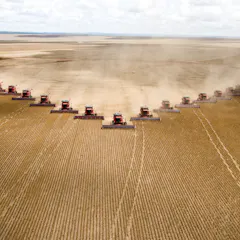
A new study finds that by 2030, less than one-third of the world’s major crop harvests will go directly to feed people.
Top contributors
-

Professor of Agronomy (Agriculture), University of Sydney
-
Assistant Professor of Energy Resource Economics, State University of New York College of Environmental Science and Forestry
-
Adjunct Professor, United States Study Centre, University of Sydney
-
Professor and Director Centre for Agricultural Engineering, University of Southern Queensland
-
Professor of Chemistry, Monash University
-
Professor of Civil and Environmental Engineering, Rice University
-
Economist, Fenner School, Australian National University
-
Professor, Queensland University of Technology
-
Emeritus Professor, Energy and Climate Mitigation, Te Kunenga ki Pūrehuroa – Massey University
-
Assoc Prof. Renewable Energy, Monash University
-
Research Professor Emeritus, University of Michigan
-
Professor of Sustainable Tourism, Griffith Institute for Tourism, Griffith University
-
Professor Spatial Transformation, Hanze University of Applied Sciences, Groningen
-
Professor of Forestry Operations, University of the Sunshine Coast
-
Professor of Sustainable Chemistry, Griffith University