
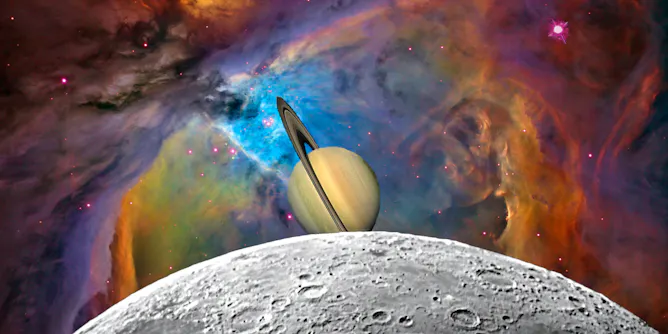
As the list of known planets beyond our solar system grows, the search for their moons is intensifying. One reason: they might hold the key to finding life elsewhere in the universe.
Articles on Extraterrestrial life
Displaying 121 - 140 of 159 articles
Have we been jumping to conclusions about water on Mars?
Dust from pulverised comets rather than an alien megastructure could explain odd flicker of distant star.

New research gives a clue about what happens when there are two habitable worlds in the same solar system.
Is there another Earth out there? Certainly, there are a few contenders
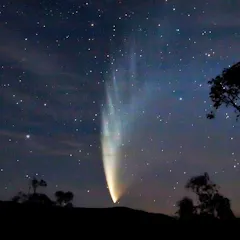
Cosmic dust may have jump-started life on Earth as well as on distant planets.
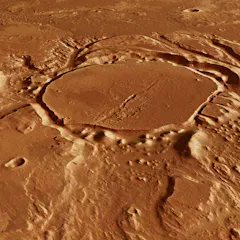
The solar wind has stripped Mars of its atmosphere, making it a lot less habitable than it once was.
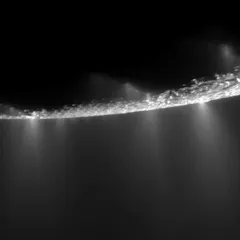
Study pinpoints some of the chemical signs of microbial life on Enceladus. The study could in part be corroborated by Cassini’s flyby of the moon.
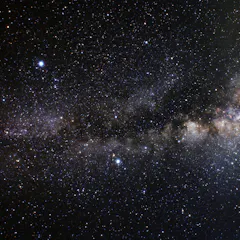
The chance that Kepler has spotted construction of a Dyson sphere are very low but it could also be the ruins of such a structure.
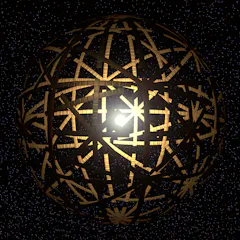
There’s a lot of speculation about a star behaving strangely in our galaxy. But even if it’s not evidence of alien intelligence, it’s sure to be an amazing discovery.
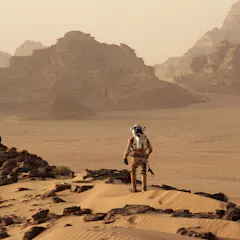
NASA has set a target date of 2030 for a manned mission to Mars. With no real scientific breakthroughs needed, success depends on developing the proper technology.
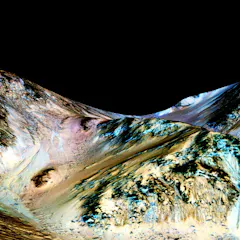
Water on Mars could mean life on Mars. But how do we explore it without destroying it?
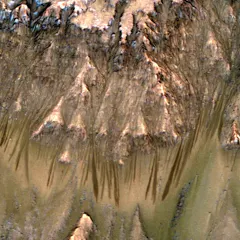
New research suggests that salty water exists on Mars in the summer months. But that wouldn’t be the first time we hear of water on the red planet. So what’s new and what isn’t?
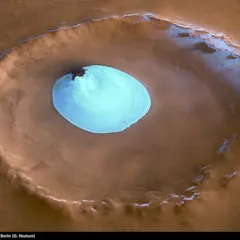
Ice is everywhere in the solar system and there may even be liquid water beneath the surface of a number of planets. But could we ever get to it?
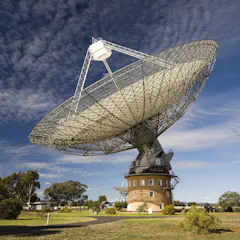
The Parkes radio telescope is part of the US$100 million search for life elsewhere in the universe, but the investment will also benefit other space research at The Dish.
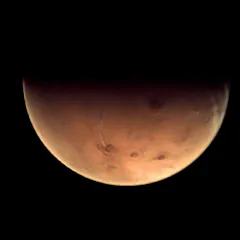
For centuries, scientists have wondered how water channels on Mars formed. Our model suggests that they were caused by water erupting from subsurface lakes on the ancient planet.
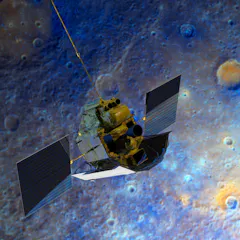
It was the first probe to find water on Mercury, the planet closest to the sun. Its mission nearly over, MESSENGER is about to crash into the planet it’s been observing.
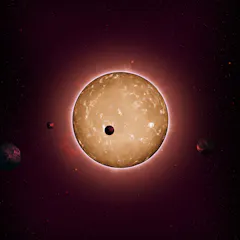
One of the crucial variables in calculating the likelihood that alien life exists elsewhere in our galaxy is the number of stars that possess planetary systems, and the proportion of those planets that…
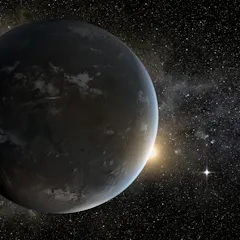
More than 1,000 exoplanets have now been discovered by the Kepler Space Telescope, announced NASA this month, and the figure continues to climb. Three of the newly confirmed Kepler planets are thought…
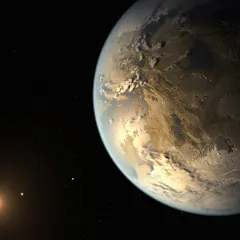
When it comes to finding the right kind of planet to target in the search for life elsewhere in the universe, the size of the planet matters. All planets are believed to form by a process of competitive…
Top contributors
-

Professor of Planetary Geosciences, The Open University
-
Professor (Astrophysics), University of Southern Queensland
-
Professor of Physics, Deputy Director (Solar System) at the Mullard Space Science Laboratory, UCL
-
University Distinguished Professor of Astronomy, University of Arizona
-
Professor (Physics), University of Southern Queensland
-
Lecturer, University of Southern Queensland
-
Professor of Planetary and Space Sciences, The Open University
-
Professor of Astronomy and Astrophysics, Penn State
-
Honorary Fellow, Space and Astronomy, CSIRO; Western Sydney University
-
Professor and Director of the Australian Centre for Astrobiology, UNSW
-
Professor in Philosophy of Science, Durham University
-
Senior research fellow, Curtin University
-
Senior Instrument Scientist, Australian Nuclear Science and Technology Organisation
-
James Martin Research Fellow, Future of Humanity Institute & Oxford Martin School, University of Oxford
-
Sir Bernard Lovell chair of Astrophysics, University of Manchester