
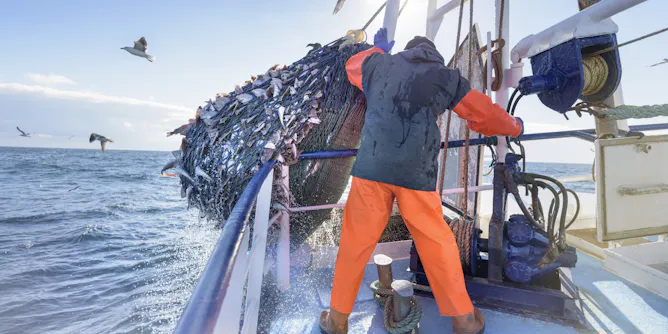
Migrating animals are vital to the health of ecosystems worldwide but a new report says they are in grave danger.
Articles on Extinction
Displaying 101 - 120 of 421 articles
It’s hard work saving birds from extinction, but we have the evidence of successful interventions to show we can avoid further losses.
Native rats and mice don’t usually evoke sympathy among the Australian public. The common names for the species – such as swamp rat – do little to help.

Australian scientists have developed a cure for myrtle rust which could stop an unprecedented extinction event unfolding in native forests.

Nature, everyone agrees, is in trouble. But can Australia’s new market-based mechanism help?
The number of bugs on our windscreens has plummeted in recent years. Are we driving faster? Or are there fewer of them?
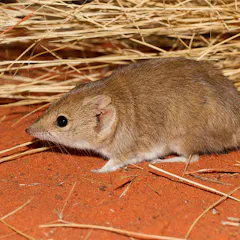
We found three previously unknown species of mulgaras hiding in museum collections – but all three have been driven to extinction since European colonisation of Australia.
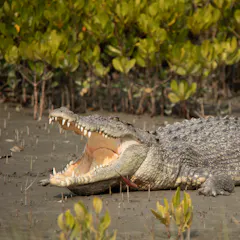
After decades of absence, crocodiles are now being seen off Bali, Lombok and Java. That’s good for the species – but what about us?
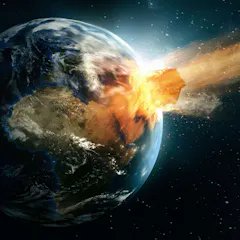
What are the odds of the end of humanity? There’s no real way to know.
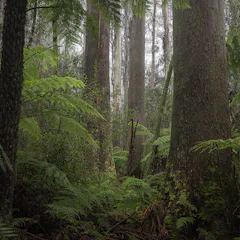
Victoria’s iconic mountain ash forests are reeling from decades of logging and fire. They’re not recovering on their own.
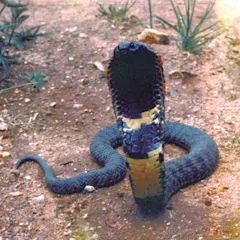
The Nyanga rinkhals can tell us about our own evolution.
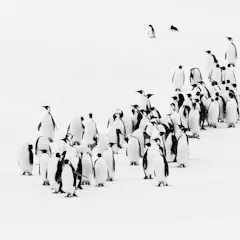
If we want to live in a world with Emperor penguins, we need to cut emissions steeply and protect parts of the ocean around Antarctica where climate change will have the biggest impact.
A supercontinent could raise global temperatures to such a degree that it could wipe out mammals.
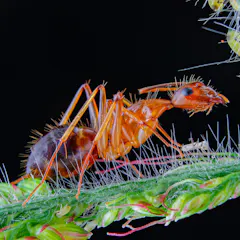
Invasive ants are a major threat to biodiversity, according to a study.
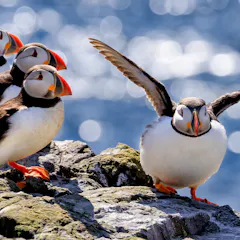
A new assessment of the population status of Europe’s birds reveals that the number of species that are of conservation concern is increasing.
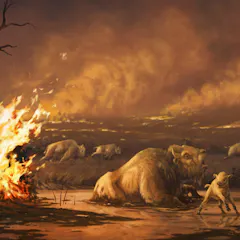
New findings from the La Brea Tar Pits in southern California suggest human-caused wildfires in the region, along with a warming climate, led to the loss of most of the area’s large mammals.

Giving AI any degree of executive control could be dangerous for humans.

I have spent five years tracking down more than 10,000 accounts of wildlife by naturalists, travellers, historians and even poets, all written between 1529 and 1772
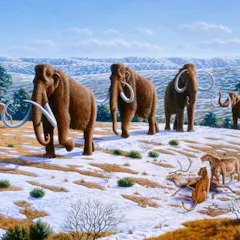
A forensic technique more often used at modern crime scenes identified blood residue from large extinct animals on spearpoints and stone tools used by people who lived in the Carolinas millennia ago.
The latest warning by AI experts is bound to create alarm, so its authors should be more specific and clarify their concerns.
Top contributors
-

Professor of Conservation Biology, Charles Darwin University
-
Professor in Wildlife Ecology and Conservation, School of Life & Environmental Sciences, Deakin University
-
Professor of Conservation and Sustainable Livelihoods, Charles Darwin University
-
Matthew Flinders Professor of Global Ecology and Node Leader in the ARC Centre of Excellence for Indigenous and Environmental Histories and Futures, Flinders University
-
Professor in Conservation Science, School of the Environment, The University of Queensland
-
Professor of Wildlife Conservation, Australian National University
-
Distinguished Professor of Ecology, Fenner School of Environment and Society, Australian National University
-
Associate Professor in Vertebrate Palaeontology, Flinders University
-
Professor in Conservation Science, School of Ecosystem and Forest Science, The University of Melbourne
-
Professor, Urban Ecology and Biodiversity, The University of Melbourne; RMIT University
-
University Fellow in Biodiversity, Charles Darwin University
-
Professor of Environmental Management, The University of Queensland
-
Lecturer in the School of Applied Sciences, Edinburgh Napier University
-
Honorary Research Fellow, University of Sydney
-
Distinguished Research Professor and Australian Laureate, James Cook University