
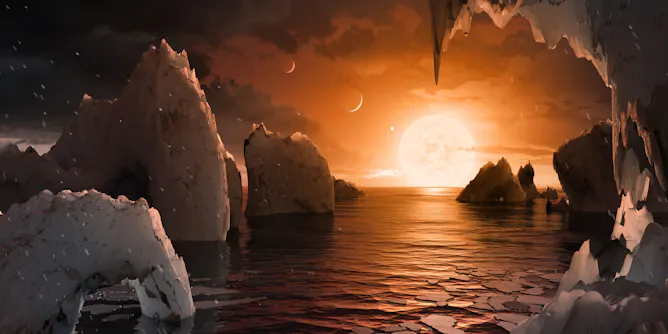
If there’s life on one of the Earth’s seven sisters, chances are it has spread to all of them.
Articles on Exoplanets
Displaying 141 - 160 of 228 articles

Churchill allowed science to flourish. Without a similar attitude in today’s politics, we may hit a bottleneck for life that leaves a Universe without a single human soul to enjoy it.

Over the last 20 years, advances in the field of exoplanet discovery have excited the imaginations of scientists and enthusiasts alike. But we’re in position to know yet whether a planet is habitable.
Colliding black holes to exploding spacecraft, 2016 was an incredible year for astrophysics.

From the discovery of gravitational waves, to the Pokémon Go phenomenon to the Census debacle, it’s been a big year in science and technology.
Ruby and sapphire clouds may be hovering over exoplanet HAT-P-7b.

Sonification is a technique for converting data into sound. It could transform the study of distant worlds.
Atmospheric changes on exoplanets could hold clues to our own environmental problems.

Technology had enabled humans to explore the deep sea, the Earth’s poles, and outer space. But we shouldn’t forget historical lessons about frontiers in the process of traversing them.
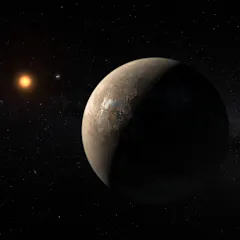
Astronomers have found an Earth-like planet orbiting our nearest neighbour, the red dwarf star Proxima Centauri. So any chance that planet may be habitable?
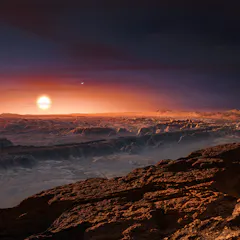
Scientists have finally found an Earth-like planet we may actually be able to visit.
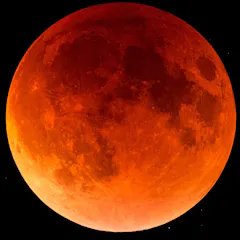
The red hue of the moon during a total lunar eclipse gives astronomers at cue on how to find out more about the planets being discovered around other stars.
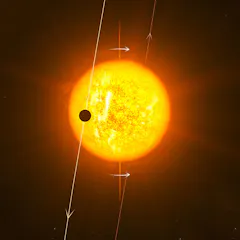
More than three thousand planets have been found orbiting other stars in our galaxy. The challenge now is to find out more about these planets.
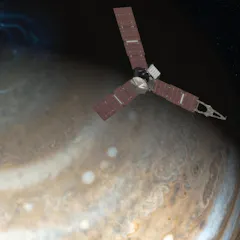
Juno’s visit to Jupiter promises to pick up on many of the unsolved mysteries that still remain in understanding of the Jovian system.
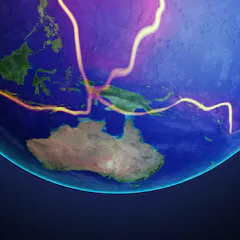
Earth is the only planet in our solar system with both plate tectonics and life. Is there a connection?
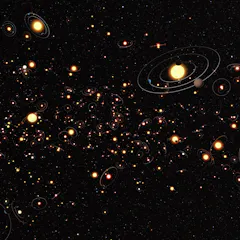
A look at some of the more obscure methods astronomers use to detect planets around other stars, in the second of a two-part series on finding world’s elsewhere in the universe.
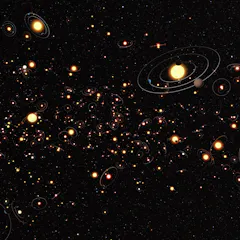
Astronomers have discovered more than 3,000 planets around other stars, so far. In the first of a two-part series we look at how they find world’s elsewhere in the universe.
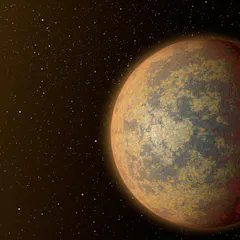
Complex life may be rare in the universe because most planets become either too hot or too cold before life has a chance to get a foothold. This might explain why we have yet to bump into E.T.
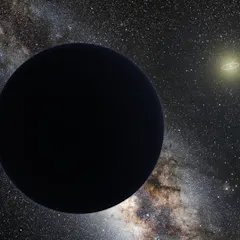
Why Planet Nine should be found in the next few years … if it exists.
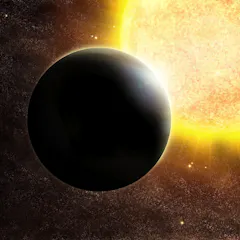
Many of the new planets found in other star systems have some extraordinary orbital behavior. So what’s going on?
Top contributors
-

Professor (Astrophysics), University of Southern Queensland
-
University Distinguished Professor of Astronomy, University of Arizona
-
Professor of Astrophysics Education, The Open University
-
Professor (Physics), University of Southern Queensland
-
Associate Dean for Research and Professor of Astronomy and Planetary Sciences, University of Arizona
-
Lecturer, University of Southern Queensland
-
Postdoc astrophysicist, Mississippi State University
-
Associate Professor, Japan Aerospace Exploration Agency (JAXA)
-
Professor of Planetary Geosciences, The Open University
-
Ernest Rutherford Fellow, The Open University
-
PhD Candidate, University of Southern Queensland
-
Senior Lecturer in Physics, Nottingham Trent University
-
Senior Curator (Astronomy), Museums Victoria Research Institute; The University of Melbourne
-
W J McDonald Postdoctoral Fellow, The University of Texas at Austin
-
Professor and Associate Dean (Research), UNSW