

Storms like 2026’s Hurricane Polo that rapidly intensify can catch communities off guard and leave little time to prepare or evacuate. Being able to forecast those risks can save lives.
Articles on Evacuation
Displaying 1 - 20 of 45 articles

Mobile phones have become part of just about everyone’s emergency infrastructure. But what do you do when the power and service go out?

Evacuations in the face of a wildfire, hurricane or other disaster are stressful and can take more time than you might expect. Here’s why practice helps and what to think about.

The Gironde wildfires reveal how logistics are key in firefighting. Emergency operations in the French region are twofold: providing relief and evacuating large populations.

A longtime diplomat explains how the State Department normally encourages and helps Americans to leave countries amid political instability and war – which didn’t happen over the last week.
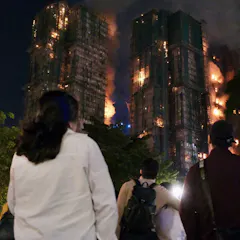
When it comes to evacuating tall buildings in a fire, not everyone can take the stairs. Here’s what else high-rises need.

What if Canada could see the impact of wildfires, floods and traffic congestion before they happen?
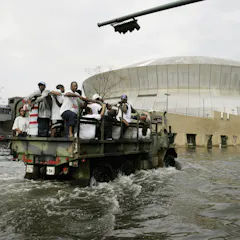
The 2005 hurricane was a disaster made worse by a lack of coordination and communication among governments and emergency leadership on the ground.
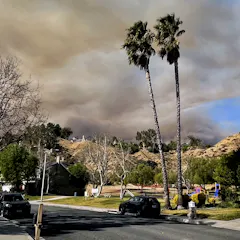
The LA wildfires stand as a reminder that evacuating fast in the face of a disaster isn’t easy, even when you think you’re prepared.

Prisons and jails are difficult to evacuate when wildfires or storms approach. Many of these facilities lack evacuation plans and may keep incarcerated people on-site instead of moving them to safety.

In 1935, a hurricane devastated the Florida Keys, killing over 400 people, many of them World War I veterans. Ernest Hemingway joined the relief efforts – and became enraged at government inaction.
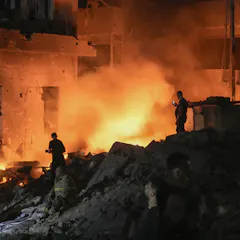
In times like these, validation, human connection and support are some of the best things you can do to protect your own and other people’s mental health.
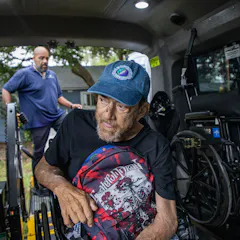
Evacuating is expensive, and for some people the risks of leaving can seem greater than staying despite the storm.

Satellites can detect land moving by just a few millimetres, but we can never be sure exactly how or when a slope will slide.

Israel’s warning to civilians in Gaza of impending attacks must be ‘effective’ under international law, meaning it must not only reach people but allow them sufficient time to evacuate safely.

As the mass evacuation of Yellowknife unfolds, the needs of minority populations will emerge. Past experiences indicate emergency officials may not be ready to meet the needs of a diverse population.

For some people, it’s a choice based on cultural beliefs or economic opportunities provided by the volcano. Other times it’s less a choice than the only option.

Parents and emergency responders repeatedly said evacuation centres should have a separate space for families with very young children. Here’s what else we could do.

Evacuations offer some hope, but only for those that qualify for them.
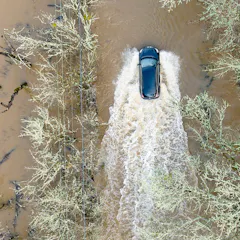
The majority of flood-related deaths involve vehicles in water. What if flood models could warn of the risks street by street using real-time storm forecasts? Machine learning can make it possible.
Top contributors
-

Professor of Political Science, Public Policy and Urban Affairs, Northeastern University
-
Professor in Digital Construction and Fire Engineering, Te Kunenga ki Pūrehuroa – Massey University
-
Associate Professor of Disaster and Emergency Management, York University, Canada
-
Adjunct Professor, School of Nursing and Midwifery, Western Sydney University
-
Postdoctoral Researcher, The Resilience Institute at Boise State University, Boise State University
-
Associate Professor of Civil Engineering, Texas A&M University
-
Assistant Professor of Marine Sciences, Texas A&M University
-
Lecturer in Transport Modelling, Edinburgh Napier University
-
Associate Professor and Principal Fellow in Urban Risk and Resilience, The University of Melbourne
-
Professor of Risk Management, University of Bristol
-
Associate Professor of Global and Sociocultural Studies, Florida International University
-
Professor of Epidemiology and Core Faculty of Disaster Research Center, University of Delaware
-
Coordinator, Veterinary Extension Specialist Group, Colorado State University
-
Associate Professor of Geography, University of Alabama
-
Ph.D. Candidate, Northeastern University