
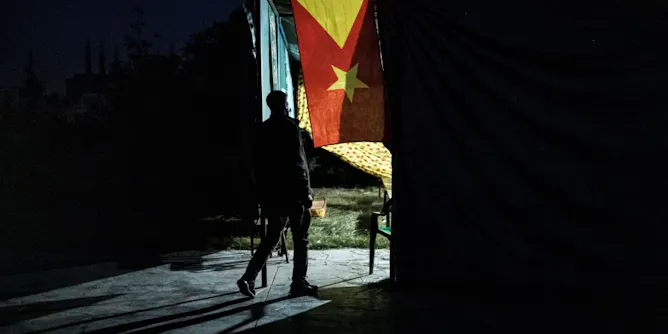
Crisis grips Ethiopia as political divisions spill over into armed conflict and potential civil war looms.
Articles on Ethiopia
Displaying 261 - 280 of 487 articles
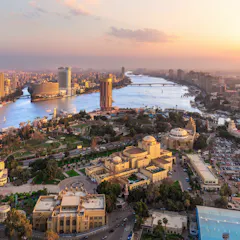
Treaties are needed to govern water resource allocation in the Nile basin region. For this to happen it’s critical to have accurate data on how much water there is.
Baxsan’s tumultuous six-decade journey as a singer was irrevocably tied to Somalia’s national identity and cultural history.

This invasive mosquito thrives in the type of habitat commonly found in urban areas. This means that malaria could become more prevalent in African cities.
The global cost of lost productivity due to depression and anxiety disorders is jarring. Around 4.7 billion days of productivity a year are lost.
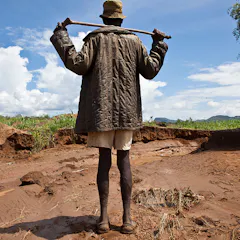
Regreening Africa works directly with 500,000 households to restore one million hectares of agricultural land.
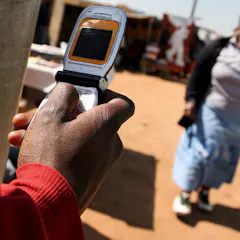
The full benefits of digital democracy are being thwarted by digital exclusion that is driven by the high cost of data.
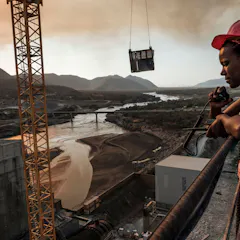
America has historically been a strong Ethiopia ally, but this latest move to withhold foreign direct assistance has thrown its loyalty into question.
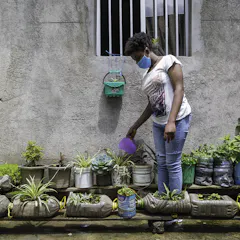
New survey shows the impact of coronavirus lockdowns on young people in Vietnam, India, Ethiopia and Peru.
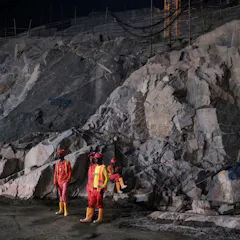
Despite previous threats by Egypt of military action, a war of over the Nile waters is not a serious possibility.
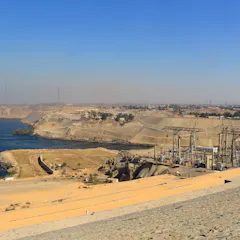
An historical perspective on the politics, dominance and conflicts over the dams on the Nile is useful.
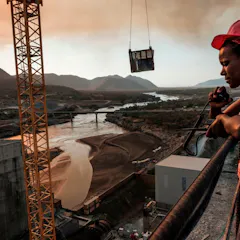
Egypt wants a guarantee that the filling and operation of the Renaissance Dam will not affect the rights it got in 1959.
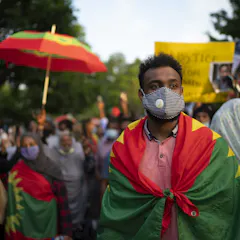
Ahmed Abiy has his work cut out to unify a nation divided along tribal lines

The outspoken singer always considered himself to be at risk, and in Ethiopia people loved him because he didn’t let that risk keep him quiet.
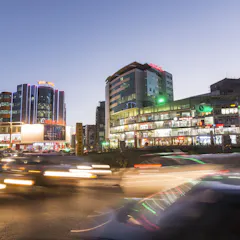
Abiy Ahmed has a vision to upgrade Ethiopia’s capital city but his ambitious megaprojects do not take the majority of Addis Ababa’s residents into account

The teeth and limb bones we studied help to understand the role and lifestyle of these species in extinct ecosystems.

The country must urgently address the politics of ethnicity before it can move towards a workable democracy.
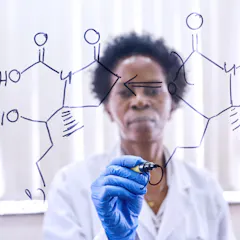
A number of programmes now exist that are helping to close the gender gap in African science, technology, engineering and maths.
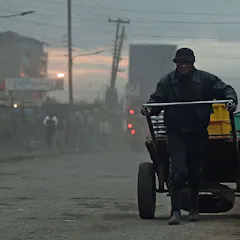
We found that air pollution levels in Nairobi increased by 182% over the study period, Kampala by 162% and Addis Ababa by 62%.
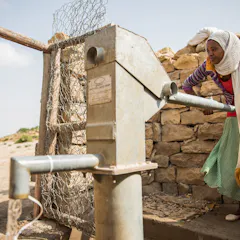
Neglecting existing communal water supplies risks leaving many of the most vulnerable and remote communities unserved.
Top contributors
-

Senior Lecturer of Political Science, Georgia Gwinnett College
-
Visiting Lecturer, University of Roehampton
-
Professor, Weber State University
-
Professor Emeritus in Global Health & Humanitarian Affairs, University of Manchester
-
Ph.D. Fellow, Center for Constitutional Democracy, Indiana University
-
PhD candidate, University of the Pacific
-
Associate Professor, Khalifa University
-
Professor of Geography, Ghent University
-
Professor of Sociology and Global and Africana Studies, University of Tennessee
-
Researcher, Ghent University; Oregon State University
-
Senior Research Fellow, Horn of Africa and Southern Africa, Institute of Commonwealth Studies, School of Advanced Study, University of London
-
Professor of International Relations, Norwegian University of Life Sciences
-
Lecturer and Senior Research Fellow at the South African Research Chair in International Law (SARCIL), University of Johannesburg
-
Visiting Adjunct Professor, School of Governance, University of the Witwatersrand
-
CGIAR