
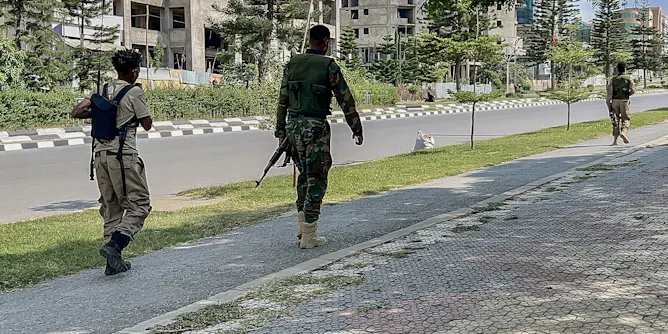
An offensive in the Tigray region followed months of aerial strikes by the Ethiopian government. The situation could spark a wider regional conflict.
Articles on Tigray
Displaying 1 - 20 of 70 articles
Pretoria stopped one phase of one war. Its incomplete implementation left unresolved disputes that are now colliding.
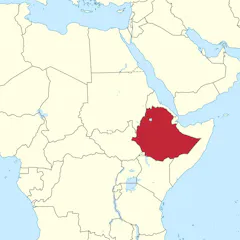
Political groups use social media ‘maptivism’ to spread exaggerated regional maps to stake a claim to territory.
A culture of solving political differences with conflict has led to persistent disagreements about the Ethiopian state.
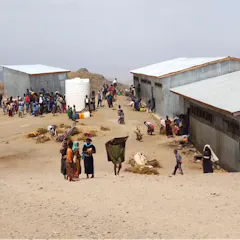
Recent confrontations in Tigray are a sign that the 2022 peace process has seriously derailed.

Global media coverage tends to focus on just one of Ethiopia’s conflicts.
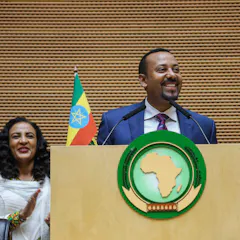
A national dialogue is usually convened during moments of political crisis or transition.

The violence in Tigray was structured, targeted and sustained.
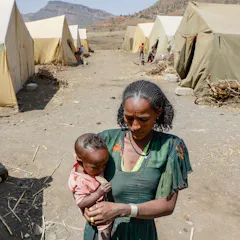
Famine was weaponised as part of a broader campaign of destruction in Ethiopia’s Tigray region.
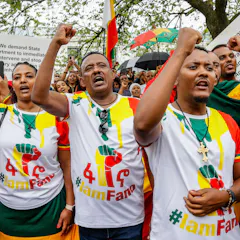
The Fano insurgency is taking place in a territory three times the size of Tigray, stretching the army’s resources.
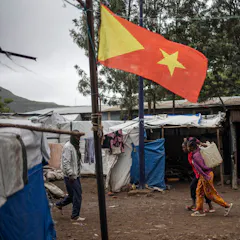
The 2020-2022 war and its lingering effects have thrown the Tigray region into chaos.
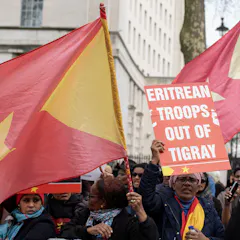
Fully implementing the principles of a ceasefire agreement is critical to post-war recovery in Ethiopia’s north.
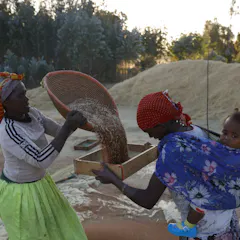
Oromia is a cultural, economic and political powerhouse. It significantly shapes Ethiopia’s identity and trajectory.
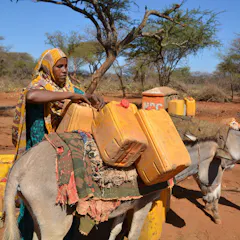
Donkeys provide vital support to women but their lives are often cut short.

Sexual violence can be used as a weapon of war. Hamas’ use of sexual violence was likely meant to show its power over Israeli women and girls and to humiliate Israeli men and Israel’s military.
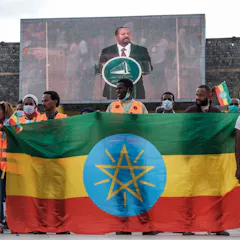
After more than 30 years of federalism, ethnic conflict in Ethiopia hasn’t been resolved – but neither has the country disintegrated.
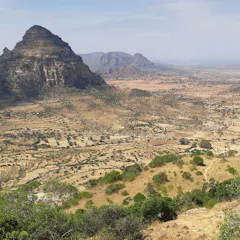
Even though the Tigray war front moved past Dabba Selama several times, the community suffered less than other nearby villages.
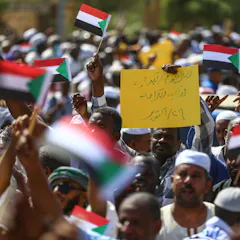
An African-led process would take into account complex regional dynamics – which would lead to a better and more stable peace agreement.
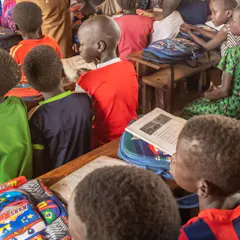
Ethiopia’s unmet refugee education reforms highlight the ways in which bureaucratic structures and interests can shape policy.
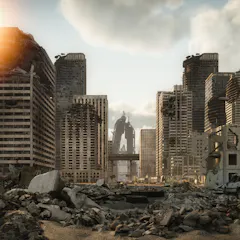
Urban spaces are a repository of people’s beliefs, memories and collective conscience.
Top contributors
-

Professor Emeritus in Global Health & Humanitarian Affairs, University of Manchester
-
Researcher, Ghent University; Oregon State University
-
Visiting Lecturer, University of Roehampton
-
Professor of Geography, Ghent University
-
Lecturer in Environment and Development, University of Manchester
-
Senior Lecturer of Political Science, Georgia Gwinnett College
-
Postdoctoral Research Fellow, Deakin University
-
Ph.D. Fellow, Center for Constitutional Democracy, Indiana University
-
NHMRC Research Fellow (Public Health), Flinders University
-
PhD Research Student, University of Reading
-
Professor, Université de Lubumbashi
-
Postdoctoral researcher, Ghent University
-
Professor of Sociology and Global and Africana Studies, University of Tennessee
-
Senior Fellow, World Peace Foundation, Fletcher School of Law and Diplomacy at Tufts, Tufts University
-
Professor of African History, St Cross College, University of Oxford