
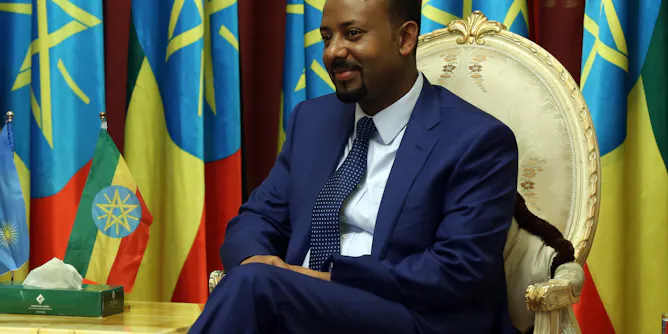
A delayed election could balkanise the country along ethnic lines and become the most severe political crisis in Ethiopia’s modern history.
Articles on Ethiopia
Displaying 281 - 300 of 487 articles
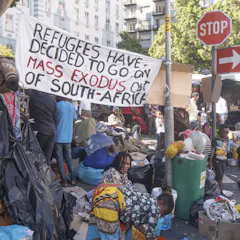
The policy and law applying to refugees and asylum seekers in South Africa is largely progressive. But, in practice, they continue to endure hardship and unfair treatment by officials.

Africa is facing a profound crisis that could set its development back a generation. It needs a solution to its debt problems that doesn’t cripple countries.
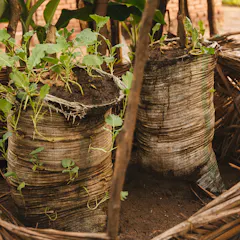
Despite their popularity, there are reasons to doubt whether “home gardens” provide a sustainable and cost-effective way of addressing hidden hunger.
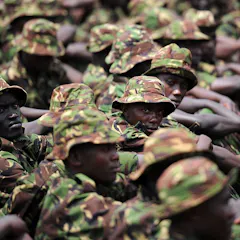
By withdrawing its troops from Somalia, Kenya could be doing more harm than good.
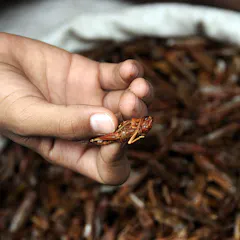
Eating locusts is an old strategy used to get food after locusts devastated crops, but things have changed.

An absence of laws governing the digital space has allowed the government to tinker with internet accessibility as it sees fit.
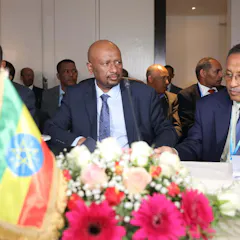
The Nile Treaties prevent upstream countries from using the waters of the Nile without the consent of those downstream. This results in an Egyptian bias.

The findings suggest that this specimen could climb and move in trees. But it may also have been able to walk on the ground. This echoes previous studies.

Thanks to one historic victory, Ethiopia became the only African country never to be colonised.
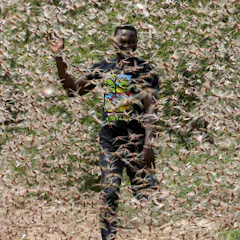
Changing weather modifies insect traits and can have an impact on their food, natural enemies and predators.
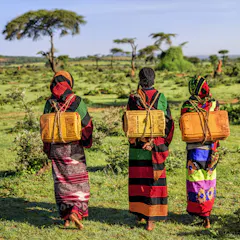
Over 60% of girls in Ethiopia are married by the age of 18. Many don’t have support in negotiating with their husbands and families to take control of their own fertility.
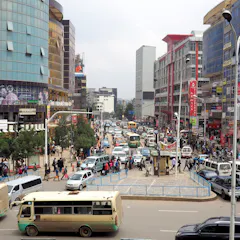
The alarm being raised by multilateral financial institutions about rising government debt across Africa is exaggerated. The real problem is that African governments pay way over the odds for debt.

Abiy’s administration should stop talking about reform and liberalisation and focus instead on stopping the country from sliding into disarray
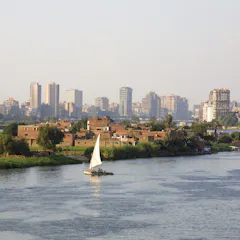
Instead of allocating the Nile waters based on a fixed, perpetual water supply Ethiopia, Sudan, and Egypt must consider changes in weather patterns, among other factors.

Countries should promote alternatives to pesticides and more carefully examine how to prevent insect invasions in the first place
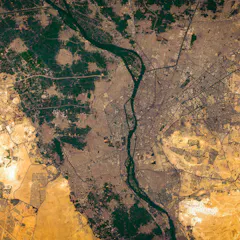
Despite more rainfall, devastating hot and dry spells are projected to become more frequent in the Upper Nile basin in the future.

Ethiopia’s new political outfit could bring minority groups into the centre of power.
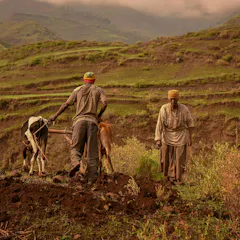
Ethiopian researchers put together maps which show where there are soil fertility issues and whether nutrients are missing.
In a country where there are more than 80 ethnic groups, the territorial solution isn’t a feasible solution.
Top contributors
-

Senior Lecturer of Political Science, Georgia Gwinnett College
-
Visiting Lecturer, University of Roehampton
-
Professor, Weber State University
-
Professor Emeritus in Global Health & Humanitarian Affairs, University of Manchester
-
Ph.D. Fellow, Center for Constitutional Democracy, Indiana University
-
PhD candidate, University of the Pacific
-
Associate Professor, Khalifa University
-
Professor of Geography, Ghent University
-
Professor of Sociology and Global and Africana Studies, University of Tennessee
-
Researcher, Ghent University; Oregon State University
-
Senior Research Fellow, Horn of Africa and Southern Africa, Institute of Commonwealth Studies, School of Advanced Study, University of London
-
Professor of International Relations, Norwegian University of Life Sciences
-
Lecturer and Senior Research Fellow at the South African Research Chair in International Law (SARCIL), University of Johannesburg
-
Visiting Adjunct Professor, School of Governance, University of the Witwatersrand
-
CGIAR