
Research on how our lifestyles affect our genes raises the possibility of giving your future kids a better start in life before they’re even born.
Articles on Epigenetics
Displaying 81 - 100 of 113 articles

A new study from Denmark shows that a man’s weight can affect the information carried by his sperm.
It’s time for neurons to share the glory. Gene activity isn’t just a background utility of the brain, but an integral part of its operation.

A new study has looked at the ‘father effect’ in epigenetics.

The study of human intelligence dates back well over 100 years. And the core disagreement between researchers and theorists is whether differences are genetic or largely influenced by the environment.

Epigenetics is increasingly used as a buzzword to sell pseudoscientific products, but the truth of epigenetics is even more interesting – and complex – than the quacks claim.
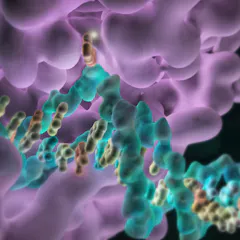
It takes a careful balance between art and science to illustrate the processes that take place within our cells and explain the complexities of epigenetics.

The epigenetic ‘musicians’ that play our genomes in different ways might help us understand the causes of autism.
Some Russians are looking back admiringly to a tyrannical scientist from Stalinist times – and using the new field of epigenetics to bolster their case.
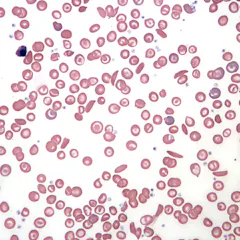
Gene therapy is allowing us to switch on natural beneficial mutations to counteract the effects of negative mutations in diseases such as sickle cell anaemia.
A recent study showing that the potential for committing a sex crime may be written in our genes is interesting but unlikely to help prevent sex offenses.
There’s still a lot we don’t know about how various genes are switched on and off. But a new project is seeking to shed light on the complex world of epigenetics.

Our parents teach us what is to eat. But this process begins well before the fight to get toddlers to eat their veggies. Not only do our parents give us the genes that define our taste receptors, research…

In January 1998 five days of freezing rain collapsed the electrical grid of the Canadian province of Québec. The storm left more than 3 million people without electricity for anywhere from a few hours…
The Prime Minister’s Prizes for Science – awarded at Parliament House in Canberra tonight – recognise excellence in science and science teaching. This year, we asked four prizewinners to reflect on…
Hugo and Ross Turner are a pair of intrepid twins currently on an expedition to Greenland. One of them, Ross, is using the same style of equipment and facilities used by Ernest Shackleton 100 years ago…
Spinal cord injuries are currently irreparable. When nerve fibres in the central nervous system are damaged there is, as yet, no way of reversing this. But research we’ve been doing has led to the discovery…

Why does a “gay gene” paper still cause a stir? A similar paper on any other topic would probably have passed unnoticed. But this is sex research – where public interest is huge but real funds and real…
Changes to the genes of people that undergo oral immunotherapy because of a peanut allergy could provide a way of testing if the treatment is working, according to findings in a new study. Peanut allergies…
The older we get, the higher our risk of cancer. With age, we accumulate exposure to environments and chemicals that increase the risk of acquiring cancer-causing mutations. But the danger doesn’t increase…
Top contributors
-

Deputy Director, Twins Research Australia & Professor in Genetics and Cell Biology, Deakin University
-
Head, Molecular Medicine Laboratory, WEHI (Walter and Eliza Hall Institute of Medical Research)
-
Jenny Graves is a Friend of The Conversation.
Distinguished Professor of Genetics and Vice Chancellor's Fellow, La Trobe University
-
Chair, The Conversation Media Group
-
Professor of Genetic Epidemiology, King's College London
-
Senior Principal Research Fellow, Garvan Institute
-
Canada Research Chair in Social Epigenetics and Professor, UBC Department of Medical Genetics, University of British Columbia
-
Assistant Professor of Systems Biology and Cancer Metabolism, University of California, Merced
-
Professor of Biomedical Engineering, Johns Hopkins University
-
Honorary Research Associate, La Trobe University
-
Postdoctoral research associate, University of Southampton
-
Clinical Therapist, West Virginia University
-
Professor of Epigenetics at the Department of Physiology, Development and Neuroscience, University of Cambridge
-
Lecturer, Macquarie University
-
Associate Professor, Stanford University